Ezra 1-2 Summary
Ezra 1-2 explained: In this introduction to the Book of Ezra and Ezra 1-2 commentary, God stirs the hearts of foreign kings and Jewish exiles to return to Jerusalem and rebuild the Temple. Through the returns, God reveals the deeper meaning of spiritual restoration, showing how He orchestrates history, keeps His covenant promises, and uses imperfect leaders to prepare the way for the ultimate Messiah.
What is the Book of Ezra about?
The Book of Ezra is the story of how God stirred the hearts of His people and foreign kings to return to Jerusalem and rebuild the Temple, even in the face of fierce opposition.
Like Nehemiah and Esther, who are up next, Ezra is called for a purpose. For such a time as this. The people need a spiritual leader, and Ezra has studied up. He is ready to teach the people.
What is the main message of Ezra?
The main message of the Book of Ezra is restoration and renewal, both physically and spiritually. The people need to return to God spiritually, and that means a return to Jerusalem physically. It will be a:
- Return to worship.
- Rebuilding of the Temple.
- Return to the promises of God. The Mosaic Covenant: the land. The Davidic Covenant: a Messiah. Little do the people know that, as they journey back, they carry the “seed” of God's promised Savior for all nations.
Key Verse for the Book of Ezra
Ezra 7:10 10 For Ezra had devoted himself to the study and observance of the Law of the Lord, and to teaching its decrees and laws in Israel.
Introduction to the Book of Ezra
The Bible is a collection of small stories that together tell a much larger story. The larger story is the entire history of our redemption with Jesus as the ultimate hero. Ezra is in the middle of that story.
How does Ezra fit into the Bible?
The Old Testament has five divisions. In the Bible Book Club, we have finished the first division called the Pentateuch or Books of the Law, the first five books of the Bible. Ezra is in the second division of the Bible, called the History Books. There are 12 of these History Books, and we have discussed nine of them.
Something unique about these next books is that the period in history is fascinating. The Israelites are once again captives, but not to Egypt or Babylon. Their exile is the consequence of years of idolatry and disobedience. The last three History Books, Ezra, Nehemiah, and Esther, all take place in the time period of the great Persian Empire, which ranks among the top five of the greatest empires of the world.
The Persian Empire left some important historical documentation that supports the biblical timeline and context regarding the people’s return to Jerusalem. In these stories, Babylon is no more, and the Israelites live under a new type of rule. The people are no longer slaves but not quite free either.
What is the historical significance of the Persian Empire during Ezra's time?
The Persian Empire, from 550 BC to 330 BC, was the largest empire by percentage of the world population in history. At the time of its dominance, approximately 44 percent of the world's population lived under Persian rule. It was also the most diverse empire in the world, unifying different nations, tribes, languages, cultures, and religions.
Unlike other nations, King Cyrus adopted a policy of tolerance, allowing conquered people to retain their customs and religions. This tolerance was not just idealistic. It was strategic, and it contributed to the stability and cohesion of the Persian Empire.
Which four Persian kings are mentioned in Ezra, Nehemiah, and Esther?
Four Persian kings are mentioned in the books of Ezra, Nehemiah, and Esther:
- Cyrus II, the Great, who conquered Media, Lydia, and Babylonia.
- Darius I, who is known as the most capable administrator.
- Xerxes I, the king known for his marriage to Esther.
- Artaxerxes I, who commissioned Nehemiah to go to Jerusalem and rebuild the wall.
Who is the author of Ezra, and what does his name mean?
The author of Ezra is thought to be Ezra, a priest and a scribe descended from Aaron. Ezra's name means help , and his goal is to help the Israelites:
- Learn and obey God's Law.
- Rebuild and worship in God's Temple.
There are no overt miracles in the Book of Ezra. The whole chain of events in the next three books is quietly initiated by the Lord.
- Ezra 1:1 – The Lord moves the heart of Cyrus
- Ezra 7 – Artaxerxes grants Ezra everything he asks, for the hand of the Lord his God is on him
- Nehemiah 2:6 – Ensures that it pleases the King to send Nehemiah.
And, well, all of Esther is one great movement of the Lord behind the scenes without a single mention of His name in the whole book.
Lessons from Ezra and Nehemiah
A message not to be missed in both Ezra and Nehemiah is the reality of imperfect leadership. These are stories about good leaders who give everything they have, work hard, and pray earnestly. Still, they cannot fully achieve what they set out to do. It's honestly a bit upsetting, but this "incomplete success" theme plays an important role in the bigger biblical story. We’ll circle back to why that matters in a moment.
What are the recurring themes of hope and disappointment in Ezra and Nehemiah?
The pattern of hope and disappointment repeats three times throughout both the books of Ezra and Nehemiah. Each cycle starts the same way:
- A Persian king decides to help.
- The king sponsors an Israelite leader,
- And sends a group of exiles back to rebuild Jerusalem.
There is so much hope and possibility at the beginning of each wave. But here’s what happens every single time:
- They start strong,
- Make real progress,
- Hit the same two problems: enemies attacking from the outside and the people failing on the inside.
What are the three separate returns of exiles mentioned in the text?
The three separate returns of the exiles are:
- Led by Zerubbabel in 538 BC to rebuild the Temple (Ezra 1-2, Ezra 3-4, and Ezra 5-6)
- Led by Ezra in 458 BC to restore commitment to God's Law (Ezra 7-8 and Ezra 9-10)
- Led by Nehemiah in 444 BC to rebuild the city walls (Nehemiah 1-7)
The point is, even though the Israelites have returned, they still cannot win, nor will they ever win without that one Messiah King. Only Jesus has the power to be that one sacrifice to end all others, and only Jesus can provide the way for our redemption.
In the Old Testament, the Temple was the meeting point for God and man. Only Jesus had the power to replace the Temple, this meeting point or mediator between God and man.
Hebrews 9:15 15 For this reason Christ is the mediator of a new covenant, that those who are called may receive the promised eternal inheritance—now that he has died as a ransom to set them free from the sins committed under the first covenant.
The next three books are favorites. They tell the story of kings, prophets, priests, politics, a queen, and the God who rules over all of it. A God who, in the beginning, created us, and a plan for us to glorify Him and be with Him forever. Welcome to the next chapter in God’s redemptive plan!
Introduction to Ezra 1-2
Recall from our last episode that it is thought that Ezra also wrote the books of Chronicles because 2 Chronicles ends with almost the exact same words that the Book of Ezra begins with. Chronicles is the story of Israel’s history written to remind the returned exiles of their past relationship with God. The Book of Ezra is the story of what happens when the exiles return, which began before Ezra was on the scene, so Ezra is going to document that history for us.
- In 539 BC: Cyrus conquered Babylon, where most of the exiles lived.
- In 538 BC: he made the decree that allowed the Israelites to return to Jerusalem and rebuild the Temple.
In this book, Ezra recounts what happened before he arrived in Jerusalem, starting with Cyrus’s decree. Also, after he arrived, which was 80 years later, in 458 BC during the reign of Artaxerxes.
Scene 1: God Moves, Cyrus Speaks, and the Exiles Are Set Free
Ezra 1:1-4
1 In the first year of Cyrus king of Persia, in order to fulfill the word of the Lord spoken by Jeremiah, the Lord moved the heart of Cyrus king of Persia to make a proclamation throughout his realm and also to put it in writing:
2 “This is what Cyrus king of Persia says: “‘The Lord, the God of heaven, has given me all the kingdoms of the earth and he has appointed me to build a temple for him at Jerusalem in Judah. 3 Any of his people among you may go up to Jerusalem in Judah and build the temple of the Lord, the God of Israel, the God who is in Jerusalem, and may their God be with them. 4 And in any locality where survivors may now be living, the people are to provide them with silver and gold, with goods and livestock, and with freewill offerings for the temple of God in Jerusalem.’”
Ezra tells us that Cyrus acted to fulfill the word of the Lord spoken to Jeremiah. Jeremiah lived from about 650 BC to 570 BC, well over a hundred years before Cyrus. Jeremiah has his own book in the Bible, but we won’t get to him for eight more books. So Ezra opens with a verse referring to Jeremiah, but we haven’t read about that yet.
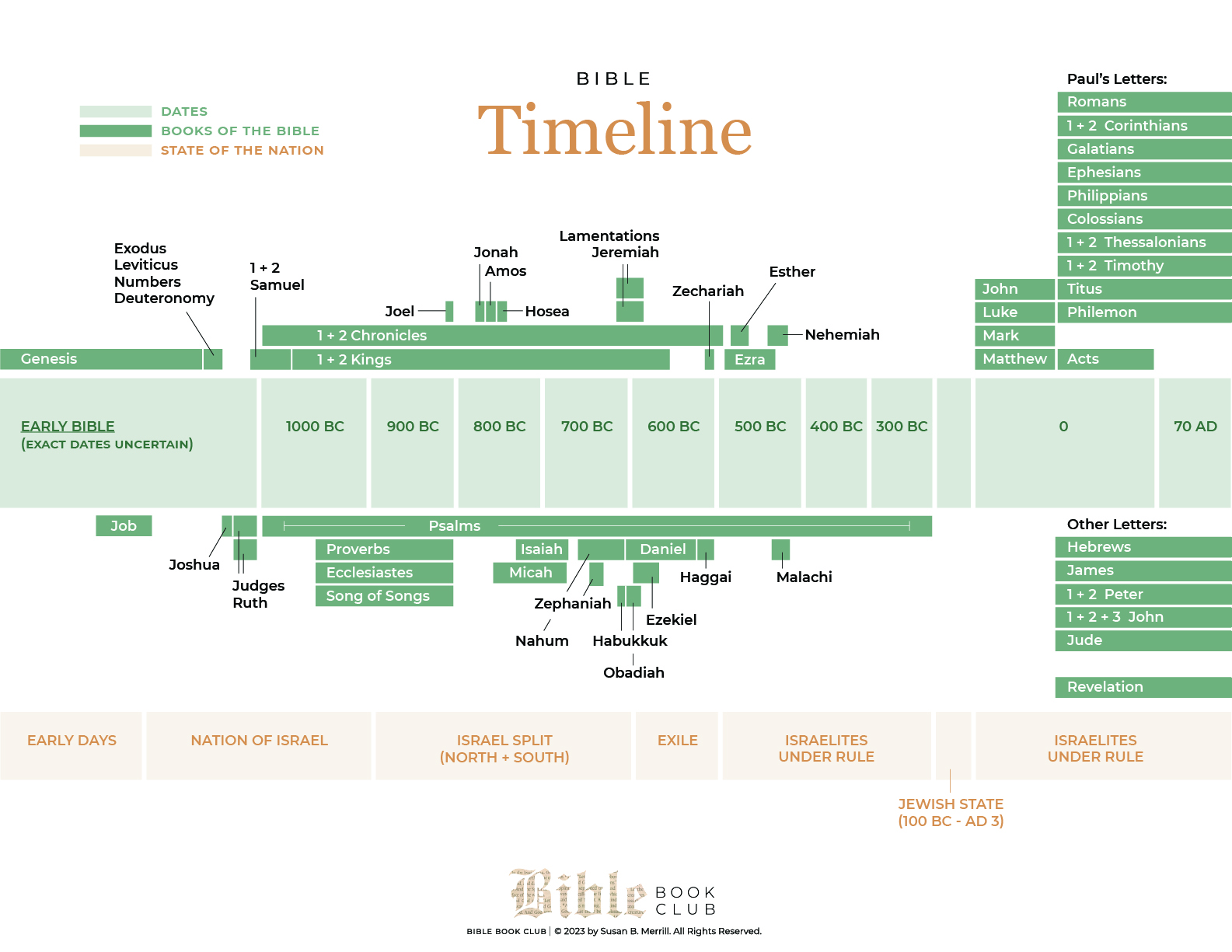
We are clearly marching through a Bible that is chronologically out of order. That is because we are in the History section of the books of the Bible. The Books of the Prophets, like Jeremiah, do not show up until the end of the Old Testament. It is a little confusing, but in each season and book of the Bible Book Club, I will try to always remind you where we are in history. Here’s a great chart of all the Books of the Old Testament.
How did King Cyrus's decree fulfill the prophecies of Jeremiah and Isaiah?
Jeremiah prophesied about Israel's exile and return. Ezra wants to make sure no one forgets that God keeps His promises. First, the exile in Jeremiah 25:
Jeremiah 25:7-11 7 “But you did not listen to me,” declares the Lord, “and you have aroused my anger with what your hands have made, and you have brought harm to yourselves.”
8 Therefore the Lord Almighty says this: “Because you have not listened to my words, 9 I will summon all the peoples of the north and my servant Nebuchadnezzar king of Babylon,” declares the Lord, “and I will bring them against this land and its inhabitants and against all the surrounding nations. I will completely destroy them and make them an object of horror and scorn, and an everlasting ruin. 10 I will banish from them the sounds of joy and gladness, the voices of bride and bridegroom, the sound of millstones and the light of the lamp. 11 This whole country will become a desolate wasteland, and these nations will serve the king of Babylon seventy years.
Jeremiah 29:10-14 10 This is what the Lord says: “When seventy years are completed for Babylon, I will come to you and fulfill my good promise to bring you back to this place. 11 For I know the plans I have for you,” declares the Lord, “plans to prosper you and not to harm you, plans to give you hope and a future. 12 Then you will call on me and come and pray to me, and I will listen to you. 13 You will seek me and find me when you seek me with all your heart. 14 I will be found by you,” declares the Lord, “and will bring you back from captivity. I will gather you from all the nations and places where I have banished you,” declares the Lord, “and will bring you back to the place from which I carried you into exile.”
The Prophet Isaiah
Another interesting prophecy that Ezra does not mention here is from the prophet Isaiah. Not only did he prophesy that they would be taken captive, but he gave the name of the king that God would use to free the exiles long before that king was born. In fact, it was over 150 years before Cyrus was even born.
Isaiah 44:28 28 who says of Cyrus, ‘He is my shepherd and will accomplish all that I please; he will say of Jerusalem, “Let it be rebuilt,” and of the temple, “Let its foundations be laid.”’
Isaiah 45:1 1 “This is what the Lord says to his anointed, to Cyrus, whose right hand I take hold of to subdue nations before him and to strip kings of their armor, to open doors before him so that gates will not be shut:
Isaiah 45:4-5 4 For the sake of Jacob my servant, of Israel my chosen, I summon you by name and bestow on you a title of honor, though you do not acknowledge me. 5 I am the Lord, and there is no other; apart from me there is no God. I will strengthen you, though you have not acknowledged me,
Isaiah 45:11-13 11 “This is what the Lord says—the Holy One of Israel, and its Maker:
Concerning things to come, do you question me about my children, or give me orders about the work of my hands? 12 It is I who made the earth and created mankind on it. My own hands stretched out the heavens; I marshaled their starry hosts. 13 I will raise up Cyrus in my righteousness: I will make all his ways straight. He will rebuild my city and set my exiles free, but not for a price or reward, says the Lord Almighty.”
The great prophet Isaiah was given a vision of how God would save the Israelites before the exile, or a great Persian king, was even on the radar. God raised up Cyrus. He summoned him by name, bestowing on him the honor and the power, even though Cyrus did not acknowledge Him as his God. His power was no accident. It was all God.
Does that register with you? God ordains kings, presidents, and prime ministers. God knows the beginning, the middle, and the end of the story before it even starts. Our only job is to insert ourselves on the page in any way God has equipped us for.
How does that make you feel? Challenged that perhaps you are being called to play a part in God’s story? Hopeful that maybe this proves God is leading, and you don’t have to. Whether here in Ezra or down the road in Malachi, think about what God is showing you. Because He wants you to learn, yes, but He also wants you to respond to what you have learned.
Ezra, Isaiah, and Jeremiah want the Israelites to see the hand of God in their past, present, and future. And God wants you to see His hand in your past, present, and future. Because if you do, it will build your faith. And the more faith you have, the more impact you will have on the pages of God's plan for the redemption of man.
Cyrus’ Stance on God
In verses 2-4, Cyrus refers to Israel's God, but most commentaries agree his words do not mean he believes. Cyrus is supportive of many religions, but he is not necessarily a devoted follower of the one true God. In this case, God influences Cyrus toward the exiles, and he goes with it. They should go and build God a Temple, and anyone who wants can take part. The captives are set free.
Scene 2: Another Exodus
This is the second exodus, the first being the infamous exodus from Egypt.
Ezra 1:5-11
5 Then the family heads of Judah and Benjamin, and the priests and Levites—everyone whose heart God had moved—prepared to go up and build the house of the Lord in Jerusalem. 6 All their neighbors assisted them with articles of silver and gold, with goods and livestock, and with valuable gifts, in addition to all the freewill offerings.
7 Moreover, King Cyrus brought out the articles belonging to the temple of the Lord, which Nebuchadnezzar had carried away from Jerusalem and had placed in the temple of his god. 8 Cyrus king of Persia had them brought by Mithredath the treasurer, who counted them out to Sheshbazzar the prince of Judah.
gold dishes — 30
silver dishes — 1,000
silver pans — 29
10 gold bowls — 30
matching silver bowls — 410
other articles — 1,00011 In all, there were 5,400 articles of gold and of silver. Sheshbazzar brought all these along with the exiles when they came up from Babylon to Jerusalem.
How long and difficult is the journey from Babylon to Jerusalem?
The journey from Babylon to Jerusalem is about 900 miles on foot, and it’s months of grueling travel at about 10 miles a day, because you:
- Have kids.
- Have animals.
- Need to look for food on the way.
- Need a day off to rest your feet .
This is no easy journey. But God moves Cyrus to allow the return, and God moves some of the people to want to return. And then, just as God moved the Egyptians to give to the Israelites for the journey in the first Exodus, God moves the Persians and any fellow Israelites who don’t leave to give in this second exodus.
How many gold and silver articles did Cyrus return to the Temple?
Then Cyrus returned to them all the items that had been stolen from the Temple by the Babylonians and miraculously preserved.
The identity of Sheshbazzar, the prince of Judah, in verses 8-11 is debatable. Some believe this name might be a Babylonian name for Zerubbabel. Others believe these are two different leaders and both may be of royal lineage.
Scene 3: Who's Who in Who Returned
Ezra 2:1-70
1 Now these are the people of the province who came up from the captivity of the exiles, whom Nebuchadnezzar king of Babylon had taken captive to Babylon (they returned to Jerusalem and Judah, each to their own town, 2 in company with Zerubbabel, Joshua, Nehemiah, Seraiah, Reelaiah, Mordecai, Bilshan, Mispar, Bigvai, Rehum and Baanah):
The list of the men of the people of Israel:
3 the descendants of Parosh — 2,172
4 of Shephatiah — 372
5 of Arah — 775
6 of Pahath-Moab (through the line of Jeshua and Joab) — 2,812
7 of Elam — 1,254
8 of Zattu — 945
9 of Zakkai — 760
10 of Bani — 642
11 of Bebai — 623
12 of Azgad — 1,222
13 of Adonikam — 666
14 of Bigvai — 2,056
15 of Adin — 454
16 of Ater (through Hezekiah) — 98
17 of Bezai — 323
18 of Jorah — 112
19 of Hashum — 223
20 of Gibbar — 95
21 the men of Bethlehem — 123
22 of Netophah — 56
23 of Anathoth — 128
24 of Azmaveth — 42
25 of Kiriath Jearim, Kephirah and Beeroth — 743
26 of Ramah and Geba — 621
27 of Mikmash — 122
28 of Bethel and Ai — 223
29 of Nebo — 52
30 of Magbish — 156
31 of the other Elam — 1,254
32 of Harim — 320
33 of Lod, Hadid and Ono — 725
34 of Jericho — 345
35 of Senaah — 3,63036 The priests: the descendants of Jedaiah (through the family of Jeshua) — 973
37 of Immer — 1,052
38 of Pashhur — 1,247
39 of Harim — 1,01740 The Levites:the descendants of Jeshua and Kadmiel (of the line of Hodaviah) — 74
41 The musicians: the descendants of Asaph — 128
42 The gatekeepers of the temple: the descendants of Shallum, Ater, Talmon, Akkub, Hatita and Shobai — 139
43 The temple servants: the descendants of Ziha, Hasupha, Tabbaoth, 44 Keros, Siaha, Padon, 45 Lebanah, Hagabah, Akkub, 46 Hagab, Shalmai, Hanan, 47 Giddel, Gahar, Reaiah, 48 Rezin, Nekoda, Gazzam, 49 Uzza, Paseah, Besai, 50 Asnah, Meunim, Nephusim, 51 Bakbuk, Hakupha, Harhur, 52 Bazluth, Mehida, Harsha, 53 Barkos, Sisera, Temah, 54 Neziah and Hatipha 55 The descendants of the servants of Solomon: the descendants of Sotai, Hassophereth, Peruda, 56 Jaala, Darkon, Giddel, 57 Shephatiah, Hattil, Pokereth-Hazzebaim and Ami 58 The temple servants and the descendants of the servants of Solomon — 392
59 The following came up from the towns of Tel Melah, Tel Harsha, Kerub, Addon and Immer, but they could not show that their families were descended from Israel: 60 The descendants of Delaiah, Tobiah and Nekoda — 652
61 And from among the priests: The descendants of Hobaiah, Hakkoz and Barzillai (a man who had married a daughter of Barzillai the Gileadite and was called by that name).
62 These searched for their family records, but they could not find them and so were excluded from the priesthood as unclean. 63 The governor ordered them not to eat any of the most sacred food until there was a priest ministering with the Urim and Thummim.
64 The whole company numbered 42,360, 65 besides their 7,337 male and female slaves; and they also had 200 male and female singers. 66 They had 736 horses, 245 mules, 67 435 camels and 6,720 donkeys.
68 When they arrived at the house of the Lord in Jerusalem, some of the heads of the families gave freewill offerings toward the rebuilding of the house of God on its site. 69 According to their ability they gave to the treasury for this work 61,000 darics of gold, 5,000 minas of silver and 100 priestly garments.
70 The priests, the Levites, the musicians, the gatekeepers and the temple servants settled in their own towns, along with some of the other people, and the rest of the Israelites settled in their towns.
How many years have passed in captivity?
Seventy years have passed in captivity. Most of these are people who were born in captivity. They have never been to the Promised Land. All they know is what their parents and grandparents have told them of the land and taught them of God's word. But God moves the heart, and God provides a way.
God moved, and the people moved. Ezra recorded every name, but long before his ink hit paper, God had chosen. This is not just any list. It is a chosen list of people called to do difficult work. God chose the people, and God chose their leaders.
What is the significance of the leader Zerubbabel in the biblical timeline?
Zerubbabel is a descendant of King David through King Jehoiachin. He carries the seed of the Messiah, and he is listed in the lineage of Christ in the books of Matthew 1 and Luke 3.
Jerusalem is back in business. It will not be an easy start-up, but it will be one filled with lessons for us, starting in our next chapters: the Jerusalem Reboot.
Group Discussion Questions for Ezra 1-2
- God raises up leaders and directs history, equipping us all to join the story. What gifts, passions, or life experiences has God equipped you with right now, and where might He be calling you to step into the story?
- God doesn't just want us to learn His Word. He also wants us to respond to what we learn. What is one truth or Scripture verse you’ve learned recently that God might be prompting you to actively respond to or put into practice this week?
- Chapter 2 isn’t just a list of names. It is a chosen list of people God called to do the difficult work of rebuilding. What emotions does it bring up when you consider that God intentionally created you specifically to live in this place and time? How does it feel to know you were on His list as Chosen long before you were even born?
Show Notes
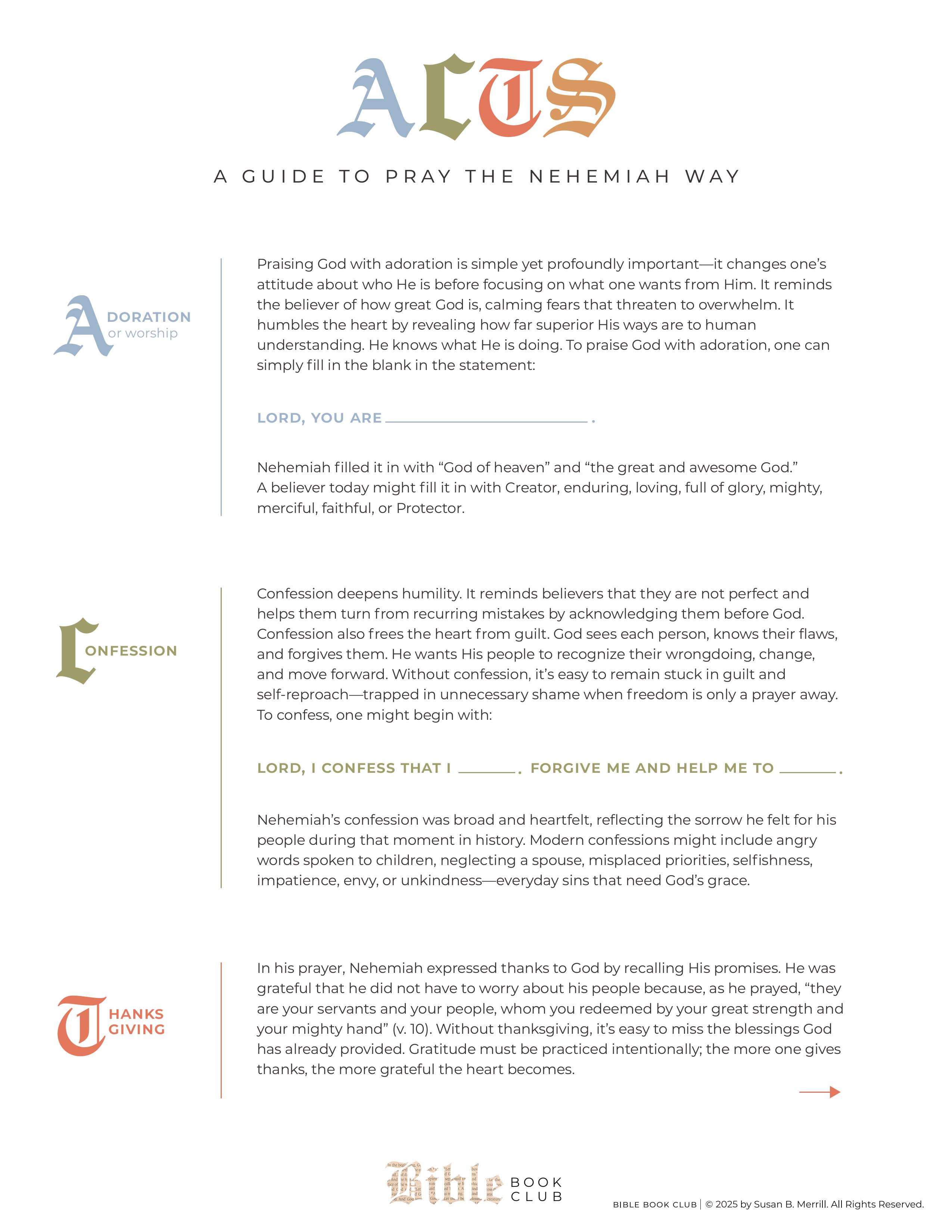
- ACTS Prayer Guide
- The Old Testament Books
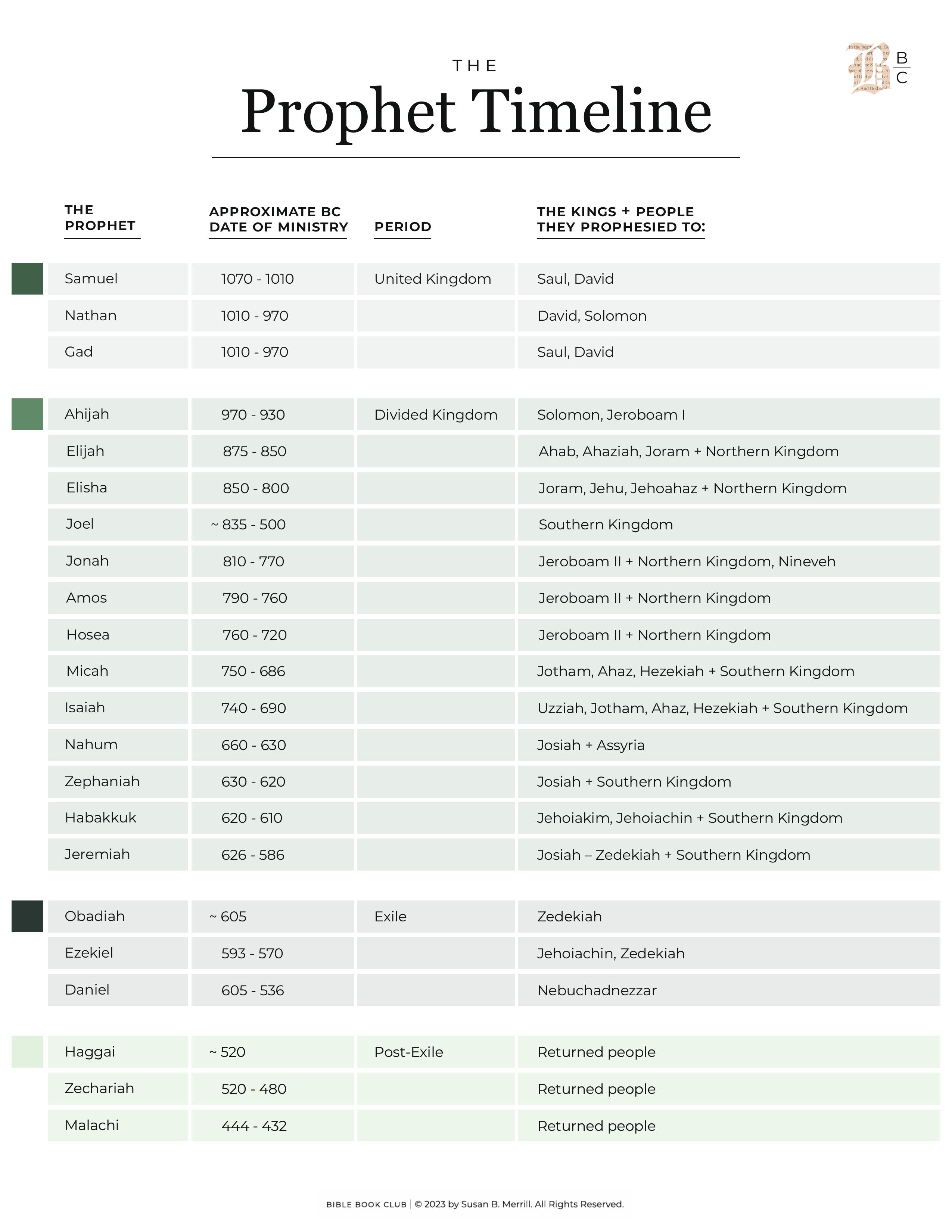
- Prophet Timeline
- Bible Prophets Timeline
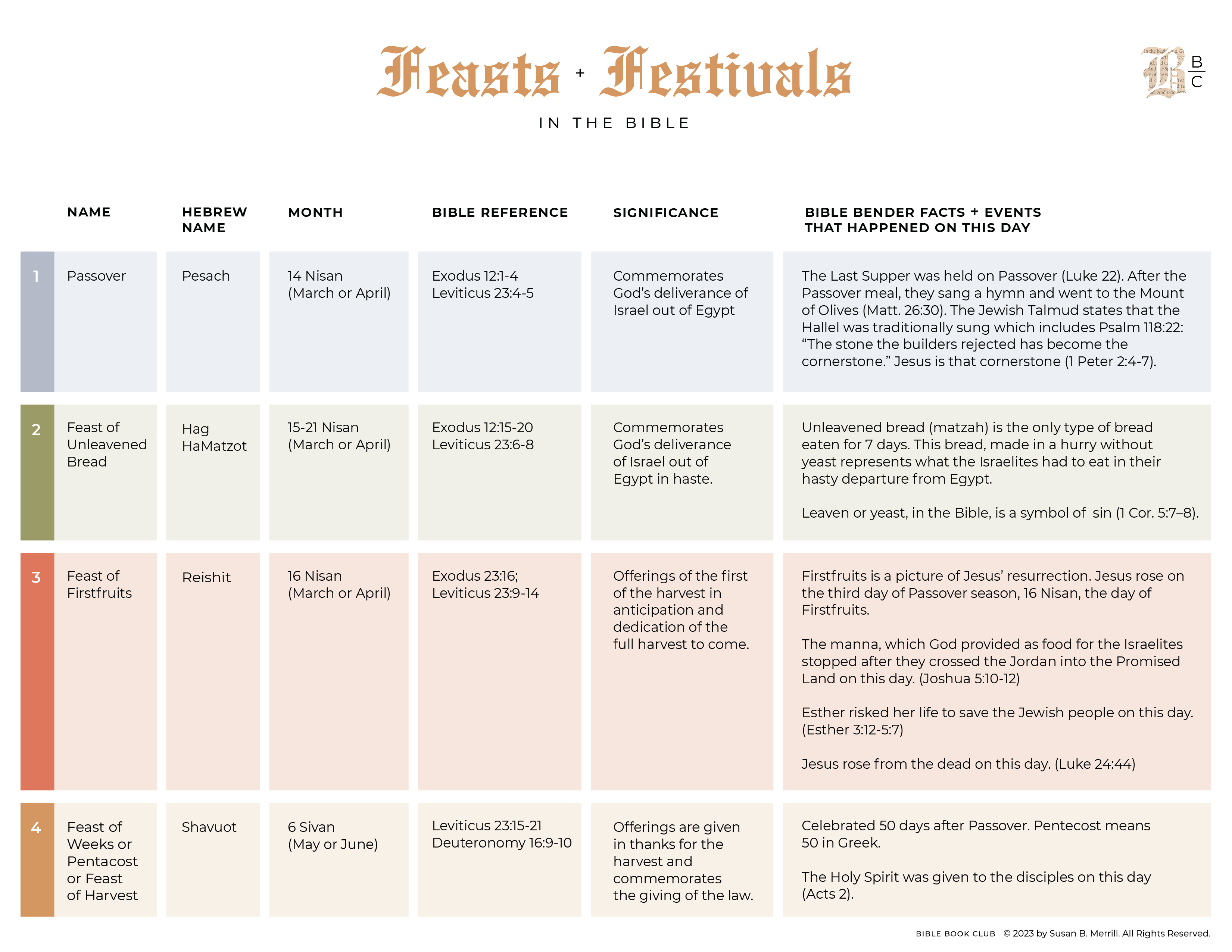
- Feasts and Festivals
- Bible Timeline
- Types of offerings: Leviticus Offerings Chart
- Video tour of the Temple Mount and the Dome of the Rock exterior on Mount Moriah
- Feasts and Festivals in the Bible
- Video of the inside of the Dome of the Rock