Ezra 5-6 Introduction
Recall from our Ezra 1-2 Bible study that there are four Persian kings pertinent to our story:
- Cyrus
- Darius
- Xerxes
- Artaxerxes
Cyrus is dead, and Darius is king. There was a king between them who is not mentioned. And for the record, Darius is not related to Cyrus. The crown passed to another Persian family, so Darius may not have been very familiar with what Cyrus decreed.
We ended Ezra 3-4 with the building of the Temple delayed.
Ezra 4:24 24 Thus the work on the house of God in Jerusalem came to a standstill until the second year of the reign of Darius king of Persia.
The fear tactics and bribes from the neighbors halted the progress on the Temple for years. It was time for God to step in, and Ezra 5-6 is about providential opposition. Up to this point in the Book of Ezra, we have read about:
- Provincial opposition: the neighbors didn’t like the new residents.
- Political opposition: the neighbors used politics to persuade the kings.
In this round, God is going to step in and get this Temple back on track.
Scene 1: God Provides Prophet Support for the People
God provides what His people need to complete His work. In this case, the people need exhortation and encouragement.
Ezra 5:1-2
1 Now Haggai the prophet and Zechariah the prophet, a descendant of Iddo, prophesied to the Jews in Judah and Jerusalem in the name of the God of Israel, who was over them. 2 Then Zerubbabel son of Shealtiel and Joshua son of Jozadak set to work to rebuild the house of God in Jerusalem. And the prophets of God were with them, supporting them.
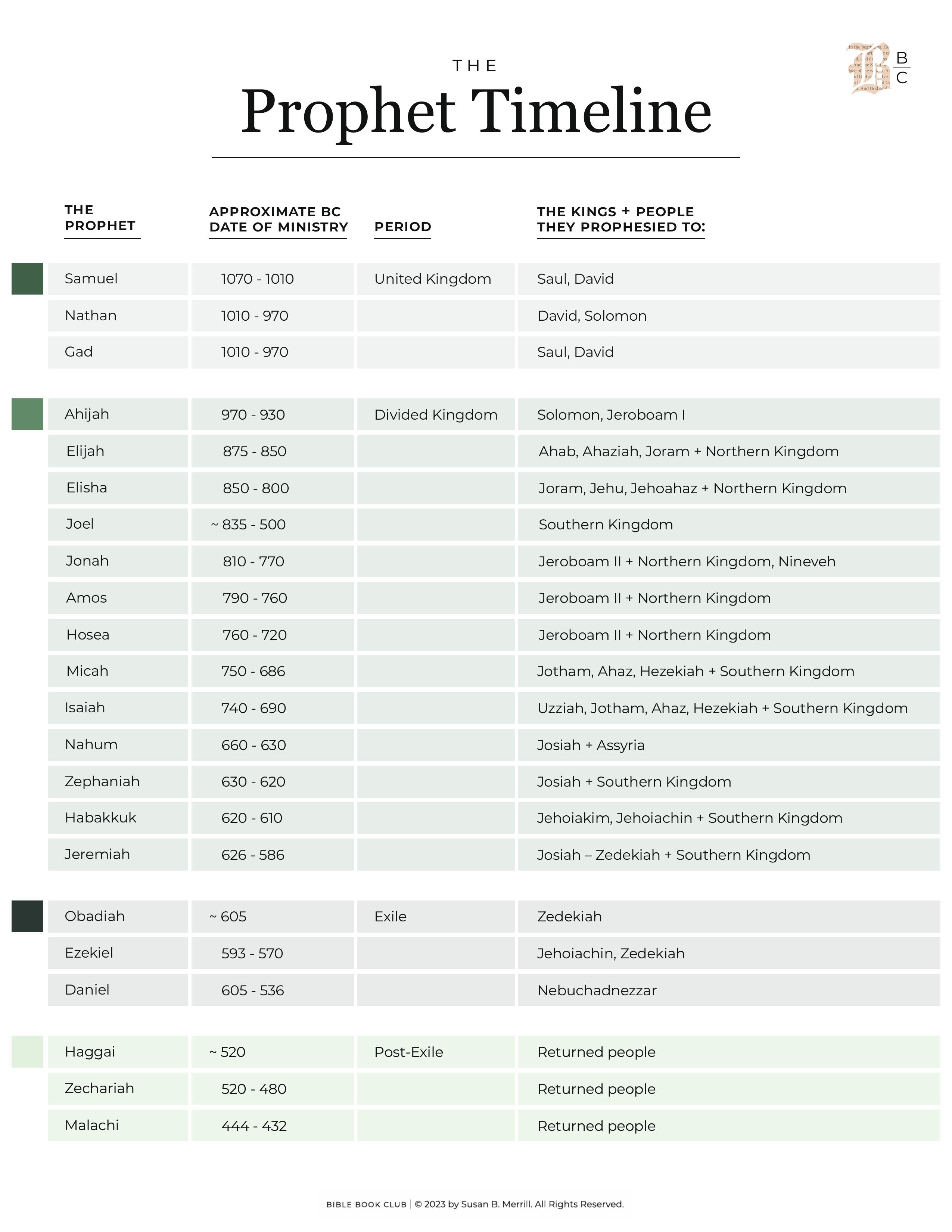
Which prophets encourage the Israelites to resume building the Temple in Ezra 5?
God breaks the silence and provides bold leaders: two very different prophets, Haggai and Zechariah. Both prophets have books in the Old Testament. Haggai's entire book of just two chapters corresponds to this period.
Haggai 1:1-6 1 In the second year of King Darius, on the first day of the sixth month, the word of the Lord came through the prophet Haggai to Zerubbabel son of Shealtiel, governor of Judah, and to Joshua son of Jozadak, the high priest:
2 This is what the Lord Almighty says: “These people say, ‘The time has not yet come to rebuild the Lord’s house.’”
3 Then the word of the Lord came through the prophet Haggai: 4 “Is it a time for you yourselves to be living in your paneled houses, while this house remains a ruin?”
5 Now this is what the Lord Almighty says: “Give careful thought to your ways. 6 You have planted much, but harvested little. You eat, but never have enough. You drink, but never have your fill. You put on clothes, but are not warm. You earn wages, only to put them in a purse with holes in it.”
How does Haggai the prophet motivate the people to rebuild the Temple?
Haggai is a plain speaker, and he gets right to the point using a not-so-gentle exhortation to get the people moving. The Lord wants to know why you are living in nice houses while the Temple is a wreck. They are wasting time and have nothing to show for it. According to Haggai, his rebuke works.
Haggai 1:12 12 Then Zerubbabel son of Shealtiel, Joshua son of Jozadak, the high priest, and the whole remnant of the people obeyed the voice of the Lord their God and the message of the prophet Haggai, because the Lord their God had sent him. And the people feared the Lord.
Why do the people listen? It says because the Lord sent him, and the people fear the Lord. Zechariah, the other prophet God sent, also has a book. In fact, his first eight chapters refer to what is happening in Ezra 5.
Zechariah 1:16-17 16 “Therefore this is what the Lord says: ‘I will return to Jerusalem with mercy, and there my house will be rebuilt. And the measuring line will be stretched out over Jerusalem,’ declares the Lord Almighty.
17 “Proclaim further: This is what the Lord Almighty says: ‘My towns will again overflow with prosperity, and the Lord will again comfort Zion and choose Jerusalem.’”Zechariah 4:6-9 6 So he said to me, “This is the word of the Lord to Zerubbabel: ‘Not by might nor by power, but by my Spirit,’ says the Lord Almighty.
7 “What are you, mighty mountain? Before Zerubbabel you will become level ground. Then he will bring out the capstone to shouts of ‘God bless it! God bless it!’”
8 Then the word of the Lord came to me: 9 “The hands of Zerubbabel have laid the foundation of this temple; his hands will also complete it. Then you will know that the Lord Almighty has sent me to you.
What is the message of the prophet Zechariah to Zerubbabel?
Zechariah's words are encouraging. God uses him to cast a vision of what is sure to come, because God is in control. God will rebuild His house in Jerusalem. The people of Judah will prosper. It will not happen by might or power but through His Spirit. Zerubbabel, the one who started it, will finish it, so they will know that God ordained it all.
And that is exactly what happens. The words of Haggai and Zechariah renew their faith and rally the people into action. With the people back on track, the Temple building begins again. God moves in the hearts of men to accomplish His will. Men who worship Him and men who don't. Like Tattenai.
Scene 2: The Opposition Has a New Name
Ezra 5:3-5
3 At that time Tattenai, governor of Trans-Euphrates, and Shethar-Bozenai and their associates went to them and asked, “Who authorized you to rebuild this temple and to finish it?” 4 They also asked, “What are the names of those who are constructing this building?” 5 But the eye of their God was watching over the elders of the Jews, and they were not stopped until a report could go to Darius and his written reply be received.
Who is Tattenai, and what role does he play in the Temple reconstruction?
Tattenai is a Persian governor of the region that includes Jerusalem. He must be somewhat important because his name is documented in Persian tablets. His questions to the Judeans are not as threatening as the Samaritans' questions were in our last chapters.
Tattenai is doing his job in an authoritative manner. He does not stop the work but seeks verification from headquarters that this building is allowed. The point is that it doesn't matter how many new names are introduced. God has their number, and God will use them to accomplish His will. They will all fall to God's spirit.
Scene 3: Tattenai's Report to the King
Ezra 5:6-17
6 This is a copy of the letter that Tattenai, governor of Trans-Euphrates, and Shethar-Bozenai and their associates, the officials of Trans-Euphrates, sent to King Darius. 7 The report they sent him read as follows:
8 The king should know that we went to the district of Judah, to the temple of the great God. The people are building it with large stones and placing the timbers in the walls. The work is being carried on with diligence and is making rapid progress under their direction.
9 We questioned the elders and asked them, “Who authorized you to rebuild this temple and to finish it?” 10 We also asked them their names, so that we could write down the names of their leaders for your information.
“We are the servants of the God of heaven and earth, and we are rebuilding the temple that was built many years ago, one that a great king of Israel built and finished. 12 But because our ancestors angered the God of heaven, he gave them into the hands of Nebuchadnezzar the Chaldean, king of Babylon, who destroyed this temple and deported the people to Babylon.
13 “However, in the first year of Cyrus king of Babylon, King Cyrus issued a decree to rebuild this house of God. 14 He even removed from the temple of Babylon the gold and silver articles of the house of God, which Nebuchadnezzar had taken from the temple in Jerusalem and brought to the temple in Babylon. Then King Cyrus gave them to a man named Sheshbazzar, whom he had appointed governor, 15 and he told him, ‘Take these articles and go and deposit them in the temple in Jerusalem. And rebuild the house of God on its site.’
16 “So this Sheshbazzar came and laid the foundations of the house of God in Jerusalem. From that day to the present it has been under construction but is not yet finished.”
17 Now if it pleases the king, let a search be made in the royal archives of Babylon to see if King Cyrus did in fact issue a decree to rebuild this house of God in Jerusalem. Then let the king send us his decision in this matter.
Tattenai is fair-minded. He states what the king should know: These people are building a Temple on your land, and they say Cyrus gave them permission to build it. Then he asks the king to fact-check it in the royal archives. The end result is a miracle.
Scene 4: The Royal Archives to the Rescue
Ezra 6:1-7
1 King Darius then issued an order, and they searched in the archives stored in the treasury at Babylon. 2 A scroll was found in the citadel of Ecbatana in the province of Media, and this was written on it:
3 In the first year of King Cyrus, the king issued a decree concerning the temple of God in Jerusalem:
Let the temple be rebuilt as a place to present sacrifices, and let its foundations be laid. It is to be sixty cubits high and sixty cubits wide, 4 with three courses of large stones and one of timbers. The costs are to be paid by the royal treasury. 5 Also, the gold and silver articles of the house of God, which Nebuchadnezzar took from the temple in Jerusalem and brought to Babylon, are to be returned to their places in the temple in Jerusalem; they are to be deposited in the house of God.
6 Now then, Tattenai, governor of Trans-Euphrates, and Shethar-Bozenai and you other officials of that province, stay away from there. 7 Do not interfere with the work on this temple of God. Let the governor of the Jews and the Jewish elders rebuild this house of God on its site.
Scene 5: Darius's Decree Flips the Script
Ezra 6:8-12
8 Moreover, I hereby decree what you are to do for these elders of the Jews in the construction of this house of God:
Their expenses are to be fully paid out of the royal treasury, from the revenues of Trans-Euphrates, so that the work will not stop. 9 Whatever is needed—young bulls, rams, male lambs for burnt offerings to the God of heaven, and wheat, salt, wine and olive oil, as requested by the priests in Jerusalem—must be given them daily without fail, 10 so that they may offer sacrifices pleasing to the God of heaven and pray for the well-being of the king and his sons.
11 Furthermore, I decree that if anyone defies this edict, a beam is to be pulled from their house and they are to be impaled on it. And for this crime their house is to be made a pile of rubble. 12 May God, who has caused his Name to dwell there, overthrow any king or people who lifts a hand to change this decree or to destroy this temple in Jerusalem.
I Darius have decreed it. Let it be carried out with diligence.
What are the specific terms of the Decree of Darius in Ezra 6?
Darius not only confirms the build but flips the script by decreeing that those same opponents must fund the Temple rebuild with taxes, supplies, and even animals for sacrifices. After years of stalling the build, the returned exiles have a miraculous moment when bureaucracy actually works for them.
God uses Tattenai to bring those dusty, forgotten scrolls to the light. King Darius decrees that the underdog is now the top dog. Not only can the exiles build their Temple, but they also get whatever they need to build and to sacrifice, all expenses paid by Persia. On top of that, any pesky complaining neighbor who interferes is dead, and it will not be a pretty death. The threats and fear that once plagued the Jews are transferred to the very people who initiated them. It’s a clear case of what man intends to harm, God can redirect for good.
- God brought the long-buried truth to light just as He had providentially raised up Cyrus.
- God placed Tattenai, a foreign administrator, over Jerusalem, who moved in their favor.
- God moved in the heart of King Darius to do the right thing.
Sometimes opposition is providential.
God can and does use opposition to accomplish His purposes. In this case, opposition results in an all-expenses-paid Temple. Similarly, opposition in our life can build us into a better temple, because opposition:
- Refines
- Strengthens
- Redirects
- Builds us!
And if it builds us, it builds the church. Opposition is not the end of the story. It is often a sign that God is at work writing an even more glorious story. One better than we could have imagined. And isn’t that what we want, to glorify God? Perhaps we should flip the script and take pleasure in opposition because we know it glorifies God. Can't you just hear the enemy grinding his teeth about that? He brings opposition, and rather than being discouraged, we rejoice.
Scene 6: The Temple Is Finished
Ezra 6:13-18
13 Then, because of the decree King Darius had sent, Tattenai, governor of Trans-Euphrates, and Shethar-Bozenai and their associates carried it out with diligence. 14 So the elders of the Jews continued to build and prosper under the preaching of Haggai the prophet and Zechariah, a descendant of Iddo. They finished building the temple according to the command of the God of Israel and the decrees of Cyrus, Darius and Artaxerxes, kings of Persia. 15 The temple was completed on the third day of the month Adar, in the sixth year of the reign of King Darius.
16 Then the people of Israel—the priests, the Levites and the rest of the exiles—celebrated the dedication of the house of God with joy. 17 For the dedication of this house of God they offered a hundred bulls, two hundred rams, four hundred male lambs and, as a sin offering for all Israel, twelve male goats, one for each of the tribes of Israel. 18 And they installed the priests in their divisions and the Levites in their groups for the service of God at Jerusalem, according to what is written in the Book of Moses.
All Because of God
- Tattenai's report.
- Darius's decree.
- Haggai’s and Zechariah's preaching.
- Zerubbabel’s and Joshua's leading.
- The people's zeal to build.
The Temple is complete. It’s where God will meet the people He has chosen, these people He has redeemed so many times, and who carry the seed of the Savior. The Savior who will redeem humanity with just one sacrifice and put an end to our dependence on this very Temple. And, with it, the need for repetitive sacrifices for the atonement of sin.
How many times in our journey through the Bible have we seen the phrase, “But for God?” We wouldn’t, couldn’t, ever be free from sin, satan, and opposition but for God. He is the only thing that stands between us and destruction. His plan saves. His plan began at the beginning, and He will see it through to the end.
Scene 7: The First Passover in the New Temple
Ezra 6:19-22
19 On the fourteenth day of the first month, the exiles celebrated the Passover. 20 The priests and Levites had purified themselves and were all ceremonially clean. The Levites slaughtered the Passover lamb for all the exiles, for their relatives the priests and for themselves. 21 So the Israelites who had returned from the exile ate it, together with all who had separated themselves from the unclean practices of their Gentile neighbors in order to seek the Lord, the God of Israel. 22 For seven days they celebrated with joy the Festival of Unleavened Bread, because the Lord had filled them with joy by changing the attitude of the king of Assyria so that he assisted them in the work on the house of God, the God of Israel.
What month does the Jewish calendar start on?
The Jewish calendar starts with the month of Nisan. God commanded Moses in Exodus 12:1 that this should be the first month of their year, and in that month they are to celebrate the Passover. The Passover is a celebration of their redemption from slavery the first time, after the first exodus.
Recall from our last chapters that the Temple building began in the second month, which would have been right after they celebrated the Passover. It is a celebration of their redemption from slavery for a second time, after a second exodus.
On what date is the Second Temple finally completed according to Ezra?
The Second Temple is finished on the third day of Adar in Darius's sixth year, around March 12, 515 BC. Providentially, this is just in time to celebrate the Passover, linking back, once again, to the Exodus story.
How long does it take to complete the Second Temple in Jerusalem?
It takes about 20 years for the exiles to complete the Second Temple in Jerusalem. They began building right after Passover, and it is completed before the Passover. Everything about the Temple points to their redemption, not just once, but twice.
Does God want them to remember, to never forget again, that He always initiates the relationship, and He is faithful? Can they learn to be faithful too?
How is the completion of the Temple celebrated by the returned exiles?
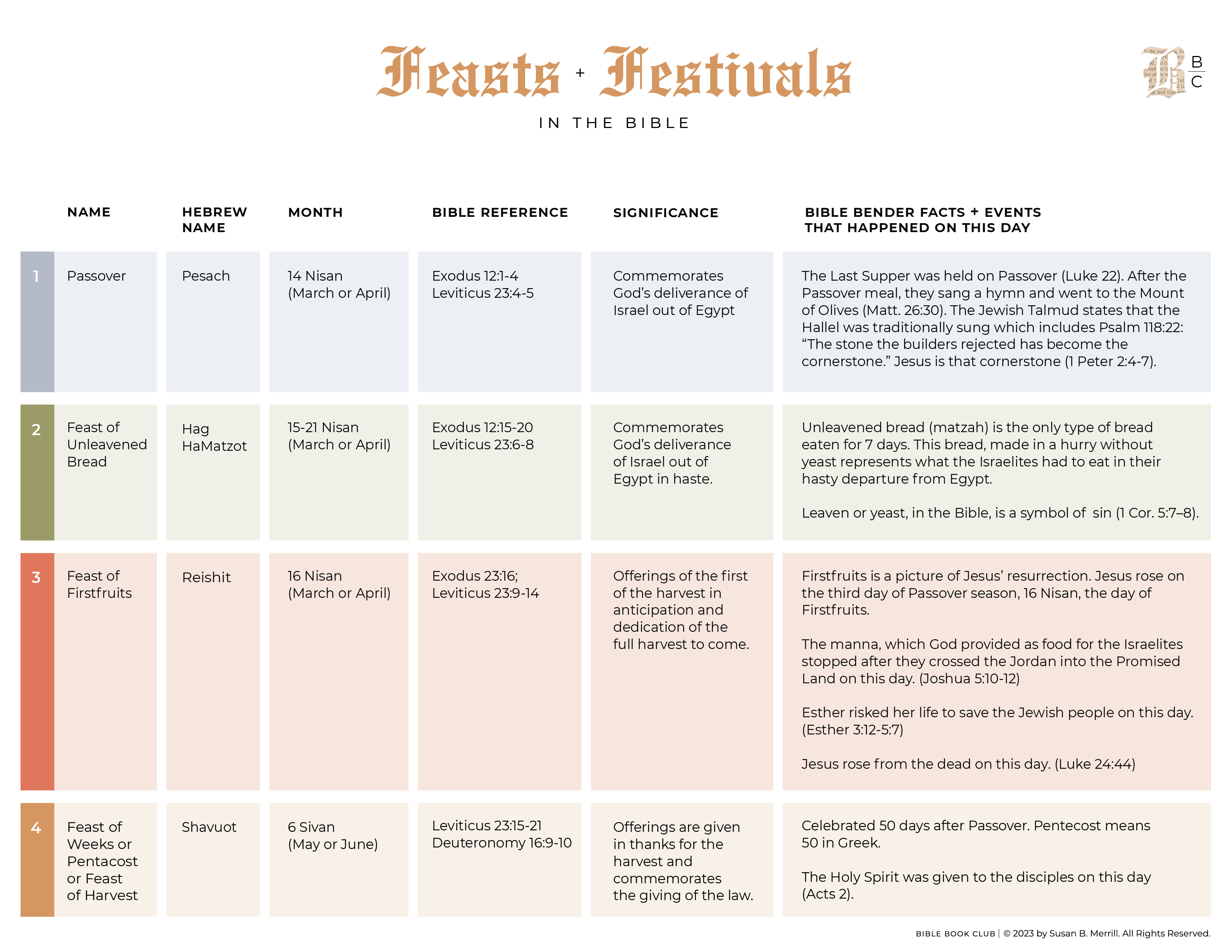
Passover is how the returned exiles celebrate the completion of the Temple! Passover is mentioned more than any other religious celebration in the Bible: 49 times in the Old Testament and 28 times in the New Testament. Jesus’s last supper was the Passover meal.
Why do believers not celebrate the Passover?
It seems to me that we are missing the celebration of our redemption day. That night before the crucifixion, when God prepared our sacrificial Lamb. The night when Jesus took on the weight of the world and said, “Not my will, but yours, Lord.”
Was God not reminding us of this at the Passover Last Supper? “Hey, I have always been here, and I am going to redeem you once and for all. I remember you. Will you remember me?” We celebrate the good news on Easter, but we don’t have a ceremony that helps us remember all that the sacrifice that saved us entailed.
Between 1 Chronicles 1 and Ezra 6, we have discussed 71 chapters written by the prolific Ezra. He has painstakingly documented Israel’s history. Now, finally, in our Ezra 7-8 Bible study, we will meet the man himself. Ezra is going to arrive on the pages of his beloved story.
Group Discussion Questions for Ezra 5-6
- God uses Tattenai (a foreign governor) and King Darius (a pagan king) to carry out His plans. When has God blessed you through an unexpected person in your life?
- Haggai calls out the people for prioritizing their own homes over God's house. In your own life, what’s one earthly priority that might pull your focus away from seeking God first?
- God uses annoying administrative red tape to unlock royal funding for the Temple. Can you think of a past roadblock in your life that God has turned into a blessing for you?
Show Notes
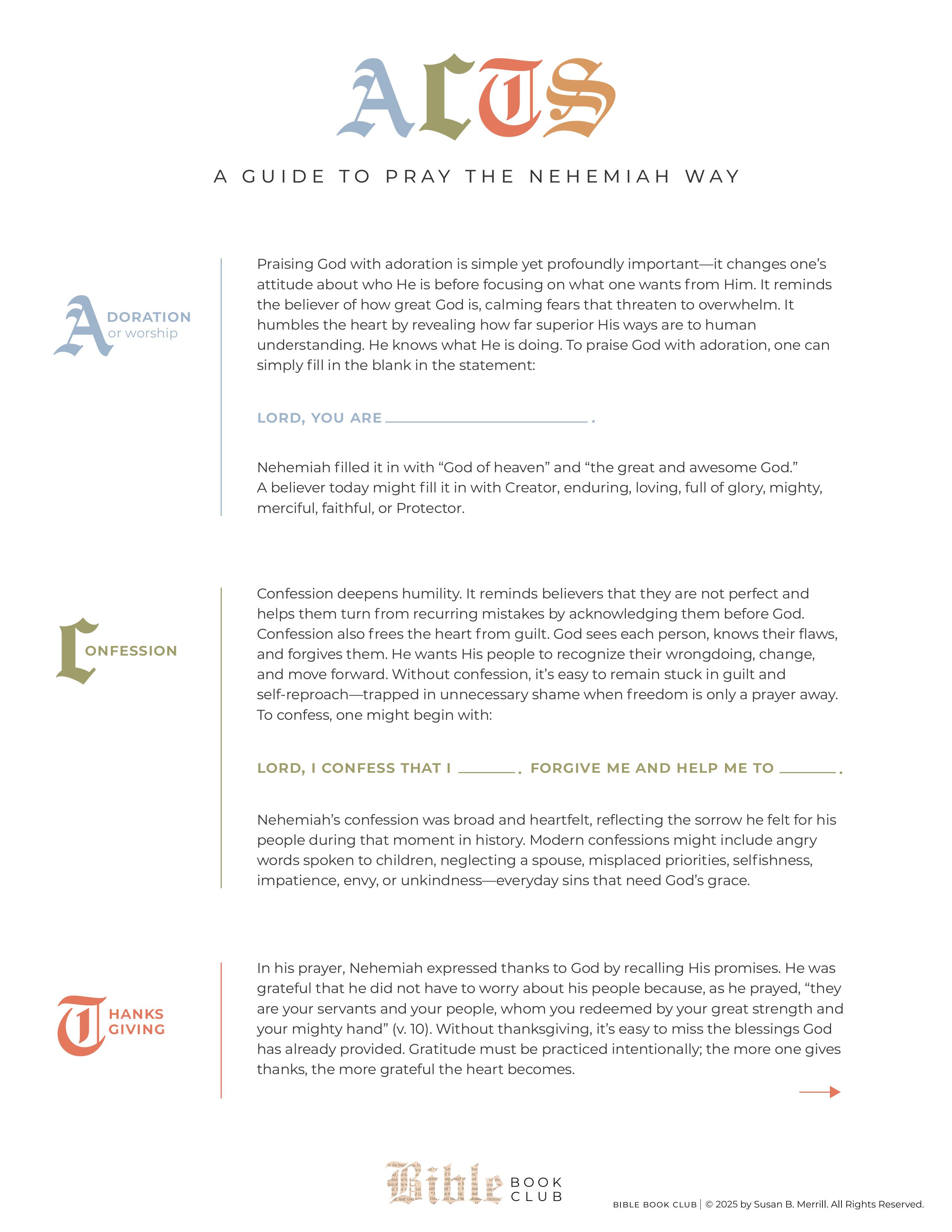
- ACTS Prayer Guide
- The Old Testament Books
- Prophet Timeline
- Bible Prophets Timeline
- Feasts and Festivals
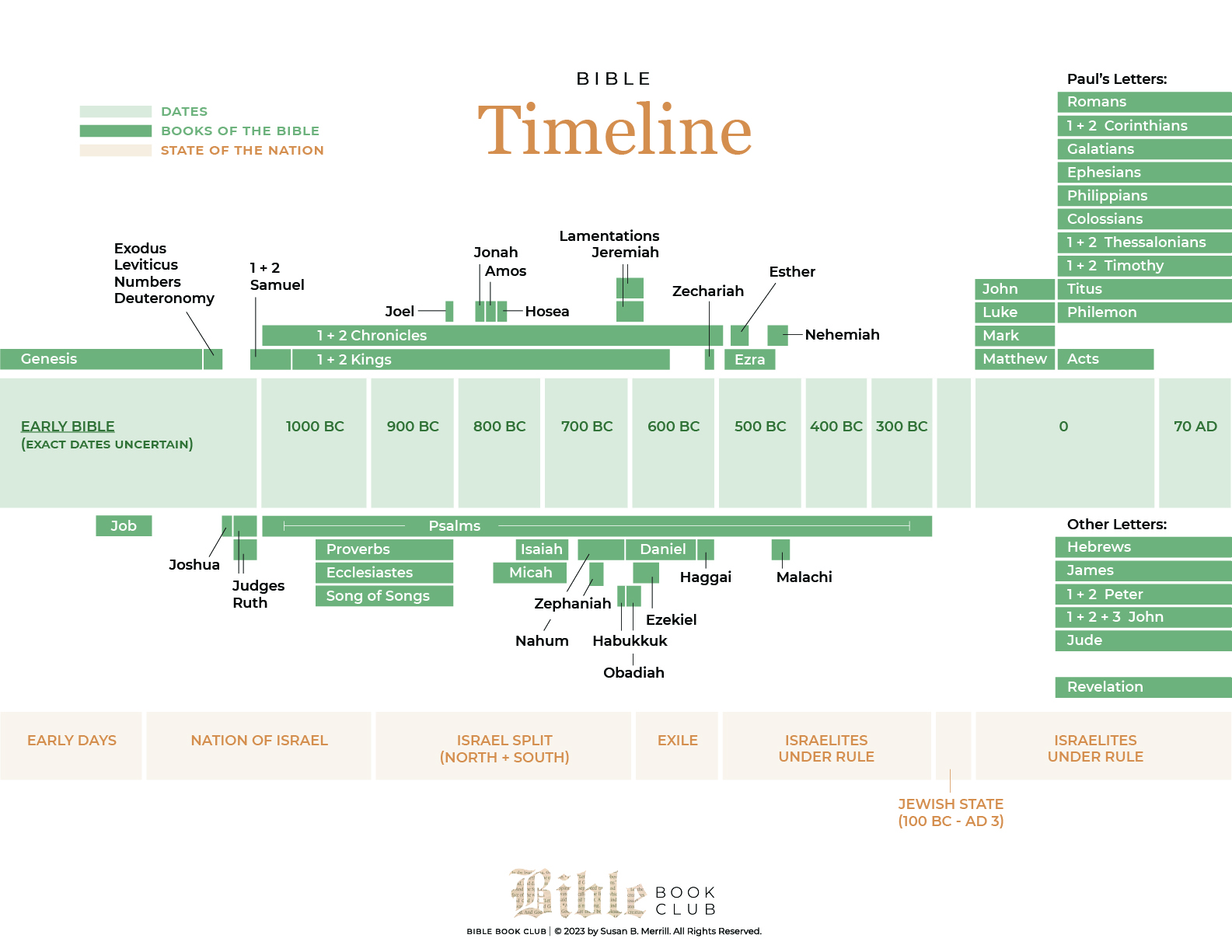
- Bible Timeline
- Types of offerings: Leviticus Offerings Chart
- Video tour of the Temple Mount and the Dome of the Rock exterior on Mount Moriah
- Feasts and Festivals in the Bible
- Video of the inside of the Dome of the Rock