Ezra 7-8 Introduction
There are several intriguing patterns in the books of Ezra and Nehemiah that we will explore in today’s Ezra 7-8 commentary.
What three patterns appear in the returns to Judah?
Each of the three returns to Judah involved some kind of building:
- Building the Temple: In Ezra 1-6, we discussed that the first wave of exiles was led by Zerubbabel, who focused on building the Temple so they could worship.
- Building the Faith: In these next four chapters, we will discuss the second wave led by Ezra, who will focus on building the faith of the people. They must be faithful to God and follow His commands, or exile will once again be their fate.
- Building the Wall: The last wave of exiles will be covered in the Book of Nehemiah. Nehemiah will focus on building the wall to protect them from enemies.
What three patterns appear in all the rebuilds?
- Each return begins with a decree from one of the kings of Persia.
- Each leader will face opposition of some kind and will be victorious in overcoming the opposition.
- Each victory will fall short of providing the king, the kingdom, and the community that God has planned for us from the beginning in Genesis.
So when we arrive at the end of each of these returns to Jerusalem, the victory falls a little flat. In Ezra 5-6, the exiles in the first wave completed the foundation of the Temple, and some cried. Then they completed the rest of the Temple, but one thing was tragically missing.
What is missing from the Second Temple compared to the first?
The Cloud is missing; there is no mention of the Cloud filling the Second Temple as it had before. The Cloud, or glory of the Lord, represented God’s presence with His people. The absence of the cloud suggests the Second Temple is lacking.
For Moses, the Cloud filled the Tabernacle at its completion.
Exodus 40:34 34 Then the cloud covered the tent of meeting, and the glory of the Lord filled the tabernacle.
And for Solomon, the Cloud filled the Temple at its completion.
1 Kings 8:10 10 When the priests withdrew from the Holy Place, the cloud filled the temple of the Lord.
Ezekiel’s Prophecy
Ezekiel, another prophet we will get to who lived some 100 years before Ezra, saw in a vision of God "the man clothed in linen," possibly Jesus, and the cherubim departing from the Temple.
Ezekiel 10:1-5 1 I looked, and I saw the likeness of a throne of lapis lazuli above the vault that was over the heads of the cherubim. 2 The Lord said to the man clothed in linen, “Go in among the wheels beneath the cherubim. Fill your hands with burning coals from among the cherubim and scatter them over the city.” And as I watched, he went in.
3 Now the cherubim were standing on the south side of the temple when the man went in, and a cloud filled the inner court. 4 Then the glory of the Lord rose from above the cherubim and moved to the threshold of the temple. The cloud filled the temple, and the court was full of the radiance of the glory of the Lord. 5 The sound of the wings of the cherubim could be heard as far away as the outer court, like the voice of God Almighty when he speaks.
We will skip the next four paragraphs where Ezekiel describes the Cherubim and their movement.
Ezekiel 10:18-19 18 Then the glory of the Lord departed from over the threshold of the temple and stopped above the cherubim. 19 While I watched, the cherubim spread their wings and rose from the ground, and as they went, the wheels went with them. They stopped at the entrance of the east gate of the Lord’s house, and the glory of the God of Israel was above them.
Ezekiel saw a linen-clad man sprinkle coals over Jerusalem, indicating judgment. Then the cloud filled the Temple, and the glory of the Lord moved from the Holy of Holies to the door of the Temple, and He left. The vision represented the end of an era. God's presence, which had dwelt in the Temple since Solomon built it, was gone because of Israel's unfaithfulness and idolatry. In the Book of Ezra, the Cloud, the glory of the Lord, does not fill the Second Temple.
What hope did the Israelites return to?
The hope the exiles have returned to is the hope of the promises.
- The Davidic covenant: the promise of a great king, the Messiah.
- The Mosaic covenant: the promise that God will dwell among them.
However, these promises are contingent upon the people's faith and obedience. The fact that God does not inhabit the Temple leads us to ask: Are the people still in a kind of spiritual exile? Can Ezra fix this problem? I don’t think I would want this job.
What is the primary focus of Ezra's return to Jerusalem?
Ezra’s primary focus is leading the people to God. It is a challenging and impossible task. In fact, after studying the past great leaders who struggled in the same position, like Moses, Aaron, Elijah, and Elisha, being CPO, or chief priest officer, of a nation that consistently fails in its sole objective of faithfulness to God would require a man of fearless faith.
Ezra is such a man because he is qualified and called.
A Note to Us
If you are called, you are hired. Whether you are qualified or successful is not the point. The only point is that God will use you in His greater plan. It may look like a mess, a failure, and a disaster, but on the other side of eternity, we know God is weaving all things together for good.
Ezra is called, and Ezra is obedient to God. But sometimes obedience to God doesn’t always feel like a victory. Sometimes it is painful.
Scene 1: Ezra Arrives with a Resume
Ezra 7:1-10
1 After these things, during the reign of Artaxerxes king of Persia, Ezra son of Seraiah, the son of Azariah, the son of Hilkiah, 2 the son of Shallum, the son of Zadok, the son of Ahitub, 3 the son of Amariah, the son of Azariah, the son of Meraioth, 4 the son of Zerahiah, the son of Uzzi, the son of Bukki, 5 the son of Abishua, the son of Phinehas, the son of Eleazar, the son of Aaron the chief priest— 6 this Ezra came up from Babylon. He was a teacher well versed in the Law of Moses, which the Lord, the God of Israel, had given. The king had granted him everything he asked, for the hand of the Lord his God was on him. 7 Some of the Israelites, including priests, Levites, musicians, gatekeepers and temple servants, also came up to Jerusalem in the seventh year of King Artaxerxes.
8 Ezra arrived in Jerusalem in the fifth month of the seventh year of the king. 9 He had begun his journey from Babylon on the first day of the first month, and he arrived in Jerusalem on the first day of the fifth month, for the gracious hand of his God was on him. 10 For Ezra had devoted himself to the study and observance of the Law of the Lord, and to teaching its decrees and laws in Israel.
When does Ezra arrive in Jerusalem?
Ezra arrives in Jerusalem in 458 BC, about 80 years after the first return led by Zerubbabel. There has been a change in Persian kings. In Ezra 5-6, King Darius decreed to Tattenai that the Jews were to be supported. However, in Ezra 7-8 commentary today, the current king is Artaxerxes, which means we have chronologically passed the Book of Esther, for she married Artaxerxes' father, King Xerxes, about 479 BC. Artaxerxes is not Esther's son. Xerxes' principal wife was Amestris, and she was the mother of Artaxerxes.
Amestris was known for cruelty, but Esther was known for being kind and for saving the Jews. Perhaps Artaxerxes was influenced by Esther, not his mother, because Artaxerxes has a soft spot for Ezra and his people. One he most likely did not get from his mother.
In these verses, Ezra gives deference to the king by announcing him first before launching into his own impressive lineage. This is a much-abbreviated lineage list, but Ezra hits the most prestigious priests in the lineage.
Who is Ezra, and what is his family lineage?
Ezra’s family lineage links straight back to Aaron himself. Hilkiah was a priest during the reign of King Josiah, and Zadok was a prominent priest during the reign of David. In our last book, Joshua was the 24 th high priest, if you include Aaron as the first. Ezra is a descendant of the twenty-second high priest, Seraiah, and clearly he is very proud of it.
Ezra is not the high priest, but he is not just any priest. Ezra is a priest of distinction. He writes a lot of impressive facts about himself, and if we didn't know him, we might think he is arrogant. However, recall that Ezra loves to include supporting documentation in his books. Point in case there are 65 chapters in Chronicles. So Ezra is simply doing what he does best: building a case.
- He is a priest born into the priesthood.
- He is a teacher well-versed in the Law of Moses.
- The king gave him everything he asked for.
- The hand of the Lord is on him.
- He has devoted himself to the study and observance of the Law.
Ezra 7:10 Meaning
In Ezra 7:10, the translation "he devoted himself" could be stronger. A more meaningful translation for the phrase would be "had set his heart." It implies that Ezra had a deliberate positioning of his heart. Like David, a man after God's heart, Ezra loves God. The point is, Ezra lives what Ezra loves. He seeks God's Law and practices God's principles. Now God will use him to lead others in God's plan.
The sequence matters. If we want to live what we love, we must know God's word and practice God's principles. Then and only then will God use us to lead others in God's plan. The Law of Moses is to the exiles what the Bible is to us. We must know it to know and love God!
Another Example for Us
There is another parallel to point out as an example to us. Ezra is greatly used by God because he finds favor. It mentions:
- Ezra is well-versed in the Law of Moses.
- He has found favor with the king.
- The hand of God is upon him.
The progression reminds me of another great teacher. One who developed in a similar manner.
Luke 2:52 52 And Jesus grew in wisdom and stature, and in favor with God and man.
Wisdom, or to know God, is to know the Word. Ezra knows God because he has devoted himself to the study of and observance of the Law of the Lord. If growing in wisdom worked well for Ezra and Jesus, surely it is a good model for us to follow; hence the purpose of the Bible Book Club. We are growing in wisdom on this journey through the Bible. It is not an easy study, but my prayer is that we find favor with God and man along the way.
Back to our story, Ezra has been diligently preparing. He is the leader Israel needs for such a time as this, and God is already going before him to pave the way, because Ezra has found favor in Persia, the greatest empire of its time.
Scene 2: Ezra Receives a Reference from the King
This isn’t just any reference. Artaxerxes hands Ezra the keys to the kingdom of Judah in the form of a letter. Ezra presents this to all those in power in the provinces around Jerusalem.
Ezra 7:11-26
11 This is a copy of the letter King Artaxerxes had given to Ezra the priest, a teacher of the Law, a man learned in matters concerning the commands and decrees of the Lord for Israel:
To Ezra the priest, teacher of the Law of the God of heaven:
13 Now I decree that any of the Israelites in my kingdom, including priests and Levites, who volunteer to go to Jerusalem with you, may go. 14 You are sent by the king and his seven advisers to inquire about Judah and Jerusalem with regard to the Law of your God, which is in your hand. 15 Moreover, you are to take with you the silver and gold that the king and his advisers have freely given to the God of Israel, whose dwelling is in Jerusalem, 16 together with all the silver and gold you may obtain from the province of Babylon, as well as the freewill offerings of the people and priests for the temple of their God in Jerusalem. 17 With this money be sure to buy bulls, rams and male lambs, together with their grain offerings and drink offerings, and sacrifice them on the altar of the temple of your God in Jerusalem.
18 You and your fellow Israelites may then do whatever seems best with the rest of the silver and gold, in accordance with the will of your God. 19 Deliver to the God of Jerusalem all the articles entrusted to you for worship in the temple of your God. 20 And anything else needed for the temple of your God that you are responsible to supply, you may provide from the royal treasury.
21 Now I, King Artaxerxes, decree that all the treasurers of Trans-Euphrates are to provide with diligence whatever Ezra the priest, the teacher of the Law of the God of heaven, may ask of you— 22 up to a hundred talents of silver, a hundred cors of wheat, a hundred baths of wine, a hundred baths of olive oil, and salt without limit. 23 Whatever the God of heaven has prescribed, let it be done with diligence for the temple of the God of heaven. Why should his wrath fall on the realm of the king and of his sons? 24 You are also to know that you have no authority to impose taxes, tribute or duty on any of the priests, Levites, musicians, gatekeepers, temple servants or other workers at this house of God.
25 And you, Ezra, in accordance with the wisdom of your God, which you possess, appoint magistrates and judges to administer justice to all the people of Trans-Euphrates—all who know the laws of your God. And you are to teach any who do not know them. 26 Whoever does not obey the law of your God and the law of the king must surely be punished by death, banishment, confiscation of property, or imprisonment.
Ezra’s Credentials
“To Ezra the priest, teacher of the Law of the God of heaven.” Even the king of Persia praises the credentials of this priest, teacher, and learned man. How did a captive rise to such trust and admiration with the king of the greatest empire? Faithful obedience on Ezra's part, and of course God, who directs the hearts of kings.
What supplies does Artaxerxes decree for the Temple?
First, the king speaks to those in Persia and decrees that any Israelite may volunteer to go, and they are to go with gifts to the God of Israel.
- The king gives silver and gold.
- The province of Babylon is to give silver and gold.
- The people are to make a free-will offering for the Temple.
Then the king addresses all the treasurers of the Trans-Euphrates, which is the land beyond the Euphrates River. These are provinces that Persia has acquired. The King decrees that the provinces supply Ezra with whatever he needs. The king also takes away any right the provinces think they had to tax Israel, because he does not want to incur the wrath of Ezra’s God. Ezra must be a very convincing teacher. Again, I have to wonder if Esther’s story and faith also played a role. I just wish we knew how much access, if any, Esther had to her husband’s son, King Artaxerxes.
What authority does King Artaxerxes give to Ezra?
King Artaxerxes grants Ezra unprecedented authority to rule over all the people, not only in Jerusalem but also over those who follow the laws of God. This includes civil, financial, and religious control. This authority is a gift, a miracle, really.
Civil Control
- Authority over "all who know the laws of your God."
- Power to appoint magistrates and judges.
- Authority to teach the Law to those who don't know it.
- Power to impose punishments, including death, banishment, confiscation, and imprisonment.
Financial Control
- Unlimited access to the royal treasury "up to 100 talents of silver"
- Authority to take whatever else is needed for God's Temple
- Tax exemption for all Temple personnel
Religious Control
- Complete freedom to establish worship according to Jewish Law
- Authority to enforce religious compliance
- Power to purify and organize the community
Scene 3: Ezra Praises the God Who Made the Return Possible
Ezra 7:27-28
27 Praise be to the Lord, the God of our ancestors, who has put it into the king’s heart to bring honor to the house of the Lord in Jerusalem in this way 28 and who has extended his good favor to me before the king and his advisers and all the king’s powerful officials. Because the hand of the Lord my God was on me, I took courage and gathered leaders from Israel to go up with me.
Why does Ezra list his qualifications in such detail?
Ezra uses a lot of white space at the beginning of this chapter detailing his qualifications to build a case for what he humbly states clearly here. The credit for his success is not what he has done. It is what God has done through him. The God who has always been theirs moves the heart of the king to bring honor to Jerusalem and favor to Ezra. Because of all that God has done, Ezra takes courage and acts.
Ezra 7-8 Meaning
That is the wonder of our relationship with God. He equips those who faithfully study and lovingly obey his Word to make a lasting impact on the world. But when He does, we must take notice and praise him as did Ezra, so the world may know.
Scene 4: Ezra Leads a List of Exiles Home
Ezra 8:1-14
List of the Family Heads Returning With Ezra
1 These are the family heads and those registered with them who came up with me from Babylon during the reign of King Artaxerxes: 2 of the descendants of Phinehas, Gershom; of the descendants of Ithamar, Daniel; of the descendants of David, Hattush 3 of the descendants of Shekaniah; of the descendants of Parosh, Zechariah, and with him were registered 150 men; 4 of the descendants of Pahath-Moab, Eliehoenai son of Zerahiah, and with him 200 men; 5 of the descendants of Zattu, Shekaniah son of Jahaziel, and with him 300 men; 6 of the descendants of Adin, Ebed son of Jonathan, and with him 50 men; 7 of the descendants of Elam, Jeshaiah son of Athaliah, and with him 70 men; 8 of the descendants of Shephatiah, Zebadiah son of Michael, and with him 80 men; 9 of the descendants of Joab, Obadiah son of Jehiel, and with him 218 men; 10 of the descendants of Bani, Shelomith son of Josiphiah, and with him 160 men; 11 of the descendants of Bebai, Zechariah son of Bebai, and with him 28 men; 12 of the descendants of Azgad, Johanan son of Hakkatan, and with him 110 men; 13 of the descendants of Adonikam, the last ones, whose names were Eliphelet, Jeuel and Shemaiah, and with them 60 men; 14 of the descendants of Bigvai, Uthai and Zakkur, and with them 70 men.
How many people return to Jerusalem in the second wave?
The list contains about 1,500 Jews from 15 different families who return to Jerusalem in the second wave. It is a smaller group than the 42,360 who returned with Zerubbabel. However, this group has a high calling. They must restore worship and lead the people back to faith in God.
Scene 5: Ezra Can't Leave Without Levites
Ezra 8:15-20
15 I assembled them at the canal that flows toward Ahava, and we camped there three days. When I checked among the people and the priests, I found no Levites there. 16 So I summoned Eliezer, Ariel, Shemaiah, Elnathan, Jarib, Elnathan, Nathan, Zechariah and Meshullam, who were leaders, and Joiarib and Elnathan, who were men of learning, 17 and I ordered them to go to Iddo, the leader in Kasiphia. I told them what to say to Iddo and his fellow Levites, the temple servants in Kasiphia, so that they might bring attendants to us for the house of our God. 18 Because the gracious hand of our God was on us, they brought us Sherebiah, a capable man, from the descendants of Mahli son of Levi, the son of Israel, and Sherebiah’s sons and brothers, 18 in all; 19 and Hashabiah, together with Jeshaiah from the descendants of Merari, and his brothers and nephews, 20 in all. 20 They also brought 220 of the temple servants—a body that David and the officials had established to assist the Levites. All were registered by name.
The Levites Are Crucial in Leading the People in Worship
On every trip, there is always a good chance you will forget something. Sometimes you can live without it, and sometimes you can't. Ezra cannot live without the Levites. They are crucial to the mission of leading the people in worship because they are crucial to God's instructions for caring for the Temple. Ezra executes orders, and with God's hand upon him, 38 Levites and 220 Temple servants are assembled and ready to go.
Scene 6: Ezra Prepares with Prayer
Ezra 8:21-30
21 There, by the Ahava Canal, I proclaimed a fast, so that we might humble ourselves before our God and ask him for a safe journey for us and our children, with all our possessions. 22 I was ashamed to ask the king for soldiers and horsemen to protect us from enemies on the road, because we had told the king, “The gracious hand of our God is on everyone who looks to him, but his great anger is against all who forsake him.” 23 So we fasted and petitioned our God about this, and he answered our prayer.
24 Then I set apart twelve of the leading priests, namely, Sherebiah, Hashabiah and ten of their brothers, 25 and I weighed out to them the offering of silver and gold and the articles that the king, his advisers, his officials and all Israel present there had donated for the house of our God. 26 I weighed out to them 650 talents of silver, silver articles weighing 100 talents, 100 talents of gold, 27 20 bowls of gold valued at 1,000 darics, and two fine articles of polished bronze, as precious as gold.
28 I said to them, “You as well as these articles are consecrated to the Lord. The silver and gold are a freewill offering to the Lord, the God of your ancestors. 29 Guard them carefully until you weigh them out in the chambers of the house of the Lord in Jerusalem before the leading priests and the Levites and the family heads of Israel.” 30 Then the priests and Levites received the silver and gold and sacred articles that had been weighed out to be taken to the house of our God in Jerusalem.
Ezra Prays for Protection
This small confession is so human. Ezra does not feel comfortable asking the king for a security detail for the trip because he has boasted to the king that God’s hand is upon them. To put his trust where his mouth is, he prays God will indeed protect them. Then Ezra carefully divides the treasure between 12 trusted priests.
Scene 7: Ezra and the Second Wave of Exiles Return
Ezra 8:31-36
31 On the twelfth day of the first month we set out from the Ahava Canal to go to Jerusalem. The hand of our God was on us, and he protected us from enemies and bandits along the way. 32 So we arrived in Jerusalem, where we rested three days.
33 On the fourth day, in the house of our God, we weighed out the silver and gold and the sacred articles into the hands of Meremoth son of Uriah, the priest. Eleazar son of Phinehas was with him, and so were the Levites Jozabad son of Jeshua and Noadiah son of Binnui. 34 Everything was accounted for by number and weight, and the entire weight was recorded at that time.
35 Then the exiles who had returned from captivity sacrificed burnt offerings to the God of Israel: twelve bulls for all Israel, ninety-six rams, seventy-seven male lambs and, as a sin offering, twelve male goats. All this was a burnt offering to the Lord. 36 They also delivered the king’s orders to the royal satraps and to the governors of Trans-Euphrates, who then gave assistance to the people and to the house of God.
How long does the journey from Babylon to Jerusalem take Ezra?
Ezra does not spend much ink on the journey or on their arrival. A journey that we discussed in Ezra 1-2 would have been incredibly difficult. He skips all of that. Ezra has finally arrived, and he is all about the business: treasures delivered, sacrifices offered, royal orders distributed. Check, check, done.
But what happens when you think you have arrived, only to discover the real work is just beginning? In our Ezra 9-10 Bible study, the calm, orderly Ezra will lose it. Read on to find out why Ezra is tearing his clothes and pulling out his hair.
Group Discussion Questions for Ezra 7-8
- Ezra "set his heart" on studying, practicing, and teaching God’s Word. The sequence matters: know it, practice it, teach it. Where are you in this sequence, and what might the next step look like for you?
- When Ezra realizes the Levites are missing, he pauses the entire trip because they are essential for leading worship. Looking at your current season of life, what is one spiritual "essential" (like rest, community, prayer, or worship) you need to make sure you don't leave behind?
- Ezra felt embarrassed to ask the King of Persia for a military escort because he had already boasted about God’s protection. Can you relate to that human moment of wanting to rely on earthly "security blankets" instead of stepping out in faith? How do you discern when to ask for human help versus when to simply trust God to pave the way?
Show Notes
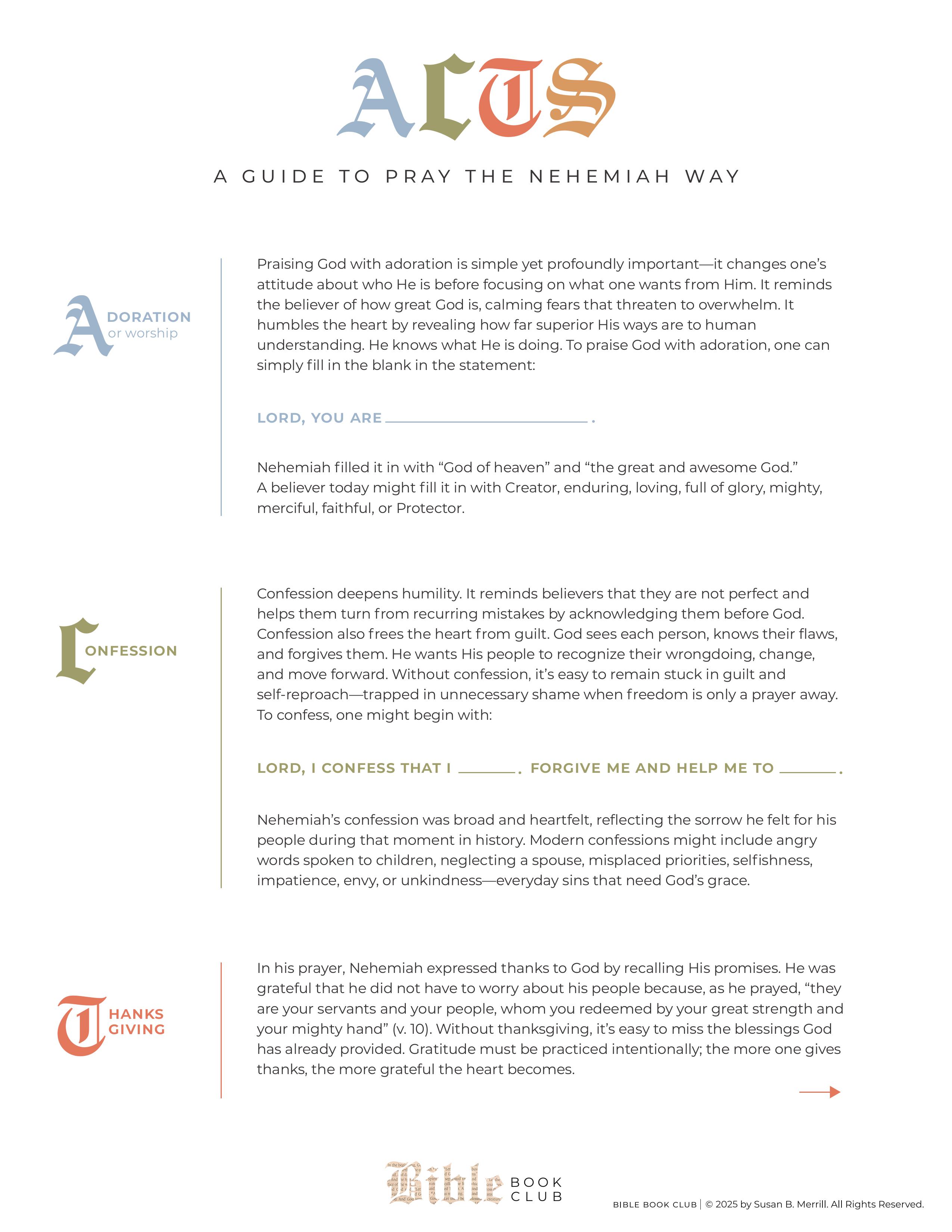
- ACTS Prayer Guide
- The Old Testament Books
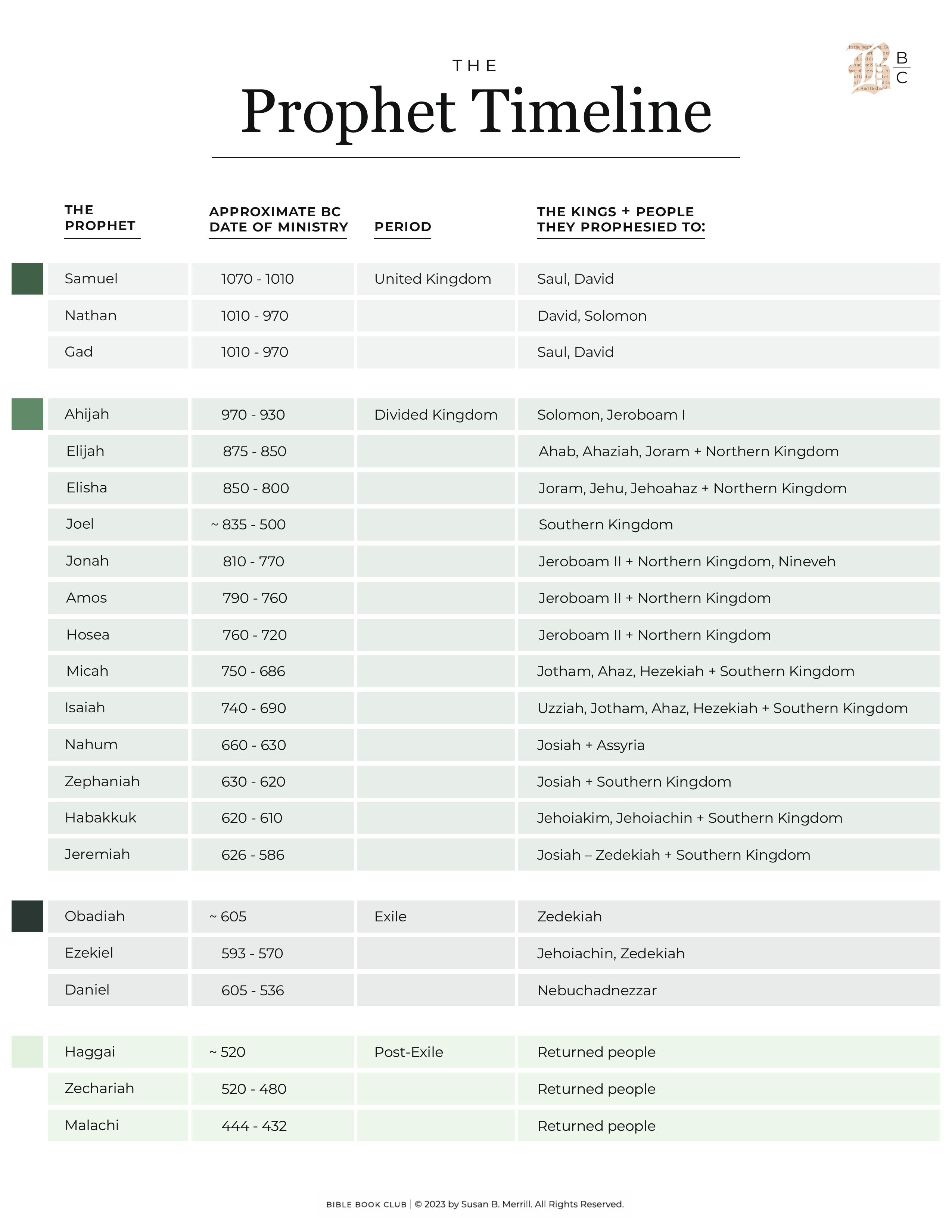
- Prophet Timeline
- Bible Prophets Timeline
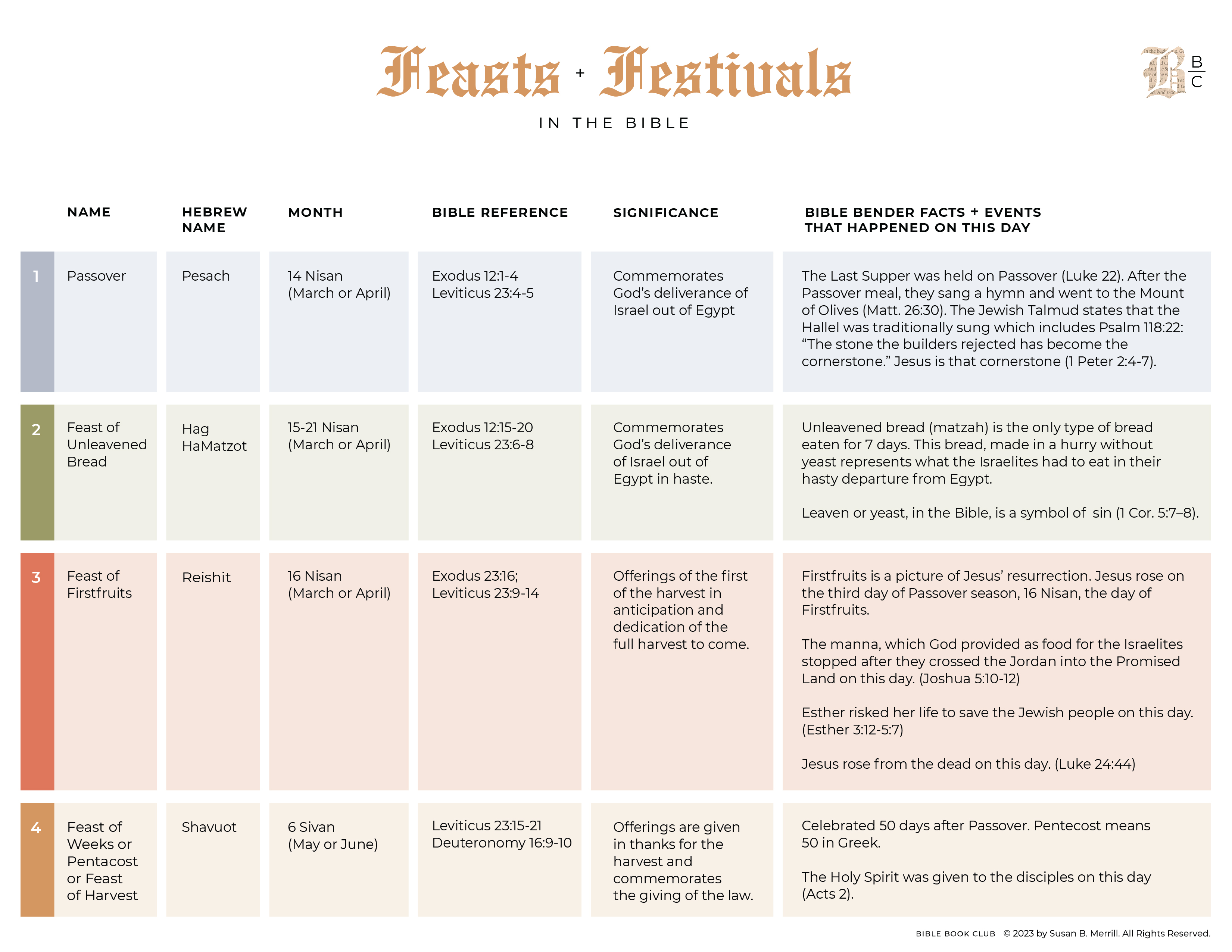
- Feasts and Festivals
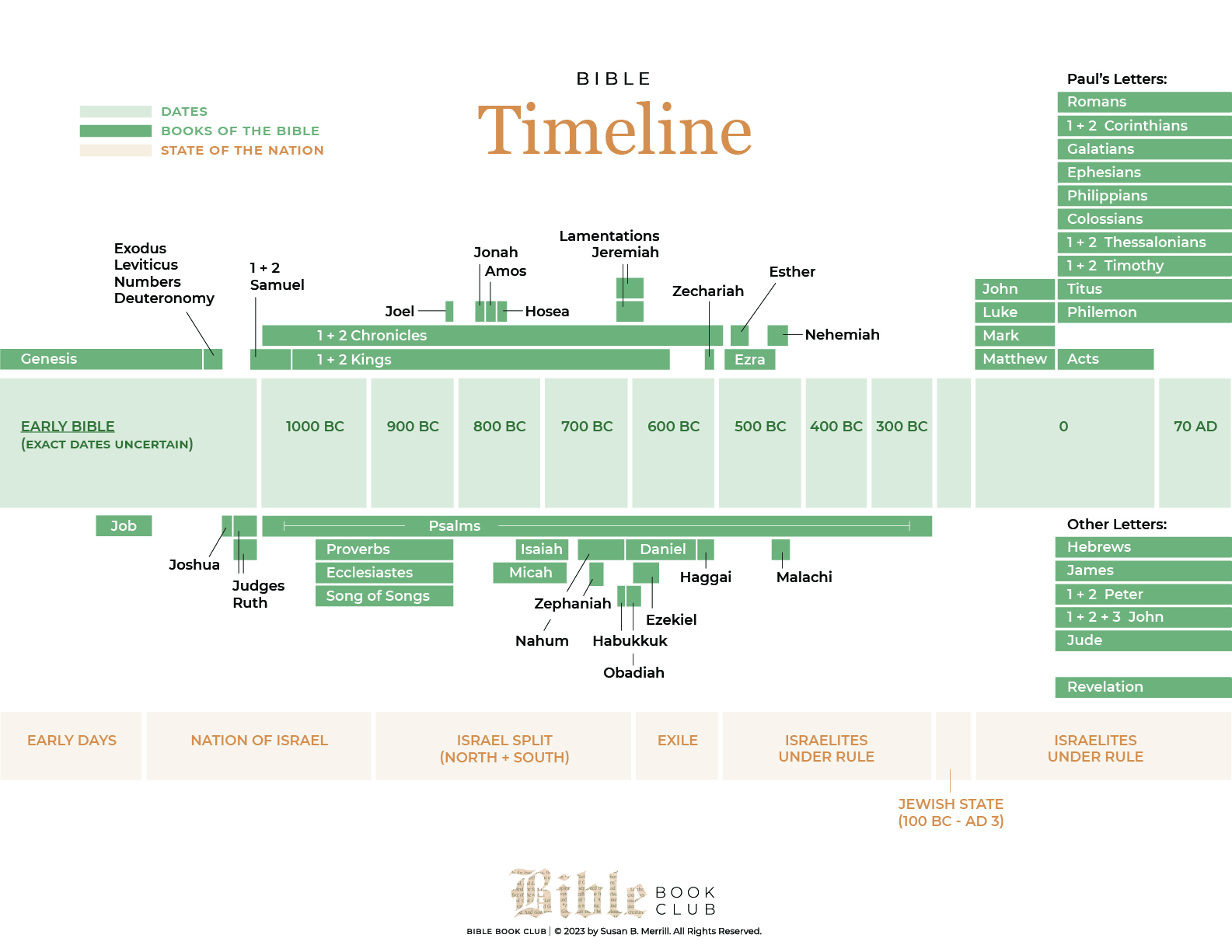
- Bible Timeline
- Types of offerings: Leviticus Offerings Chart
- Video tour of the Temple Mount and the Dome of the Rock exterior on Mount Moriah
- Feasts and Festivals in the Bible
- Video of the inside of the Dome of the Rock