

Subscribe to BBC on Apple, Spotify , or Amazon
Who wrote the Book of Ezra?
A man named Ezra actually wrote the book of Ezra in the Bible, and in it he captures the story of God stirring the hearts of His people to return to Jerusalem. That return takes place in three waves. In Ezra 3 we’re exploring the first return that Ezra documented but was not actually a part of himself.
In Ezra 3 There Are 3 Keys to Relationship with God
In order to have a relationship with God, the returning exiles will need three components.
- The promised seed of a king, the future Messiah, from the line of David.
- A high priest from the line of Aaron to perform the sacrifices.
- An altar for the forgiveness of sins.
Ezra 3 opens with Zerubbabel and Joshua who satisfy the Israelite’s first two needs. Zerubbabel is the grandson of Jehoiachin, the last king of Judah, so he and his descendants qualify for the position of king according to the Davidic Covenant. He is accompanied by the priest Joshua.
Who is Joshua in the Bible?
Joshua is the son of Jozadak, and 1 Chronicles 6 traces his ancestry in detail. This is important because the high priest must be a descendant of Aaron. Joshua meets the criteria and is the 24th high priest of Israel.
So with Zerubbabel and Joshua, the Israelites have the first two things they need for a relationship with God. However, sin can only be forgiven or atoned for through sacrifices on the altar, and sin is what stands between the Israelites and a relationship with God. So before they even build the Temple they rebuild the altar in Ezra verses 3:1-3.
Altars in the Bible
The practice of building altars in the Bible began with the Israelites’ forefather Noah in Genesis 8. His first act upon landing the Ark was to build an altar and offer sacrifices. Then in Genesis 12 when Abraham arrived in the land God told him would belong to his descendants he built an altar. Jacob did the same in Genesis 33. These altars were for worship and thanksgiving.
Moses wrote the Book of the Law, the purpose of sacrifice, and built the bronze altar for the Tabernacle. Solomon super-sized that altar for the Temple. Now, hundreds of years later, Zerubbabel and Joshua are laying the groundwork to renew Israel’s covenant with God.
How to Have a Relationship with God in Modern Times
In Hebrews 9:11-15 Paul beautifully explains why the old law of cleansing sin with blood has been replaced with a new covenant for us. In the Old Testament they needed a high priest, a king who was the descendent of David, and an altar. Jesus is both the king and high priest all-in-one, and He is the only sacrifice we need.
Our relationship with God doesn’t require three things the way it did in the Old Testament. Everything we need is contained within one Man, the significantly superior Jesus Christ. He is the Son of God and the only one who with a single act atoned for all sins.
Building of the Second Temple Begins in Ezra 3
In Ezra 3:4-6, before the Israelites begin the building of the second Temple, they held religious ceremonies. Their ability to remember all the commandments laid out by Moses for these, even to the point of starting on the all-important number seven, is impressive. Especially for a people who are an entire generation removed from ever living in Jerusalem!
For more background on these ceremonies, listen to the books of Exodus, Season 2 and Deuteronomy, Season 5 of the Bible Book Club Podcast. You can also check out our chart of Feasts and Festivals and our chart on types of offerings for a better understanding.
Who built the second Temple?
In the Bible, there are two times the Temple is built. Solomon built the first temple. Now in Ezra 3:7-8 the Israelites are building the second Temple, which is a rebuilding of Solomon’s original Temple. When we read about the temple in the New Testament, it’s this second Temple which Herod renovated and expanded.
Timing the Build of the Second Temple
The timing of the rebuild is purposeful. Like the first Temple, building begins in the second month of the new year following Passover. The Passover is a reminder of God’s deliverance from the Israelites’ first captivity in Egypt. Now they are celebrating another deliverance, this time from Babylon. Their sin exiled them to Babylon, but God’s faithfulness brought them back.
When was the destruction of the second Temple?
In Matthew 24, Jesus prophesied that not one stone would be left of the Temple, and that’s exactly what happened. The second Temple was completely destroyed in 70 AD by the Romans. Today, the Temple Mount where it once stood is covered by the Dome of the Rock, which was built in AD 692.
We covered a lot about this important site in Season 14, Episode 1 of the Bible Book Club Podcast when we read 2 Chronicles 1-3. There are several great show notes on the Dome of the Rock in that episode including videos and images. We’ll include them here as well.
What does this mean for Christians?
The Temple was completely destroyed in 70 AD, which means there has not been a Jewish Temple for worship in nearly 2,000 years. What does that mean for Christians? Once again, it is the Apostle Paul who explains it for us in 1 Corinthians 3:10-17.
The need for a physical temple is replaced by Christ who is the foundation, and the church is the Temple. We are the church. Therefore, we are collectively and individually God’s Temple, and the Word of God is how we build the Temple, the church, and our faith.
Points to Ponder
What is the condition of your temple? Does it need a total rebuild? Is it feeling small? Perhaps you need to invest in expanding it. Or maybe your temple is radiating with a golden glow that glorifies the Lord.
The Bittersweet Completion of the Temple Foundation
The completion of the Temple foundation in Ezra 3:8-13 is huge, and the people celebrate with praise and thanks. But there are some mixed emotions. The older generation weeps because they remember the glory of Solomon’s Temple. This second Temple is built among the ruins of what could not compare. It is a bittersweet moment.
For the younger generation, finishing the foundation is pure joy. They are likely the ones who did most of the labor, and it was hard work. The massive blocks of stone they placed for the foundation were five by six feet, and they weighed about 5,000 pounds each. Also, while Solomon had many laborers, the exiles had few, and they likely lacked the skill of the prior builders. So this younger generation is glad to finish the job.
The Neighbors Oppose the Temple Rebuild
In Ezra 4, 5, and 6, there will be three rounds of opposition to the Temple rebuild. And, just to confuse us, they are not in chronological order. All of these attacks will be from outsiders. In Ezra chapters 7-10, the opposition will be from internal struggles.
Lessons on Opposition
There is, was, and always will be opposition in this world. But not in the next! The opposition will die in the end so hold out for that. But in the meantime, the books of Ezra, Nehemiah, and Esther are all lessons for us on opposition.
So far, in the books of the Bible we’ve covered, most of the opposition takes the form of dramatic military battles where God parts seas, drops walls, and blinds the enemy. In contrast, the opposition in these books is sneakier stuff like political backstabbing, bureaucratic roadblocks, and lots of social and economic pressure tactics.
Israel is no longer an independent nation that can rely on military might. They are a vulnerable minority group. To survive and rebuild, they must learn to be politically smart, stay faithful, and trust that God will deliver behind the scenes.
Round 1 of Opposition in Ezra 4
After the kingdom of Israel split, the Israelites in the Northern Kingdom stopped worshipping at the Temple. Years later, when many of them were exiled, foreigners moved in and occupied towns in Samaria only about 35 miles north of Jerusalem.
Some of the Israelites who escaped the exile intermarried with these foreigners creating a hybrid culture and religion that opposed God. We see this continue into the New Testament with the Israelite versus Samaritan rivalry. It’s highlighted in the story of the Good Samaritan in Luke 10 and the Woman at the Well in John 4.
So it’s not surprising the neighboring enemies oppose the idea of the Temple rebuild and all things related to God. Still, they offer to help in Ezra 4:1-2 insisting they’ve been sacrificing to God since the king of Assyria brought them there. In Ezra 4:3-5, Zerubbabel and Joshua give them the stiff arm because enemies never really help. They may offer, but they are hiding covert motives and more often than not they’re lying.
Zerubbabel and Joshua recognize their neighbor’s evil intent and refuse. The surrounding enemies of Judah are not happy, and they’re not giving up. They try everything from intimidating the exiles to bribing officials in an attempt to stop the rebuild. This opposition goes on for years and it’s devastating for the returned exiles. Discouragement sets in and with it delays. From the reign of King Cyrus to Darius the people falter.
Expect Opposition When You’re Serving God
The principle for us to remember here is that nothing that is attempted for God will go unchallenged by the enemy. Therefore, we must be aware of anything or anyone who might hinder our faith. Ezra 3 and 4 have a lot of life lessons for us about the opposition we face today.
First, it’s important to remember a delay in the world is not a denial from God. We must fight hard against discouragement, be still, and pursue patience as we give God time to reveal what He is doing behind the scenes.
Second, we must watch out for distractions. The opposition loves to lead us astray, so pray for clarity and the ability to notice when you are getting sidetracked.
Lessons on Enemies
Our first lesson on lying enemies was in Genesis 3. The serpent, more crafty than the other animals, appeared as though wanting to help Eve. But he led her down a path of lies, and Eve fell for it to the detriment of all.
Enemies don’t self-identify, so you have to study their profile and actions. The Samaritans were not believers. They lied. The serpent twisted Eve’s words. He lied.
When you identify an enemy who then offers to help you, know they have an ulterior motive and reject the offer. Then brace yourself because, when rejected, enemies may invite you to compromise.
Compromise is what sent the Israelites into captivity. They were led astray by the promises of false gods and compromised their faith. Don’t compromise. Clearly know your objective and stick to it. The serpent was really good at leading Eve off her objective and used questions like, “Did God really say you must not eat from any tree in the garden?”
When all else fails, enemies will resort to psychological warfare and may accuse you of past sins hoping self doubt will stop you. Therefore, you must remember you are forgiven and a new creature in Christ.
Questions to ponder:
What form of enemy are you most susceptible to? Is there anyone who is in opposition to the growth in your Temple of faith?
What are you attempting that the enemy is attempting to thwart? How good are you at handling opposition in a Christ-like way? What can you do to be better at it?
We are living in an increasingly anxious world. Christ brought peace and perspective into His approach to opposition. How can we Christians do the same, thereby building the church body and the human temple today?
A Slight Detour and a Nasty Letter from the Neighbors
In verses 4:6-16 Ezra takes a quick detour, fast forwarding many years to the time of Esther and Nehemiah. Xerxes is the king that Esther married, and Artaxerxes is the king in Nehemiah’s story.
During this time, the same pesky surrounding neighbors are attacking and Rehum writes a letter accusing the returned Jews of rebuilding the former “wicked” city of Jerusalem. His main proof of this is that the Judeans are rebuilding the walls that were built to defend the city and defense implies rebellion against taxation.
Rehum is very cunning and, after laying out the problem, he adds fuel to the fire by pointing out that Judah has done this before. He suggests the king should search for himself, because it’s all in the records.
The King’s Response
In Ezra 4:17-23 the king sends his reply stating the obvious, that Judah has had many powerful kings. Of course it has, David, Solomon, and others were once the powerhouses of the land. But Rehum’s letter effectively stops work on the rebuilding for 16 years until Nehemiah hears about the disrepair and sets the exact same king straight with the providential help of God. We’ll read more about that in upcoming chapters.
Back to the First Round of Opposition
In these last few verses, Ezra has been reminiscing about the opposition they’ve seen throughout his own life. But in verse 4:24 he brings us back to his original time period before Xerxes and Artaxerxes when the first round of opposition began.
This last verse gives us a little hint when things will get rolling with the temple rebuild again. In our next few chapters, we’ll get to see the Israelites persevere and faithfully complete the Temple despite even more opposition.
🎧 Ready to dive deeper? Listen to episodes of the Bible Book Club Podcast here.
Show Notes:
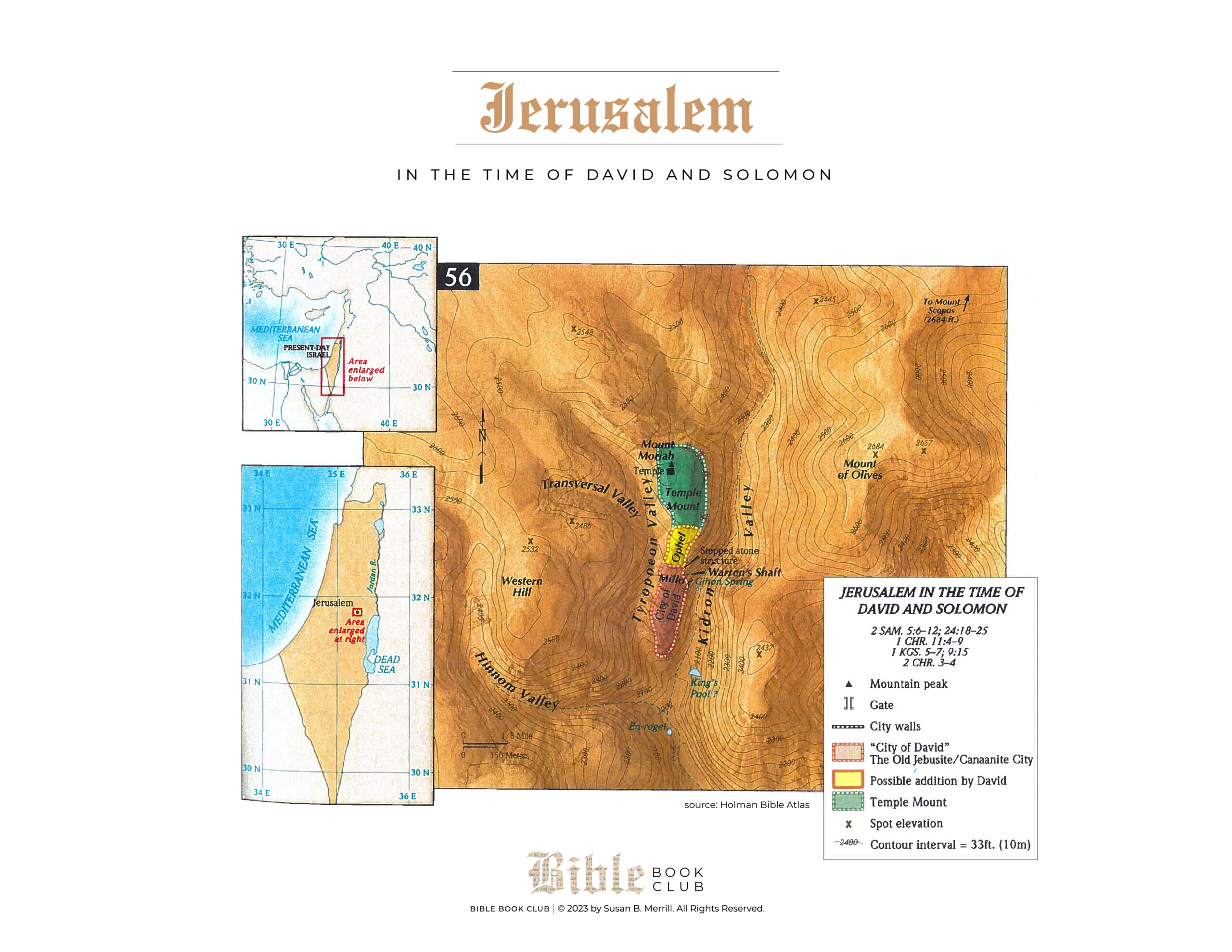
Map of Mount Moriah and the temple
Video tour of the Temple Mount and the dome of the Rock exterior on Mount Moriah
Video of the inside of the Dome of the Rock
Picture of the Rock inside the dome


Other Podcast Episodes Mentioned:
