What is the primary purpose of the Book of Chronicles?
Chronicles is the story of Israel's history written to remind the returned exiles of their spiritual heritage and God's faithfulness to His covenant promises.
The author, or Chronicler as we call him, wants this retelling to encourage them, even though their situation is difficult, and inspire them to be faithful. So he portrays the reigns of David and Solomon in the best possible light. Their stories of the past provide hope for the future.
Key Verse for the Book of 2 Chronicles
2 Chronicles 7:14 1 4 if my people, who are called by my name, will humble themselves and pray and seek my face and turn from their wicked ways, then I will hear from heaven, and I will forgive their sin and will heal their land.
2 Chronicles Introduction
If you were with us in 1 Chronicles, you will recall that 1 and 2 Chronicles were originally written as one book. So we are actually right in the middle of a story. One more helpful thing to remember is the role Chronicles plays in the greater story of the Bible:
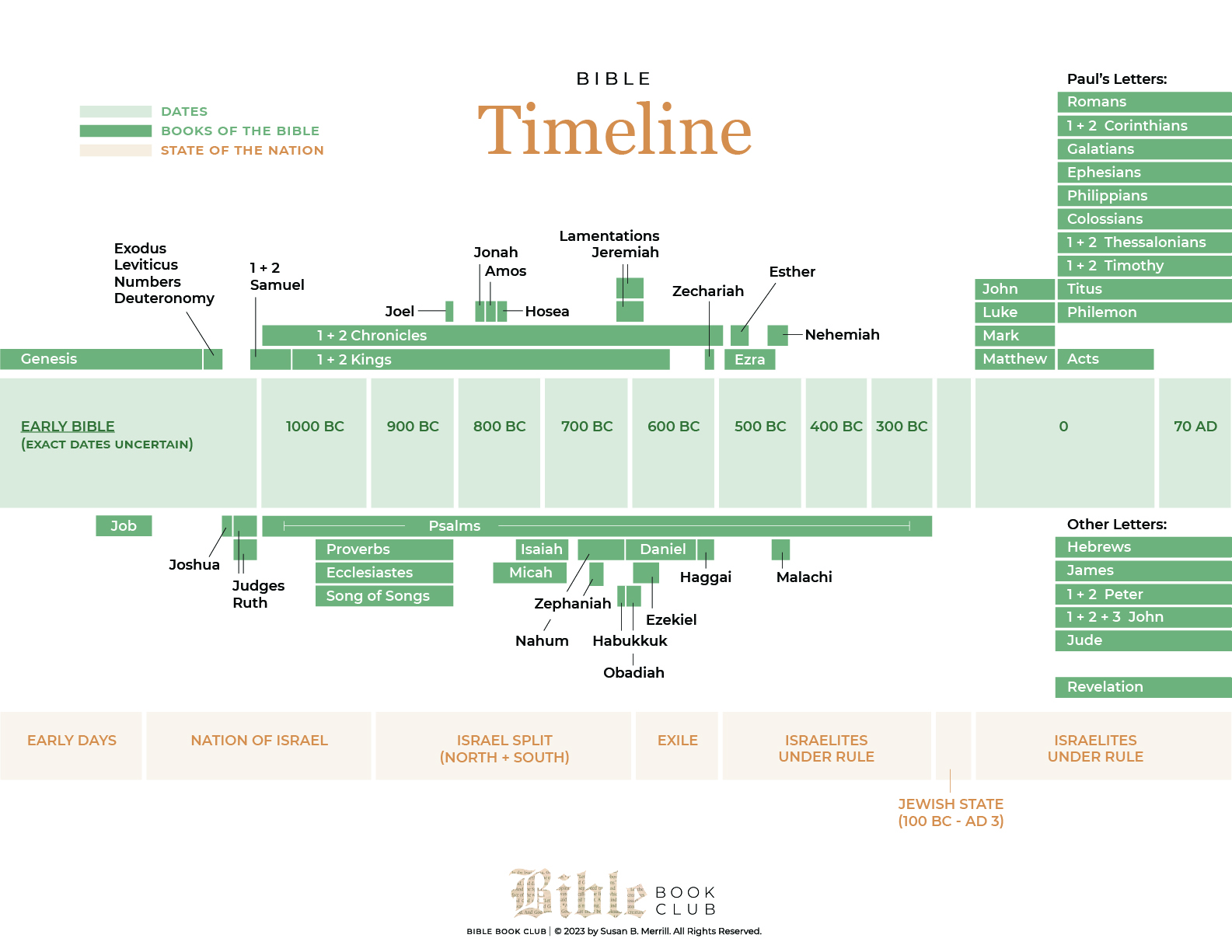
- Kings explains why the exile happened and was written during the exile.
- Chronicles encourages faith and hope and was written after the exile.
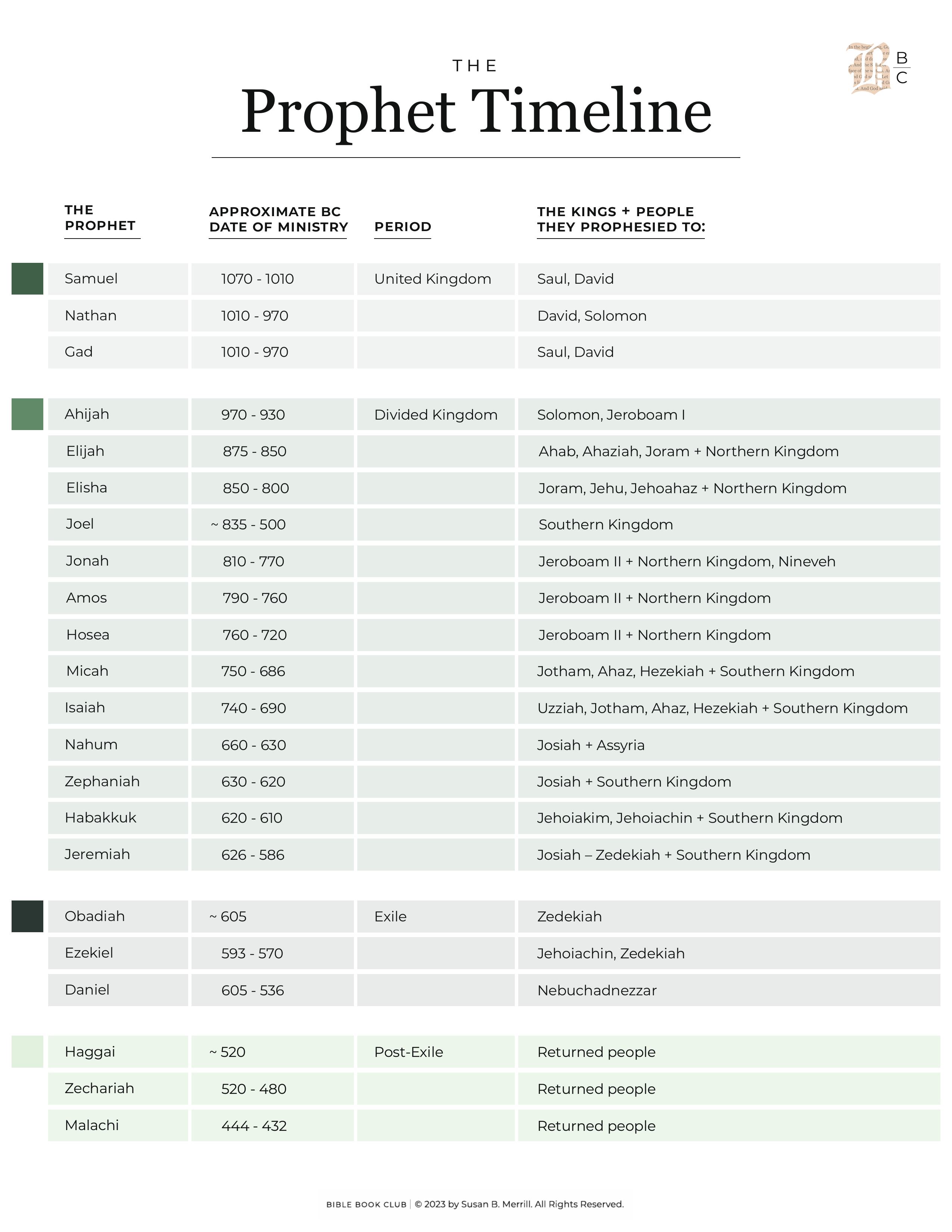
- Books of the Prophets call for repentance and warn of judgment before, during, and after the exile.
Our story in 2 Chronicles opens with Solomon as the new king of Israel.
Scene 1: Solomon Seeks God
2 Chronicles 1:1-6
1 Solomon son of David established himself firmly over his kingdom, for the Lord his God was with him and made him exceedingly great.
2 Then Solomon spoke to all Israel—to the commanders of thousands and commanders of hundreds, to the judges and to all the leaders in Israel, the heads of families— 3 and Solomon and the whole assembly went to the high place at Gibeon, for God’s tent of meeting was there, which Moses the Lord’s servant had made in the wilderness. 4 Now David had brought up the ark of God from Kiriath Jearim to the place he had prepared for it, because he had pitched a tent for it in Jerusalem. 5 But the bronze altar that Bezalel son of Uri, the son of Hur, had made was in Gibeon in front of the tabernacle of the Lord; so Solomon and the assembly inquired of him there. 6 Solomon went up to the bronze altar before the Lord in the tent of meeting and offered a thousand burnt offerings on it.
David’s Final Words for Solomon
In our 1 Chronicles 28-29 commentary, David had a few final words for his son Solomon.
1 Chronicles 28:9 9 “And you, my son Solomon, acknowledge the God of your father, and serve him with wholehearted devotion and with a willing mind, for the Lord searches every heart and understands every desire and every thought. If you seek him, he will be found by you; but if you forsake him, he will reject you forever.
Why did Solomon travel to Gibeon to seek God?
Solomon is doing exactly what David commanded. He gathers all Israel and marches them up to the Tent of Meeting at Gibeon. Gibeon is the old place of worship, established by their forefathers, and is soon to be replaced by the Temple.
Then he publicly inquires of the Lord and makes a thousand burnt offerings. He seeks the Lord because David said if you seek Him, you will find Him. The word "inquire" or "seek" is a theme word in Chronicles. It denotes a quest of faith to discern God's will.
The propensity "to inquire" of God is a measure of the faithfulness of the kings and leaders of Israel. We saw that Saul stopped inquiring and failed. Solomon's heart is clearly in the right place, and he is on the right track as a king and as the first son of the Davidic Covenant to inherit the promise.
Point to Ponder
Is our propensity "to inquire" of God still a measure of our faithfulness? The answer is yes, and I am convicted by that thought. A question I asked myself was: Am I inquiring of the Lord? First, before others? Last, only when desperate? Or never? Ouch.
Back to Our Story
Solomon seeks God, with all Israel in tow, at Gibeon, and God does not disappoint. He is pleased and promptly responds to Solomon's faithfulness.
Scene 2: Solomon Asks for Wisdom Instead of Wealth
2 Chronicles 1:7-17
7 That night God appeared to Solomon and said to him, “Ask for whatever you want me to give you.”
8 Solomon answered God, “You have shown great kindness to David my father and have made me king in his place. 9 Now, Lord God, let your promise to my father David be confirmed, for you have made me king over a people who are as numerous as the dust of the earth. 10 Give me wisdom and knowledge, that I may lead this people, for who is able to govern this great people of yours?”
11 God said to Solomon, “Since this is your heart’s desire and you have not asked for wealth, possessions or honor, nor for the death of your enemies, and since you have not asked for a long life but for wisdom and knowledge to govern my people over whom I have made you king, 12 therefore wisdom and knowledge will be given you. And I will also give you wealth, possessions and honor, such as no king who was before you ever had and none after you will have.”
13 Then Solomon went to Jerusalem from the high place at Gibeon, from before the tent of meeting. And he reigned over Israel.
14 Solomon accumulated chariots and horses; he had fourteen hundred chariots and twelve thousand horses, which he kept in the chariot cities and also with him in Jerusalem. 15 The king made silver and gold as common in Jerusalem as stones, and cedar as plentiful as sycamore-fig trees in the foothills. 16 Solomon’s horses were imported from Egypt and from Kue—the royal merchants purchased them from Kue at the current price. 17 They imported a chariot from Egypt for six hundred shekels of silver, and a horse for a hundred and fifty. They also exported them to all the kings of the Hittites and of the Arameans.
What does Solomon ask for when God appears to him?
Solomon asks for wisdom to lead the people. He demonstrated his love for God in his worship at the Tent of Meeting, and here Solomon demonstrates love for others with his request. Love God, love people, love life. Hmm, we discussed that in our 1 Chronicles 28-29 commentary.
Isn't this what we have been taught to do by Jesus, the final King from the line of David?
Matthew 22:36-40 36 “Teacher, which is the greatest commandment in the Law?”
37 Jesus replied: “‘Love the Lord your God with all your heart and with all your soul and with all your mind.’ 38 This is the first and greatest commandment. 39 And the second is like it: ‘Love your neighbor as yourself.’ 40 All the Law and the Prophets hang on these two commandments.”
Love God first, love people second. All the Law and the Prophets hang on these two commandments. From Moses to David to our next books of Ezra, Nehemiah, and on and on. It all hangs on these two simple commandments. If we get these right, we live a righteous life. If we get these wrong, none of the other actions will make up for it. Love God, love others, and you will love life.
That does not mean it will be easy or perfect. It was not for David, Solomon, Abraham, Jacob, Ruth, Esther, and so on. But to live life in the will of God is to live in peace despite the seasonal storms.
How did God reward Solomon's request for wisdom?
Because he asked for wisdom instead of wealth, God gave Solomon wisdom and wealth. Solomon put others ahead of wealth, and God rewarded his right priority. His wealth was used for God's glory, and Solomon, son of the famous King David, became famous in his own right. So famous, we will see, that people came to learn about the God of Solomon.
The lessons to learn from Solomon are simple:
- Start with God. Before making decisions, go to God first.
- Think beyond yourself. What is best for others?
- Be humble and open to accept God's response.
- Seek wisdom over wealth. God's will over your will.
Chariots and Horses
Solomon’s acquisition of chariots and horses is problematic in this story. It is a direct violation of Moses' command in Deuteronomy 17, because it shows reliance on military might rather than God's strength, and it establishes trade relationships with Egypt.
But some believe it may be acceptable by this time because Solomon is establishing Israel as a power for peace. The Chronicler does not present it as sinful. However, the accumulation of horses and wives, all forbidden in Deuteronomy 17, contributes to Solomon's spiritual decline and the kingdom's division. So while Solomon is on the rise, the enemy is worming his way in.
Scene 3: Solomon Improves the Plan and Cuts a Deal
You’d think, based on all David provided prior to his death, that Solomon would be ready to break ground without any other assistance. But Solomon is a masterclass in wisdom, and because God has increased Israel's wealth, Solomon's vision for the Temple may have grown.
Solomon wants the best for the one he and his father David love the most. So he puts his wisdom to work and phones an old friend. He needs King Hiram's legendary craftsmen and Lebanon's towering cedars. Things Israel simply doesn’t possess.
2 Chronicles 2:1-16
1 Solomon gave orders to build a temple for the Name of the Lord and a royal palace for himself. 2 He conscripted 70,000 men as carriers and 80,000 as stonecutters in the hills and 3,600 as foremen over them.
3 Solomon sent this message to Hiram king of Tyre:
“Send me cedar logs as you did for my father David when you sent him cedar to build a palace to live in. 4 Now I am about to build a temple for the Name of the Lord my God and to dedicate it to him for burning fragrant incense before him, for setting out the consecrated bread regularly, and for making burnt offerings every morning and evening and on the Sabbaths, at the New Moons and at the appointed festivals of the Lord our God. This is a lasting ordinance for Israel.
5 “The temple I am going to build will be great, because our God is greater than all other gods. 6 But who is able to build a temple for him, since the heavens, even the highest heavens, cannot contain him? Who then am I to build a temple for him, except as a place to burn sacrifices before him?
7 “Send me, therefore, a man skilled to work in gold and silver, bronze and iron, and in purple, crimson and blue yarn, and experienced in the art of engraving, to work in Judah and Jerusalem with my skilled workers, whom my father David provided.
8 “Send me also cedar, juniper and algum logs from Lebanon, for I know that your servants are skilled in cutting timber there. My servants will work with yours 9 to provide me with plenty of lumber, because the temple I build must be large and magnificent. 10 I will give your servants, the woodsmen who cut the timber, twenty thousand cors of ground wheat, twenty thousand cors of barley, twenty thousand baths of wine and twenty thousand baths of olive oil.”
11 Hiram king of Tyre replied by letter to Solomon:
“Because the Lord loves his people, he has made you their king.”
“Praise be to the Lord, the God of Israel, who made heaven and earth! He has given King David a wise son, endowed with intelligence and discernment, who will build a temple for the Lord and a palace for himself.
13 “I am sending you Huram-Abi, a man of great skill, 14 whose mother was from Dan and whose father was from Tyre. He is trained to work in gold and silver, bronze and iron, stone and wood, and with purple and blue and crimson yarn and fine linen. He is experienced in all kinds of engraving and can execute any design given to him. He will work with your skilled workers and with those of my lord, David your father.
15 “Now let my lord send his servants the wheat and barley and the olive oil and wine he promised, 16 and we will cut all the logs from Lebanon that you need and will float them as rafts by sea down to Joppa. You can then take them up to Jerusalem.”
17 Solomon took a census of all the foreigners residing in Israel, after the census his father David had taken; and they were found to be 153,600. 18 He assigned 70,000 of them to be carriers and 80,000 to be stonecutters in the hills, with 3,600 foremen over them to keep the people working.
Who is Hiram, King of Tyre?
Hiram is the powerful king of the Phoenician city-state of Tyre. He is a shrewd businessman who controls the eastern Mediterranean's most important trade routes and access to Lebanon's legendary cedar forests. On top of his rich resources, he possesses the ancient world's finest craftsmen and seafaring expertise.
Hiram had an established friendship with King David before Solomon's reign and supplied cedar and skilled workers for David's palace. He is a good friend to have, and more of a business partner to Solomon than a political ally.
As a shrewd businessman, Hiram accepts the facts. And the fact is, David and Solomon have prospered because of their God. Therefore, Hiram respects David and Solomon's God. Unfortunately, his respect doesn’t lead to faith. Like the nations around them, what works for David and Solomon is their God. Not his.
What are the terms of the trade deal between Solomon and King Hiram?
The deal King Hiram created with Solomon is simple: Israel trades wheat, barley, olive oil, and wine for cedar, skilled labour, and craftsmanship. Solomon also "hires" 70,000-80,000 Lebanese workers for the Temple project, and both kingdoms benefit. Until Israel didn't.
The relationship becomes problematic when it gets personal. Solomon marries many foreign wives, including some Sidonian women. Sidon is a major city in Phoenicia, and in 1 Kings we learned:
1 Kings 11:1-6 1 King Solomon, however, loved many foreign women besides Pharaoh’s daughter—Moabites, Ammonites, Edomites, Sidonians and Hittites. 2 They were from nations about which the Lord had told the Israelites, “You must not intermarry with them, because they will surely turn your hearts after their gods.” Nevertheless, Solomon held fast to them in love. 3 He had seven hundred wives of royal birth and three hundred concubines, and his wives led him astray. 4 As Solomon grew old, his wives turned his heart after other gods, and his heart was not fully devoted to the Lord his God, as the heart of David his father had been. 5 He followed Ashtoreth the goddess of the Sidonians, and Molek the detestable god of the Ammonites. 6 So Solomon did evil in the eyes of the Lord; he did not follow the Lord completely, as David his father had done.
Solomon is wise, but that doesn't mean he can’t be tempted. And sometimes temptation can lead even a wise man down a foolish path. In the end, Solomon follows other gods, including Ashtoreth, a goddess of Phoenicia. Unfortunately, other kings after Solomon follow suit, and it gets even worse later during King Ahab's dynasty with his marriage to Jezebel, a Phoenician princess. For more on all the havoc Jezebel wreaks on both the Northern Kingdom and Judah, start with our 1 Kings 20-21 commentary called Ahab and Jezebel: Israel’s Most Wicked Couple.
How does 2 Chronicles differ from the Book of Kings?
The sin of Solomon and others, like David and Bathsheba, will not be covered in Chronicles. Those stories are documented in the Books of Kings. The stories covered in Chronicles are a highlight reel of sorts. Like a motivating video to fire up the home team, the returned exiles of Israel.
Scene 4: Finally, the Temple Build Begins
Building the Temple is a big deal. Even today, the former location of the Temple is a big deal. Recall from 2 Samuel that the Temple was built on the threshing floor purchased by David, located on Mount Moriah.
The Temple Today
Today, nothing is left to be seen of the Temple. It is covered by the most famous and oldest Islamic building. The location is the most sacred and disputed real estate in the world. It is a holy place for Christians, Jews, and Muslims.
The Muslims and Mount Moriah
The Muslims believe the rock on Mount Moriah is the place from which the Prophet Muhammad ascended into heaven. The Dome of the Rock is a shrine that was completed in 692 and completely covers the rock. Muslims also consider Abraham a prophet. However, instead of Abraham sacrificing Isaac on this rock, the Quran suggests Ishmael was the sacrificial son.
Jews and the Temple
The Jews also regard the location of the stone inside the Dome of the Rock as the holiest spot on Earth, because it is where Isaac was almost sacrificed. It is also the site of the Holy of Holies in Solomon's Temple where the Ark of the Covenant sat. Because Muslim authorities have refused to permit Jewish prayer on the Temple Mount, the Jews developed a custom of praying near the Western Wall.
Christians and the Temple
To Christians, the rock, formerly the Temple, is sacred because it is where:
- The baby Jesus was presented in the Temple.
- Jesus was found among the teachers as a 12-year-old.
- Jesus prayed, taught, and drove the money changers out of the Temple precincts.
- The veil was torn when Jesus died on the cross.
The Temple represents all that Jesus fought to give us access to without the never-ending constraints of sacrificing for atonement.
2 Chronicles 3 Explained: Building the Temple
Before we jump into the building of the Temple, take a look at the Drawing of the Tabernacle and the Temple for comparison. And here are a few more links for those of you who are curious about where the Temple was built.
- Video tour of the Temple Mount and the Dome of the Rock exterior on Mount Moriah
- Video of the Inside of the Dome of the Rock
- Picture of the Rock inside the Dome
The Chronicler's description of the building is brief because of who he is writing to. The returned exiles are in the process of rebuilding the Temple and are very aware of what it needs to look like. The Chronicler's focus is on the Temple's spiritual significance and worship. He also omits describing Solomon's palace, which is adjacent to the Temple. If you would like a more detailed description of the building, Solomon's palace, and God's instructions to Solomon, check out our 1 Kings 5-6 commentary.
2 Chronicles 3:1-14
1 Then Solomon began to build the temple of the Lord in Jerusalem on Mount Moriah, where the Lord had appeared to his father David. It was on the threshing floor of Araunah the Jebusite, the place provided by David. 2 He began building on the second day of the second month in the fourth year of his reign.
3 The foundation Solomon laid for building the temple of God was sixty cubits long and twenty cubits wide (using the cubit of the old standard). 4 The portico at the front of the temple was twenty cubits long across the width of the building and twenty cubits high.
He overlaid the inside with pure gold. 5 He paneled the main hall with juniper and covered it with fine gold and decorated it with palm tree and chain designs. 6 He adorned the temple with precious stones. And the gold he used was gold of Parvaim. 7 He overlaid the ceiling beams, doorframes, walls and doors of the temple with gold, and he carved cherubim on the walls.
8 He built the Most Holy Place, its length corresponding to the width of the temple—twenty cubits long and twenty cubits wide. He overlaid the inside with six hundred talents of fine gold. 9 The gold nails weighed fifty shekels. He also overlaid the upper parts with gold.
10 For the Most Holy Place he made a pair of sculptured cherubim and overlaid them with gold. 11 The total wingspan of the cherubim was twenty cubits. One wing of the first cherub was five cubits long and touched the temple wall, while its other wing, also five cubits long, touched the wing of the other cherub. 12 Similarly one wing of the second cherub was five cubits long and touched the other temple wall, and its other wing, also five cubits long, touched the wing of the first cherub. 13 The wings of these cherubim extended twenty cubits. They stood on their feet, facing the main hall.
14 He made the curtain of blue, purple and crimson yarn and fine linen, with cherubim worked into it.
15 For the front of the temple he made two pillars, which together were thirty-five cubits long, each with a capital five cubits high. 16 He made interwoven chains and put them on top of the pillars. He also made a hundred pomegranates and attached them to the chains. 17 He erected the pillars in the front of the temple, one to the south and one to the north. The one to the south he named Jakin and the one to the north Boaz.
What are the physical dimensions of Solomon's Temple?
The exterior of Solomon’s Temple measures approximately 90 feet long, 30 feet wide, and 45 feet high. The Temple size is double the size of the Tabernacle. The front porch adds another 10 cubits. Around the three other walls of the exterior, three stories of side rooms are built.
The Temple is a small building compared to the others Solomon builds. However, it is a part of a much larger royal compound and the adjacent palace. The interior includes a long, narrow main hall, or Holy Place. The inner sanctuary at the end of the main hall for the Ark is called the Most Holy Place, or Holy of Holies. The entrance to the sanctuary is through the front porch, and the entrance to the side rooms and stairs is on the south side of the Temple.
What is the interior of the Most Holy Place like?
The inner sanctuary, or the Most Holy Place, is the resting place for the Ark of the Covenant. It is a perfect cube in dimension, 20 cubits square. For reference, a biblical cubit is about 1.5 feet (in other ancient cultures it is longer). It is a golden cube. The walls, floor, and ceiling are all overlaid with gold.
The Most Holy Place takes up the entire last third of the Temple, or 30 feet. The first two-thirds, or 60 feet, are the main hall, or Holy Place. This room is also gold. Solomon used a lot of gold.
The two cherubim inside the Most Holy Place are 15 feet high, with wings that touch in the middle and expand the width of the room. That means each cherubim is also 15 feet wide. In our drawing, you can see these cherubim most likely stand right behind or over the Ark with their wings touching above it.
The pillars of Jakin and Boaz are huge. In 1 Kings, we learned that each pillar is about 6 feet wide and has a capital on top that makes the entire pillar 34 feet tall. The capitals are in the shape of lilies decorated with tightly woven chainwork in a net pattern with lots of pomegranates. The pillars' names have meanings.
What are the names and meanings of the two bronze pillars?
The names and meanings of the pillars are:
- Jakin, which means " He will establish. "
- Boaz, which means " in Him is strength. "
When combined, they send a message or prayer that God will establish His people, or the line of David, and He is the strength of the nation and its king. Nothing about the Temple is without purpose or a historical coincidence.
Why is Mount Moriah significant in the construction of the Temple?
In the divine placement of the Temple on Mount Moriah, God connects the Temple to His covenant with Abraham and later with David and Solomon. It is the spot where God saved Isaac, and the spot where God saved David and his line from the plague. Mount Moriah is a place tied to obedience, faith, and redemption.
In 2 Chronicles 4-5 commentary, Solomon will complete David's dream, and the people will hold their breath to see if Solomon can successfully get the Ark inside without anyone dying.
Group Discussion Questions for 2 Chronicles 1-3
- Solomon's first act as king is to gather all Israel and publicly seek God before making any decisions. Where has the tendency to "inquire of the Lord" shown up, or been absent, in your own leadership or decision-making?
- Solomon asks for wisdom to serve others rather than wealth to serve himself. When you pray, what does your asking reveal about your priorities?
- The Temple is built on Mount Moriah, a place already marked by God's prior acts of redemption in Israel's history. Are there places or moments in your own story where God seems to keep returning to complete what He began?