2 Chronicles 6-7 Introduction
The Chronicler has been retelling the exiles’ stories of their past so they can have hope for their future. The completion of the Temple and the appearance of God’s glory in the Cloud are the high points of their past, not just because God is now dwelling among them and can be properly worshiped. The Temple is a faith builder. It is visible proof that God has done everything He promised.
Scene 1: Solomon Speaks of the Promises Fulfilled
This scene is a continuation of our last episode. The glory of the Lord in the form of a cloud has just filled the Temple. I cannot imagine what the collective crowd response was. Were they silent in awe or cheering in joy? How long did it take for Solomon to regain his composure? I am not sure. But he is the son of David, born to be king, a man of wisdom, and heir to the promise. He turns from the awe-inspiring Cloud of Glory and speaks to God’s people.
2 Chronicles 6:1-11
1 Then Solomon said, “The Lord has said that he would dwell in a dark cloud; 2 I have built a magnificent temple for you, a place for you to dwell forever.”
3 While the whole assembly of Israel was standing there, the king turned around and blessed them. 4 Then he said:
“Praise be to the Lord, the God of Israel, who with his hands has fulfilled what he promised with his mouth to my father David. For he said, 5 ‘Since the day I brought my people out of Egypt, I have not chosen a city in any tribe of Israel to have a temple built so that my Name might be there, nor have I chosen anyone to be ruler over my people Israel. 6 But now I have chosen Jerusalem for my Name to be there, and I have chosen David to rule my people Israel.’
7 “My father David had it in his heart to build a temple for the Name of the Lord, the God of Israel. 8 But the Lord said to my father David, ‘You did well to have it in your heart to build a temple for my Name. 9 Nevertheless, you are not the one to build the temple, but your son, your own flesh and blood—he is the one who will build the temple for my Name.’
10 “The Lord has kept the promise he made. I have succeeded David my father and now I sit on the throne of Israel, just as the Lord promised, and I have built the temple for the Name of the Lord, the God of Israel. 11 There I have placed the ark, in which is the covenant of the Lord that he made with the people of Israel.”
What did Solomon say to the people?
Solomon states the facts of what God has done for the nation. God has:
- Chosen to dwell among them in a dark Cloud as He had before during the time of Moses in:
- Kept His promise to Abraham and David that they would be His people and He would be with them.
- Fulfilled His promise that the Temple would be built by David’s son on the ground David purchased.
- Fulfilled His promise that Solomon would be king and would build the Temple.
From this point forward, the Temple and worship are central to their identity. The Temple is visible proof that God has delivered the promised kingdom, in the Promised Land, for God's chosen people. In his speech, Solomon rightly gives all the credit to God. Despite all the hard work David and Solomon put into the building, it is God's hand, not their hands, that made it a reality.
Scene 2: Solomon's Prayer of Dedication
2 Chronicles 6:12-42
12 Then Solomon stood before the altar of the Lord in front of the whole assembly of Israel and spread out his hands. 13 Now he had made a bronze platform, five cubits long, five cubits wide and three cubits high, and had placed it in the center of the outer court. He stood on the platform and then knelt down before the whole assembly of Israel and spread out his hands toward heaven.
14 He said: “Lord, the God of Israel, there is no God like you in heaven or on earth—you who keep your covenant of love with your servants who continue wholeheartedly in your way. 15 You have kept your promise to your servant David my father; with your mouth you have promised and with your hand you have fulfilled it—as it is today.
16 “Now, Lord, the God of Israel, keep for your servant David my father the promises you made to him when you said, ‘You shall never fail to have a successor to sit before me on the throne of Israel, if only your descendants are careful in all they do to walk before me according to my law, as you have done.’ 17 And now, Lord, the God of Israel, let your word that you promised your servant David come true.
18 “But will God really dwell on earth with humans? The heavens, even the highest heavens, cannot contain you. How much less this temple I have built! 19 Yet, Lord my God, give attention to your servant’s prayer and his plea for mercy. Hear the cry and the prayer that your servant is praying in your presence. 20 May your eyes be open toward this temple day and night, this place of which you said you would put your Name there. May you hear the prayer your servant prays toward this place. 21 Hear the supplications of your servant and of your people Israel when they pray toward this place. Hear from heaven, your dwelling place; and when you hear, forgive.
22 “When anyone wrongs their neighbor and is required to take an oath and they come and swear the oath before your altar in this temple, 23 then hear from heaven and act. Judge between your servants, condemning the guilty and bringing down on their heads what they have done, and vindicating the innocent by treating them in accordance with their innocence.
24 “When your people Israel have been defeated by an enemy because they have sinned against you and when they turn back and give praise to your name, praying and making supplication before you in this temple, 25 then hear from heaven and forgive the sin of your people Israel and bring them back to the land you gave to them and their ancestors.
26 “When the heavens are shut up and there is no rain because your people have sinned against you, and when they pray toward this place and give praise to your name and turn from their sin because you have afflicted them, 27 then hear from heaven and forgive the sin of your servants, your people Israel. Teach them the right way to live, and send rain on the land you gave your people for an inheritance.
28 “When famine or plague comes to the land, or blight or mildew, locusts or grasshoppers, or when enemies besiege them in any of their cities, whatever disaster or disease may come, 29 and when a prayer or plea is made by anyone among your people Israel—being aware of their afflictions and pains, and spreading out their hands toward this temple— 30 then hear from heaven, your dwelling place. Forgive, and deal with everyone according to all they do, since you know their hearts (for you alone know the human heart), 31 so that they will fear you and walk in obedience to you all the time they live in the land you gave our ancestors.
32 “As for the foreigner who does not belong to your people Israel but has come from a distant land because of your great name and your mighty hand and your outstretched arm—when they come and pray toward this temple, 33 then hear from heaven, your dwelling place. Do whatever the foreigner asks of you, so that all the peoples of the earth may know your name and fear you, as do your own people Israel, and may know that this house I have built bears your Name.
34 “When your people go to war against their enemies, wherever you send them, and when they pray to you toward this city you have chosen and the temple I have built for your Name, 35 then hear from heaven their prayer and their plea, and uphold their cause.
36 “When they sin against you—for there is no one who does not sin—and you become angry with them and give them over to the enemy, who takes them captive to a land far away or near; 37 and if they have a change of heart in the land where they are held captive, and repent and plead with you in the land of their captivity and say, ‘We have sinned, we have done wrong and acted wickedly’; 38 and if they turn back to you with all their heart and soul in the land of their captivity where they were taken, and pray toward the land you gave their ancestors, toward the city you have chosen and toward the temple I have built for your Name; 39 then from heaven, your dwelling place, hear their prayer and their pleas, and uphold their cause. And forgive your people, who have sinned against you.
40 “Now, my God, may your eyes be open and your ears attentive to the prayers offered in this place.
41 “Now arise, Lord God, and come to your resting place,
you and the ark of your might.May your priests,
Lord God, be clothed with salvation,
may your faithful people rejoice in your goodness.
42 Lord God, do not reject your anointed one.
Remember the great love promised to David your servant.”
What is the location of Solomon's bronze prayer platform?
Solomon climbs a bronze platform in the outer courtyard in front of the bronze altar. He kneels down and spreads out his hands to God in worship. We can only guess how many are present, but it is an "assembly of Israel," suggesting thousands, and certainly including all elders and leaders.
I know I would have been on the other side with my ear to the wall or holding up a child so they could transmit the words to me. Solomon's first words are words of praise for God and His covenant of love. The covenant of love mentioned here means a covenant of hesed.
What does the term "covenant of love" or "hesed" mean in this context?
God's keeping of His covenant is an act of hesed, a kindness performed for the benefit of a person in need within the context of a deep and enduring commitment between the two people. Israel is a people in need because of their sin and separation from God.
God provides a way to overcome their separation and meets them here in the Temple, despite their sin, out of love for them and in covenant with them. Solomon praises God for His mercy in choosing to do this for Israel but also notes the conditions. This covenant is for those who continue wholeheartedly in God's way.
Then Solomon turns to the future and asks God to keep another promise. Solomon prays that God will keep His promises to David. The promise that there will always be a descendant of David on the throne. Next, Solomon turns his focus to the Temple and acknowledges that God cannot be contained or limited to this Temple or this earth, as did the apostle Luke in Acts 7.
Acts 7:44-50 44 “Our ancestors had the tabernacle of the covenant law with them in the wilderness. It had been made as God directed Moses, according to the pattern he had seen. 45 After receiving the tabernacle, our ancestors under Joshua brought it with them when they took the land from the nations God drove out before them. It remained in the land until the time of David, 46 who enjoyed God’s favor and asked that he might provide a dwelling place for the God of Jacob. 47 But it was Solomon who built a house for him.
48 “However, the Most High does not live in houses made by human hands. As the prophet says: 49 “‘Heaven is my throne, and the earth is my footstool. What kind of house will you build for me? says the Lord. Or where will my resting place be? 50 Has not my hand made all these things?’
Like Solomon, Luke declares that the Lord does not live in houses made by humans. Heaven is the Lord’s throne, and the earth his footstool. Next, Solomon petitions God to hear the prayers of Israel.
What six life-threatening scenarios does Solomon include in his dedication prayer?
The wise man that he is, Solomon lists six life-threatening scenarios in which Israel may need God to hear their prayers and forgive them. He asks for God to hear their prayers:
- When a person wrongs a neighbor. This speaks to Solomon's heart for justice and unity.
- When Israel suffers defeat by an enemy because they have turned away from God. Solomon is concerned for their safety and peace.
- When they experience a drought, famine, plague, or other natural disaster because they have turned away from God. Solomon fears for their physical suffering.
- When a foreigner who believes in God prays.
- When they pray for victory in war.
- When they are in exile and to forgive them when they sin so greatly that God gives them over to their enemies. This situation is near and dear to the Chronicler's heart. This is the exact situation from which his readers have just returned, and if our author has anything to say about it, it will never happen again.
Lastly, Solomon petitioned God to give attention to all the prayers and to arise and rest in this Temple. Solomon prays for the people with wisdom. He is not blind to their history of sin and rebellion. He ends his prayer, once more begging God to hear them whenever they cry out to him.
Solomon's focus is on forgiveness, because forgiveness is key to their relationship with God. And the purpose of the covenant, the Temple, and the nation is for Israel to be God's people and live in relationship. Not a perfect relationship like in the Garden of Eden, but an imperfect covenantal relationship until the New Covenant.
That is the covenant we benefit from. In the New Covenant, there is a perfect King. He is the One who, as Revelation 3 puts it, "Is holy and true, who holds the key of David. What he opens no one can shut, and what he shuts no one can open." The key of David is held by Jesus Christ. Only He has the key to an eternal relationship with God.
Scene 3: God Responds, and the People Rejoice
2 Chronicles 7:1-10
1 When Solomon finished praying, fire came down from heaven and consumed the burnt offering and the sacrifices, and the glory of the Lord filled the temple. 2 The priests could not enter the temple of the Lord because the glory of the Lord filled it. 3 When all the Israelites saw the fire coming down and the glory of the Lord above the temple, they knelt on the pavement with their faces to the ground, and they worshiped and gave thanks to the Lord, saying,
4 Then the king and all the people offered sacrifices before the Lord. 5 And King Solomon offered a sacrifice of twenty-two thousand head of cattle and a hundred and twenty thousand sheep and goats. So the king and all the people dedicated the temple of God. 6 The priests took their positions, as did the Levites with the Lord’s musical instruments, which King David had made for praising the Lord and which were used when he gave thanks, saying, “His love endures forever.” Opposite the Levites, the priests blew their trumpets, and all the Israelites were standing.
7 Solomon consecrated the middle part of the courtyard in front of the temple of the Lord, and there he offered burnt offerings and the fat of the fellowship offerings, because the bronze altar he had made could not hold the burnt offerings, the grain offerings and the fat portions.
8 So Solomon observed the festival at that time for seven days, and all Israel with him—a vast assembly, people from Lebo Hamath to the Wadi of Egypt. 9 On the eighth day they held an assembly, for they had celebrated the dedication of the altar for seven days and the festival for seven days more. 10 On the twenty-third day of the seventh month he sent the people to their homes, joyful and glad in heart for the good things the Lord had done for David and Solomon and for his people Israel.
How does God manifest His presence during the Temple dedication in 2 Chronicles?
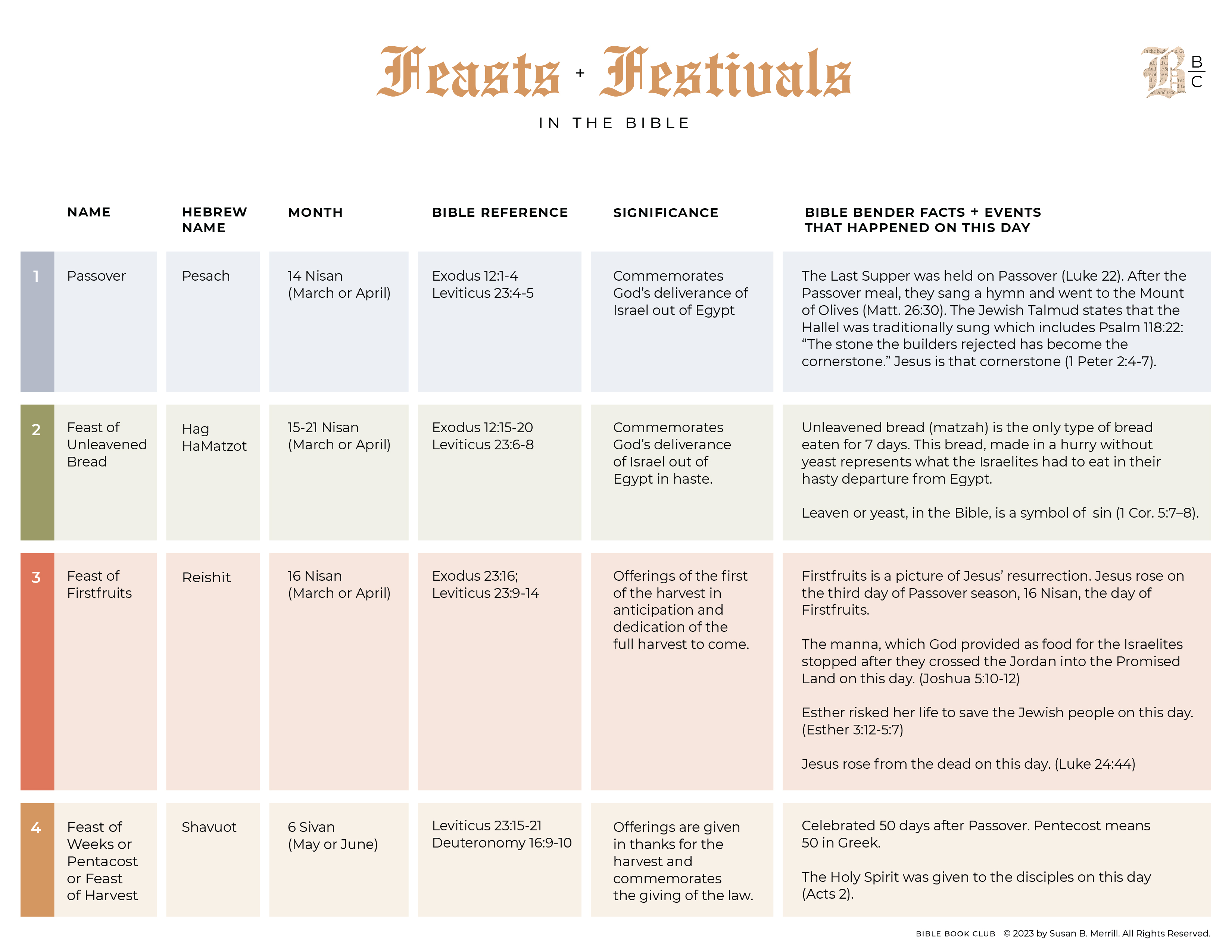
Fire comes down from heaven and consumes the sacrifices. God is pleased with His chosen people, and He accepts their sacrifices. Then the Glory of the Lord fills the Temple. This day, this celebration, this Temple are a big deal. The Feast of Tabernacles is one of many Israelite celebrations. See a complete list in our Feasts and Festivals show note.
Why did Solomon dedicate the Temple during the Feast of Tabernacles?
Solomon likely dedicated the Temple at the Feast of Tabernacles for several key reasons. First, many Israelites are gathered in Jerusalem for this pilgrimage festival, ensuring a large audience for the dedication, as required by Deuteronomy 16:16. Second, the feast commemorates the Israelites' desert wanderings in temporary shelters, symbolizing a move from the temporary Tabernacle to the permanent Temple, emphasizing God's enduring presence.
How long does the total celebration for the Temple dedication last?
The dedication celebration lasts seven days, with seven more days of celebration for the Feast of Tabernacles. It is estimated that over 100,000 men are gathered for the dedication and celebration. The sacrifices needed for the celebration are so great that the bronze altar is not big enough. Solomon has to consecrate the middle of the courtyard to provide additional space for offerings.
The occasion is momentous. The Temple is the ultimate symbol of God's relationship with Israel. It represents permanence, standing, and a future. It is costly and beautiful. So much more beautiful than the Tabernacle. What the Israelites cannot begin to fathom is that this beautiful new Temple is nothing compared to what is to come.
In fact, no one has any idea until the apostle John, who is alone and in exile on the island of Patmos, has a vision. A vision more beautiful than the Tabernacle and the Temple put together. A vision that merges both man-made structures, the Tabernacle and the Temple, with the Garden of Eden into something more glorious. A new heaven and a new earth. A place where there is no Temple because God dwells among His people. What John sees in his vision, he writes in Revelation:
Revelation 21:1-4 1 Then I saw “a new heaven and a new earth,” for the first heaven and the first earth had passed away, and there was no longer any sea. 2 I saw the Holy City, the new Jerusalem, coming down out of heaven from God, prepared as a bride beautifully dressed for her husband. 3 And I heard a loud voice from the throne saying, “Look! God’s dwelling place is now among the people, and he will dwell with them. They will be his people, and God himself will be with them and be their God. 4 ‘He will wipe every tear from their eyes. There will be no more death’ or mourning or crying or pain, for the old order of things has passed away.”
Revelation 21:22 22 I did not see a temple in the city, because the Lord God Almighty and the Lamb are its temple.
The Tabernacle and the Temple are temporary ways God can dwell among His people. His plan has always been for something more. Something more intimate, eternal, and beautiful beyond all we can imagine. A new heaven and a new earth where God's dwelling place is among the people.
Scene 4: God Appears to Solomon for the Second Time
The Lord only speaks to Solomon directly two times that we know of. The first appearance, or theophany, was in 1 Kings 3 when God told Solomon to ask for whatever he wanted, and Solomon asked for wisdom. This is the second theophany.
2 Chronicles 7:11-22
11 When Solomon had finished the temple of the Lord and the royal palace, and had succeeded in carrying out all he had in mind to do in the temple of the Lord and in his own palace, 12 the Lord appeared to him at night and said:
“I have heard your prayer and have chosen this place for myself as a temple for sacrifices.
13 “When I shut up the heavens so that there is no rain, or command locusts to devour the land or send a plague among my people, 14 if my people, who are called by my name, will humble themselves and pray and seek my face and turn from their wicked ways, then I will hear from heaven, and I will forgive their sin and will heal their land. 15 Now my eyes will be open and my ears attentive to the prayers offered in this place. 16 I have chosen and consecrated this temple so that my Name may be there forever. My eyes and my heart will always be there.
17 “As for you, if you walk before me faithfully as David your father did, and do all I command, and observe my decrees and laws, 18 I will establish your royal throne, as I covenanted with David your father when I said, ‘You shall never fail to have a successor to rule over Israel.’
19 “But if you turn away and forsake the decrees and commands I have given you and go off to serve other gods and worship them, 20 then I will uproot Israel from my land, which I have given them, and will reject this temple I have consecrated for my Name. I will make it a byword and an object of ridicule among all peoples. 21 This temple will become a heap of rubble. All who pass by will be appalled and say, ‘Why has the Lord done such a thing to this land and to this temple?’ 22 People will answer, ‘Because they have forsaken the Lord, the God of their ancestors, who brought them out of Egypt, and have embraced other gods, worshiping and serving them—that is why he brought all this disaster on them.’”
What are the specific conditions for God healing the land in 2 Chronicles 7:14?
God acknowledges that He has heard Solomon's prayers and promises that His heart will always be at the Temple. If the people obey God’s command and if Solomon walks faithfully, then God promises He will establish His throne as He promised David.
This is not new news to Solomon. God reiterates the same rules of faith and obedience to Abraham, Jacob, Moses, Joshua, and David. Then God warns Solomon. This warning should be piercing to the Chronicler's audience, as they have suffered from their forefathers' failure to heed the warning.
What warning does God give Solomon regarding the Temple's potential destruction?
If Solomon does not obey and is unfaithful to God, then Israel will lose the Promised Land and the Temple, and Solomon and his descendants will lose the throne. The warning casts a shadow on the success of the Temple dedication.
Unfortunately, as the Chronicler will document in the coming chapters, the Israelite kings do not heed God's warning. Nevertheless, the Chronicler's post-exilic readers are in a new situation. They have the opportunity to learn from the past. They are rebuilding the Temple. What does that mean for us today?
How does the New Testament contrast Solomon's Temple with God's dwelling place?
We are the church. Our bodies are a Temple, and Christ dwells within each of us. Our hope does not rely on sacrificing at a physical building. Our hope lies in Christ, our mediator.
1 Timothy 2:5-6 5 For there is one God and one mediator between God and mankind, the man Christ Jesus, 6 who gave himself as a ransom for all people.
Obedience, faithfulness, humility, and repentance are still a part of the relationship equation with God. Thankfully, unlike the Israelites, we have direct access and a guarantee of forgiveness through faith in Christ.
Join our 2 Chronicles 8-9 Bible study here!
Group Discussion Questions for 2 Chronicles 6-7
- Solomon pauses, looks back, and praises God for keeping His promises. In your own life, where can you spot God’s faithfulness, and how could you praise and celebrate that in a very real way this week?
- In 2 Chronicles 6, Solomon lists several specific scenarios such as broken relationships, feeling far from home, or facing unexpected hardship. He prays for God’s forgiveness and help. Can you relate to that feeling of dread and worry that something terrible might happen to your loved ones? In those moments, how can you follow Solomon’s example?
- God’s dwelling place started in the Tabernacle, moved to Solomon’s Temple, and now dwells within us. How does knowing your body is a temple of the Holy Spirit change how you view self-care?