2 Chronicles 10-12 Introduction
In 2 Chronicles 10-12, the Chronicler is going to transition to all the lesser kings. The nation will divide into northern Israel and southern Judah. Unlike 1 Kings and 2 Kings, which cover both kingdoms, Chronicles ignores the northern kings. They had no divine promise.
The promise from God was for the line of David, and their only hope is in him. The king who saves must come from that line. Therefore, the Chronicler focuses exclusively on Judah's 21 kings, including David. The Chronicler adds new details that are not in the books of Kings to teach the returned exiles through character studies of the faithful and unfaithful.
The Israelites must learn from their past. If they are faithful to their covenant with God, He will be with them. If they are unfaithful, there will be consequences and ultimately exile. The players in this story are Rehoboam and Jeroboam.
The Mystery of Solomon’s Sons
Rehoboam is the only recorded son of Solomon, which is a mystery because Solomon had 700 wives and 300 concubines. But only three children are recorded: one son, Rehoboam, and two daughters, Taphath and Basemath. This is very odd because Solomon's father, David, had 19 sons recorded, but it mentions that there are more. And Solomon's son Rehoboam had 18 wives and 60 concubines, which resulted in 28 sons and 60 daughters. Why would the Bible list so many of David's and Rehoboam's offspring and not Solomon's? Solomon had the most wives, so you would think he would have more children than either his father or his son.
The Mystery of Solomon’s Foreign Wives
The other puzzle is this: if Solomon was the wisest man on earth, why did he marry so many foreign, idolatrous women so early in life when David was probably alive? And why did David allow it? First, Solomon married Pharaoh's daughter. Then Rehoboam's mother, Naamah, who was an Ammonite of all people! David fought with the Ammonites right before Solomon was born.
This is crazy, but recall that David had been a friend to the Ammonite king Nahash. When Nahash died, David sent an envoy to express his condolences to Nahash's son, Hunan. Hunan humiliated the envoy, cutting their beards and clothes. That started a war. David sent Joab and his troops, which included Bathsheba's husband, Uriah. David had an affair, killed Uriah, married Bathsheba, and their child died. Their next child is Solomon, who grows up and marries an Ammonite!? Solomon would never have been born if his father hadn't sinned while his army was at war with the Ammonites.
Why would David let Solomon marry a foreigner, an Ammonite? And Solomon was young. It is estimated he was between the ages of 14 and 19. There are several formulas used to estimate Solomon's age when he married, when he took the throne, and when he had Rehoboam. Most calculations estimate that Rehoboam was born one year before David died and Solomon took the throne. Which means Solomon had not yet asked God for wisdom, because he wasn’t king. So, perhaps we can excuse Solomon for his choice of an Ammonite wife. He was young and still foolish. But David is not excused for allowing it. He was fighting the Ammonites when he sinned with Bathsheba, so allowing Bathsheba's son, Solomon, the next king, to marry an Ammonite, a foreigner, which is breaking God's Law, which forbade worshiping foreign Gods, is crazy wrong.
Jeroboam
Here is what we know of Jeroboam: he was from the tribe of Ephraim, which is one of Joseph's sons. So leadership ran in his blood. Under Solomon, Jeroboam was promoted to a position of authority.
1 Kings 11:28 28 Now Jeroboam was a man of standing, and when Solomon saw how well the young man did his work, he put him in charge of the whole labor force of the tribes of Joseph.
This included the tribes of Ephraim and Manasseh. At this time, Solomon was heavily taxing the people and forcing labor. Jeroboam's role made him familiar with the discontent among the people.
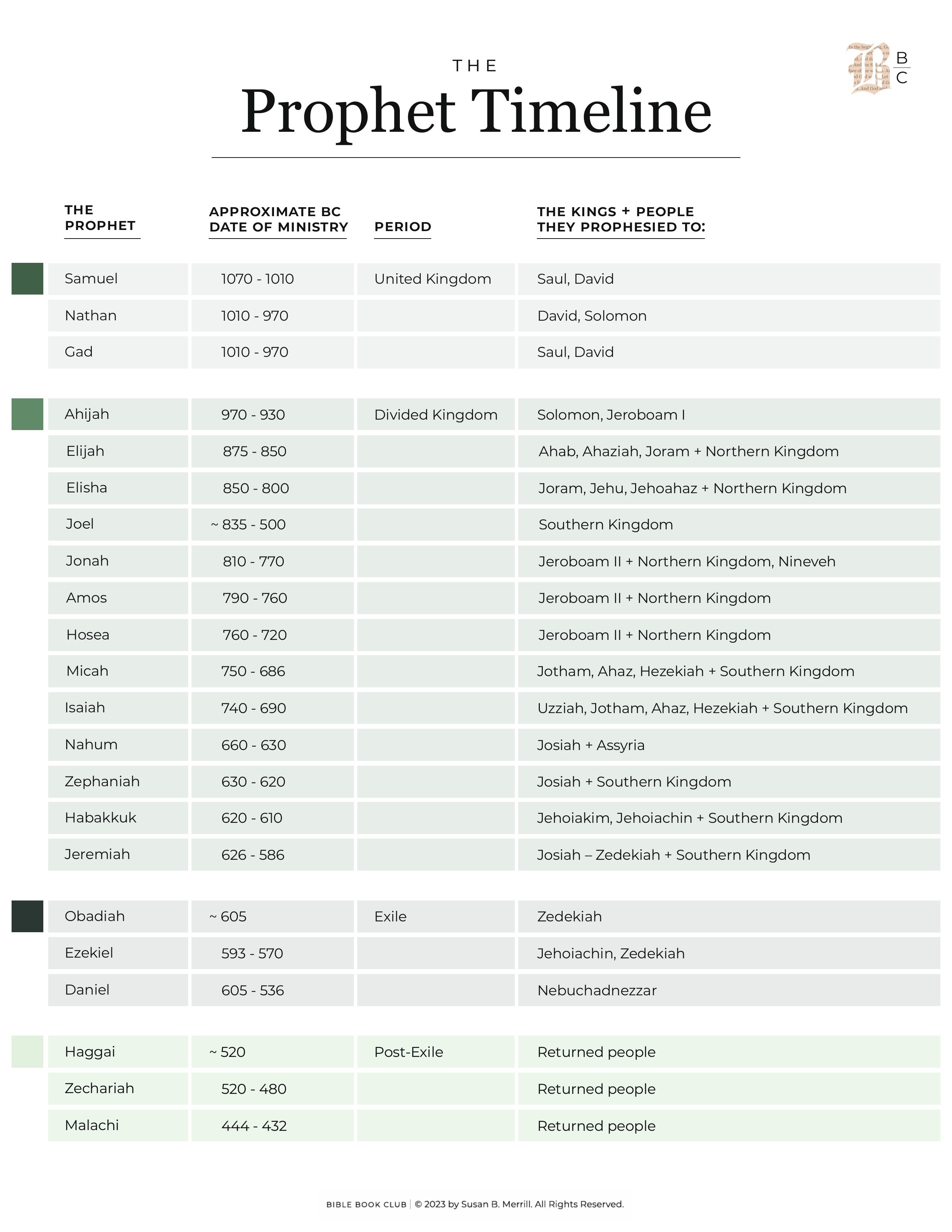
Jeroboam's path to kingship began with Solomon's idolatry and sin. In 1 Kings 11:29-39, the prophet Ahijah approached Jeroboam while he was working for Solomon. Ahijah tore a new cloak into 12 pieces and told Jeroboam, "Take ten pieces for yourself, for this is what the Lord, the God of Israel, says: 'See, I am going to tear the kingdom out of Solomon's hand and give you ten tribes.'" When Solomon heard of this prophecy, he tried to kill Jeroboam, and Jeroboam fled to Egypt for protection until Solomon's death.
Scene 1: Rehoboam the King of Conflict
If we had to describe all the kings up until this point concisely:
- Saul was the king after his own heart.
- David was the king after God's heart.
- Solomon was the king of wisdom.
- Rehoboam was the king of folly.
His folly led to his downfall. He will be remembered as the king whose reign led to the divide.
2 Chronicles 10:1-15
1 Rehoboam went to Shechem, for all Israel had gone there to make him king. 2 When Jeroboam son of Nebat heard this (he was in Egypt, where he had fled from King Solomon), he returned from Egypt. 3 So they sent for Jeroboam, and he and all Israel went to Rehoboam and said to him: 4 “Your father put a heavy yoke on us, but now lighten the harsh labor and the heavy yoke he put on us, and we will serve you.”
5 Rehoboam answered, “Come back to me in three days.” So the people went away.
6 Then King Rehoboam consulted the elders who had served his father Solomon during his lifetime. “How would you advise me to answer these people?” he asked.
7 They replied, “If you will be kind to these people and please them and give them a favorable answer, they will always be your servants.”
8 But Rehoboam rejected the advice the elders gave him and consulted the young men who had grown up with him and were serving him. 9 He asked them, “What is your advice? How should we answer these people who say to me, ‘Lighten the yoke your father put on us’?”
10 The young men who had grown up with him replied, “The people have said to you, ‘Your father put a heavy yoke on us, but make our yoke lighter.’ Now tell them, ‘My little finger is thicker than my father’s waist. 11 My father laid on you a heavy yoke; I will make it even heavier. My father scourged you with whips; I will scourge you with scorpions.’”
12 Three days later Jeroboam and all the people returned to Rehoboam, as the king had said, “Come back to me in three days.” 13 The king answered them harshly. Rejecting the advice of the elders, 14 he followed the advice of the young men and said, “My father made your yoke heavy; I will make it even heavier. My father scourged you with whips; I will scourge you with scorpions.” 15 So the king did not listen to the people, for this turn of events was from God, to fulfill the word the Lord had spoken to Jeroboam son of Nebat through Ahijah the Shilonite.
The Crowning of King Rehoboam
The new King Rehoboam went to Shechem to be crowned. Shechem held significant historical and religious importance for the Israelites. It was the site where Joshua read the covenant between God and the people of Israel after they entered the Promised Land, in Joshua 8. The fact that they were meeting at the place honored for the covenant should have reminded the Israelites to be faithful to the covenant!
The choice of Shechem may have been forced on Rehoboam because it is in the territory of Ephraim, the tribe of Jeroboam. Asking Rehoboam to come to them is most likely a premeditated scheme to secede from Judah. There are no traditions for crowning kings at this early stage. Saul, David, and Solomon were all crowned in a different place. So Rehoboam goes to Shechem for his ordination. Israel, led by Jeroboam, confronted Rehoboam at Shechem.
Why did the ten northern tribes rebel against Rehoboam in 2 Chronicles 10?
The ten northern tribes accused Rehoboam of the heavy yoke his father, Solomon, had placed on the people of the North, meaning taxes and forced labor. A heavy yoke was typical of kings. Kings live lavish lifestyles that do not pay for themselves.
Solomon, the wisest king ever, should have known better. He asked God for wisdom, not wealth. In the end, it sounds like he wanted both. On the other hand, the Israelites are far from innocent. They are rebelling against God. God chose the kings. To choose another king themselves is wrong. The people sent for Jeroboam, which means they are disobeying God. They say they will serve Rehoboam if he lightens the load.
Rehoboam's Father, Solomon, was the wisest man on earth. Solomon, in his wisdom, chose advisors. They became Rehoboam's advisors. Wouldn't it make sense that, if these advisors were chosen by the wisest man on earth, then they would be wise too?
But Rehoboam is not interested in seeking wisdom. He is seeking wealth, and his choice is foolish. He chooses to do things his way with his advisors. How could he fall so far with a father like Solomon and a grandfather like David? Solomon listened to his father, David, and followed his instructions for the Temple and worship very carefully. Rehoboam would not even listen to his father's advisors.
Rehoboam threatens the 10 tribes of the North, but Israel is not having it. And we are not surprised. Verse 15 tells us that this was God's will. Ahijah, the prophet, foretold that this would happen in 1 Kings 11 when he tore his cloak into 12 pieces and gave 10 of them to Jeroboam.
The Message for Us
God has the end game in mind. He knows the choices each player will make. Right or wrong, they will all play into His plan, and God will win the game. His victory over sin is certain.
Dr. Dale Ralph Davis, a commentary author, said this about Rehoboam's stupidity in listening to his friends:
The focus of this passage is on God's sovereignty not human stupidity... It tells us the end God had in mind in this whole affair...This story should prove an encouragement to believers...Contrary to our fears, human stupidity is not running loose but is on the leash of God's sovereignty.
- Situations don't make sense to you.
- Life seems unfair.
- People around you prosper in sin.
- The world appears to be reckless and lost.
The sin of the world, the foolishness of humanity, is not running loose. God has it all on a leash, and one day it will come to an end. It was for this very reason that God sent His Son from the line of David, a king above all kings. The king who ended the Davidic line of imperfect kings.
John the Baptist was one of the first to recognize Jesus as king. He said:
John 1:29 29 The next day John saw Jesus coming toward him and said, “Look, the Lamb of God, who takes away the sin of the world!
But all will recognize Christ in the end.
Philippians 2:9-11 9 Therefore God exalted him to the highest place and gave him the name that is above every name, 10 that at the name of Jesus every knee should bow, in heaven and on earth and under the earth, 11 and every tongue acknowledge that Jesus Christ is Lord, to the glory of God the Father.
The game will end. The battle will be over, and Jesus will be king forever.
Revelation 11:15 15 The seventh angel sounded his trumpet, and there were loud voices in heaven, which said: “The kingdom of the world has become the kingdom of our Lord and of his Messiah, and he will reign for ever and ever.”
Jesus Christ is the one king, anointed by God, who can save the world.
- Jesus, which means saves.
- Christ, which means anointed one.
So hold on, do not despair. The sin of the world, the foolishness of humanity, is not running loose. God has it all on a leash, and one day it will come to an end.
Scene 2: Rehoboam's Folly Leads to Israel's Rebellion
2 Chronicles 10:16-19
16 When all Israel saw that the king refused to listen to them, they answered the king: “What share do we have in David, what part in Jesse’s son? To your tents, Israel! Look after your own house, David!”
So all the Israelites went home. 17 But as for the Israelites who were living in the towns of Judah, Rehoboam still ruled over them.
18 King Rehoboam sent out Adoniram, who was in charge of forced labor, but the Israelites stoned him to death. King Rehoboam, however, managed to get into his chariot and escape to Jerusalem. 19 So Israel has been in rebellion against the house of David to this day.
Israel Rebels
Rehoboam sends Adoniram to deal harshly with the Israelites, and he is stoned to death. Rehoboam escapes to Jerusalem. Israel rebels against the house of David and God. The 12 tribes that David fought so hard to unite divide just one generation after his death. The irony is, Rehoboam rejected God's people, and the people rejected Rehoboam and God.
In a spiritually catastrophic move, the 10 tribes of Israel rejected the Davidic Dynasty and Covenant promises. In just one generation, all have forgotten David's heart for the Lord. And in just months, they have forgotten all the wisdom writings of Solomon.
The Wisdom of Solomon
Solomon wrote over 100 proverbs extolling the value of wisdom and the dangers of foolishness. In fact, the book of Proverbs begins with:
Proverbs 1:1-7 1 The proverbs of Solomon son of David, king of Israel:
2 for gaining wisdom and instruction; for understanding words of insight; 3 for receiving instruction in prudent behavior, doing what is right and just and fair; 4 for giving prudence to those who are simple, knowledge and discretion to the young— 5 let the wise listen and add to their learning, and let the discerning get guidance— 6 for understanding proverbs and parables, the sayings and riddles of the wise.
7 The fear of the Lord is the beginning of knowledge, but fools despise wisdom and instruction.
The entire chapter of Proverbs 9 personifies foolishness and wisdom. Wisdom is described as a valuable gift, while foolishness is portrayed as self-destructive. Proverbs 13:20 compares them both.
Proverbs 13:20 20 Walk with the wise and become wise, for a companion of fools suffers harm.
Rehoboam Rejects Wisdom
The point is, Rehoboam is exposed to wisdom through:
- Observation of his father.
- His father's writing.
- His father's advisors.
But Rehoboam is also exposed to wealth. He has a choice. He chooses the foolish advice of his companions, and he chooses wealth because it benefits him. The result will be catastrophic for both Israel and Judah. It will be the beginning of their path to exile. A national and theological crisis will evolve from the actions of this one king, reversing so much of what David and Solomon worked for.
Scene 3: The Kingdom Divides
The Chronicler has been following the stories written in 1 Kings 12. However, he omits crucial, painful parts that he assumes we know. Like this one:
1 Kings 12:20 20 When all the Israelites heard that Jeroboam had returned, they sent and called him to the assembly and made him king over all Israel. Only the tribe of Judah remained loyal to the house of David.
It's like the Chronicler can't bear to say Israel made someone else king. Judah alone maintains the true continuity of Israel's covenant relationship with God. The Northern Kingdom serves as a negative example of what happens when you abandon the Davidic line, the Temple, and proper worship. He treats the Northern Kingdom of Israel as essentially outside the covenant community, though not exactly as complete foreigners.
So the Chronicler largely ignores them and only mentions northern Israel when it directly impacts Judah's story. He has written them out of the main narrative of God's people. When he does mention northern Israel, it's usually as an enemy, threat, or cautionary example. They're treated as a separate political entity rather than fellow Israelites.
2 Chronicles 11:1-4
1 When Rehoboam arrived in Jerusalem, he mustered Judah and Benjamin—a hundred and eighty thousand able young men—to go to war against Israel and to regain the kingdom for Rehoboam.
2 But this word of the Lord came to Shemaiah the man of God: 3 “Say to Rehoboam son of Solomon king of Judah and to all Israel in Judah and Benjamin, 4 ‘This is what the Lord says: Do not go up to fight against your fellow Israelites. Go home, every one of you, for this is my doing.’” So they obeyed the words of the Lord and turned back from marching against Jeroboam.
Rehoboam Doesn’t Attack
Rehoboam runs back to Jerusalem and gathers an impressive army from the faithful tribes of Judah and Benjamin. But before he can attack, the prophet Shemaiah stops him with a word from the Lord. Shemaiah reminds Rehoboam that the northern tribes are still brothers. The Northern Kingdom's rebellion is God's doing. It is a consequence of Solomon's sin. King Rehoboam obeys the command and appears to turn as a result of the lesson he learns.
Scene 4: Rehoboam Defends, the Levites Support
2 Chronicles 11:5-17
5 Rehoboam lived in Jerusalem and built up towns for defense in Judah: 6 Bethlehem, Etam, Tekoa, 7 Beth Zur, Soko, Adullam, 8 Gath, Mareshah, Ziph, 9 Adoraim, Lachish, Azekah, 10 Zorah, Aijalon and Hebron. These were fortified cities in Judah and Benjamin. 11 He strengthened their defenses and put commanders in them, with supplies of food, olive oil and wine. 12 He put shields and spears in all the cities, and made them very strong. So Judah and Benjamin were his.
13 The priests and Levites from all their districts throughout Israel sided with him. 14 The Levites even abandoned their pasturelands and property and came to Judah and Jerusalem, because Jeroboam and his sons had rejected them as priests of the Lord 15 when he appointed his own priests for the high places and for the goat and calf idols he had made. 16 Those from every tribe of Israel who set their hearts on seeking the Lord, the God of Israel, followed the Levites to Jerusalem to offer sacrifices to the Lord, the God of their ancestors. 17 They strengthened the kingdom of Judah and supported Rehoboam son of Solomon three years, following the ways of David and Solomon during this time.
Rehoboam’s Eyes Are Opened
Rehoboam seems to see the light of the consequences of sin. His father's and his own. Ten of the tribes of Israel are now enemies, and his holdings are greatly reduced. So he builds up defenses and strengthens Judah, which also includes the tribe of Benjamin.
The Levites are the true heroes. Their commitment to the Word of God is solid. When Jeroboam in the north goes rogue with his own form of worship, they head south to Jerusalem along with some members of the northern tribes who are faithful.
Scene 5: Rehoboam's Family
2 Chronicles 11:18-23
18 Rehoboam married Mahalath, who was the daughter of David’s son Jerimoth and of Abihail, the daughter of Jesse’s son Eliab. 19 She bore him sons: Jeush, Shemariah and Zaham. 20 Then he married Maakah daughter of Absalom, who bore him Abijah, Attai, Ziza and Shelomith. 21 Rehoboam loved Maakah daughter of Absalom more than any of his other wives and concubines. In all, he had eighteen wives and sixty concubines, twenty-eight sons and sixty daughters.
22 Rehoboam appointed Abijah son of Maakah as crown prince among his brothers, in order to make him king. 23 He acted wisely, dispersing some of his sons throughout the districts of Judah and Benjamin, and to all the fortified cities. He gave them abundant provisions and took many wives for them.
Rehoboam’s Redeeming Qualities
Rehoboam has some redeeming moments when he:
- Marries Israelites, cousins, it sounds like.
- Receives the blessing of a large family.
- Is wise in parenting his sons.
Scene 6: The Attack from Shishak
2 Chronicles 12:1-11
1 After Rehoboam’s position as king was established and he had become strong, he and all Israel with him abandoned the law of the Lord. 2 Because they had been unfaithful to the Lord, Shishak king of Egypt attacked Jerusalem in the fifth year of King Rehoboam. 3 With twelve hundred chariots and sixty thousand horsemen and the innumerable troops of Libyans, Sukkites and Cushites that came with him from Egypt, 4 he captured the fortified cities of Judah and came as far as Jerusalem.
5 Then the prophet Shemaiah came to Rehoboam and to the leaders of Judah who had assembled in Jerusalem for fear of Shishak, and he said to them, “This is what the Lord says, ‘You have abandoned me; therefore, I now abandon you to Shishak.’”
6 The leaders of Israel and the king humbled themselves and said, “The Lord is just.”
7 When the Lord saw that they humbled themselves, this word of the Lord came to Shemaiah: “Since they have humbled themselves, I will not destroy them but will soon give them deliverance. My wrath will not be poured out on Jerusalem through Shishak. 8 They will, however, become subject to him, so that they may learn the difference between serving me and serving the kings of other lands.”
9 When Shishak king of Egypt attacked Jerusalem, he carried off the treasures of the temple of the Lord and the treasures of the royal palace. He took everything, including the gold shields Solomon had made. 10 So King Rehoboam made bronze shields to replace them and assigned these to the commanders of the guard on duty at the entrance to the royal palace. 11 Whenever the king went to the Lord’s temple, the guards went with him, bearing the shields, and afterward they returned them to the guardroom.12 Because Rehoboam humbled himself, the Lord’s anger turned from him, and he was not totally destroyed. Indeed, there was some good in Judah.
13 King Rehoboam established himself firmly in Jerusalem and continued as king. He was forty-one years old when he became king, and he reigned seventeen years in Jerusalem, the city the Lord had chosen out of all the tribes of Israel in which to put his Name. His mother’s name was Naamah; she was an Ammonite. 14 He did evil because he had not set his heart on seeking the Lord.
15 As for the events of Rehoboam’s reign, from beginning to end, are they not written in the records of Shemaiah the prophet and of Iddo the seer that deal with genealogies? There was continual warfare between Rehoboam and Jeroboam. 16 Rehoboam rested with his ancestors and was buried in the City of David. And Abijah his son succeeded him as king.
What is the significance of Rehoboam replacing gold shields with bronze shields?
When Egypt attacks and makes off with all the gold, Rehoboam loses the golden shine that reflects his father Solomon's glory to the world, because the gold is no longer being used to reflect God's glory. Rehoboam replaces it with dull bronze.
Note that God does not use a Canaanite invasion as a warning to Judah. He uses the Egyptians, which should have triggered their memory.
Why does God send the Egyptians to attack Jerusalem in 2 Chronicles 12?
God's choice to send Egyptians to attack Jerusalem is a blatant reminder of the slavery they left in Egypt. And of the slavery they will return to if they don’t get it together and repent. Rehoboam is buried with David, and his son Abijah succeeds him.
This is Abijah, son of Rehoboam, not Abijah, the son of Jeroboam. Ironically, both kingdoms use the name Abijah, which means "my father is God," but neither of their fathers, Jeroboam or Rehoboam, followed God.
Join our 2 Chronicles 13-16 Bible study!
Group Discussion Questions for 2 Chronicles 10-12
- The Chronicler intentionally focuses on the line of David, where God's covenant promise lives. In a world full of daily noise, distractions, and hostility towards Christians, how do you keep your focus fixed on God’s core promises?
- Rehoboam rejects the wise counsel of his father's elders and instead chooses the foolish advice of peers who tell him what he wants to hear. Can you relate to the desire to listen to people (or social media algorithms) that tell you what you want to hear versus considering if another perspective might be valuable?
- Rehoboam replaces Solomon's gold shields with bronze ones after they are carried off, a dimmer substitute for what once reflected God's glory. Have you ever settled for a lesser substitute in your walk with God instead of pursuing His glory in your life?