
Subscribe to BBC on Apple, Spotify , or Amazon
What Happened to Solomon’s Temple?
In 1 Kings 5, we’ll dig into the building of the Temple. As we do, it’s awe-inspiring to note the place where the Temple was built is still the most sacred and disputed real estate in the world today. The location is holy for Muslims, Jews, and Christians, although today it’s the site of the Dome of the Rock.
When was dome of the rock built?
The Muslims completed the shrine called the Dome of the Rock in 692. It entirely covers the rock and is the most famous and oldest Islamic site. The Muslims believe the rock on Mount Moriah is the place from which the Prophet Muhammad ascended into heaven. They also considered Abraham a prophet. However, instead of Abraham sacrificing Isaac on this rock, the Quran suggests Ishmael was the sacrificial son.
Why is the Dome of the Rock important to Jews?
The Jews also regard the location of the stone inside the Dome of the Rock as the holiest spot on Earth, because it is where Isaac was almost sacrificed. It is also the site of the Holy of Holies in Solomon’s Temple where the Ark of the Covenant sat. Muslim authorities refuse to permit Jewish prayer on the Temple Mount, so the Jews have developed a custom of praying at the Western Wall.
Why is the Dome of the Rock important to Christianity?
To Christians the rock, formerly the Temple, is sacred because it is where the baby Jesus was presented in the Temple. It’s also where Jesus was found among the teachers as a 12-year-old. As an adult, it’s where Jesus prayed, taught, and drove the moneychangers out of the Temple precincts. The veil of the Temple was torn when Jesus died on the cross, and to Christians the Temple represents all Jesus fought to give us access to without the never-ending constraints of sacrificing for atonement of our sins.
The Importance of the Temple in Solomon’s Time
In 2 Samuel 7:10-13, God promised David his offspring would build a house for the Lord. The time has come for Solomon to build. This is a historic occasion for the Israelites for several reasons. First and foremost, the Temple is being built to house the Ark, which is the seat of God’s presence. It will serve as the focal point for Israel’s worship and religious life. The place of atonement for their sins, which is crucial in their relationship with God.
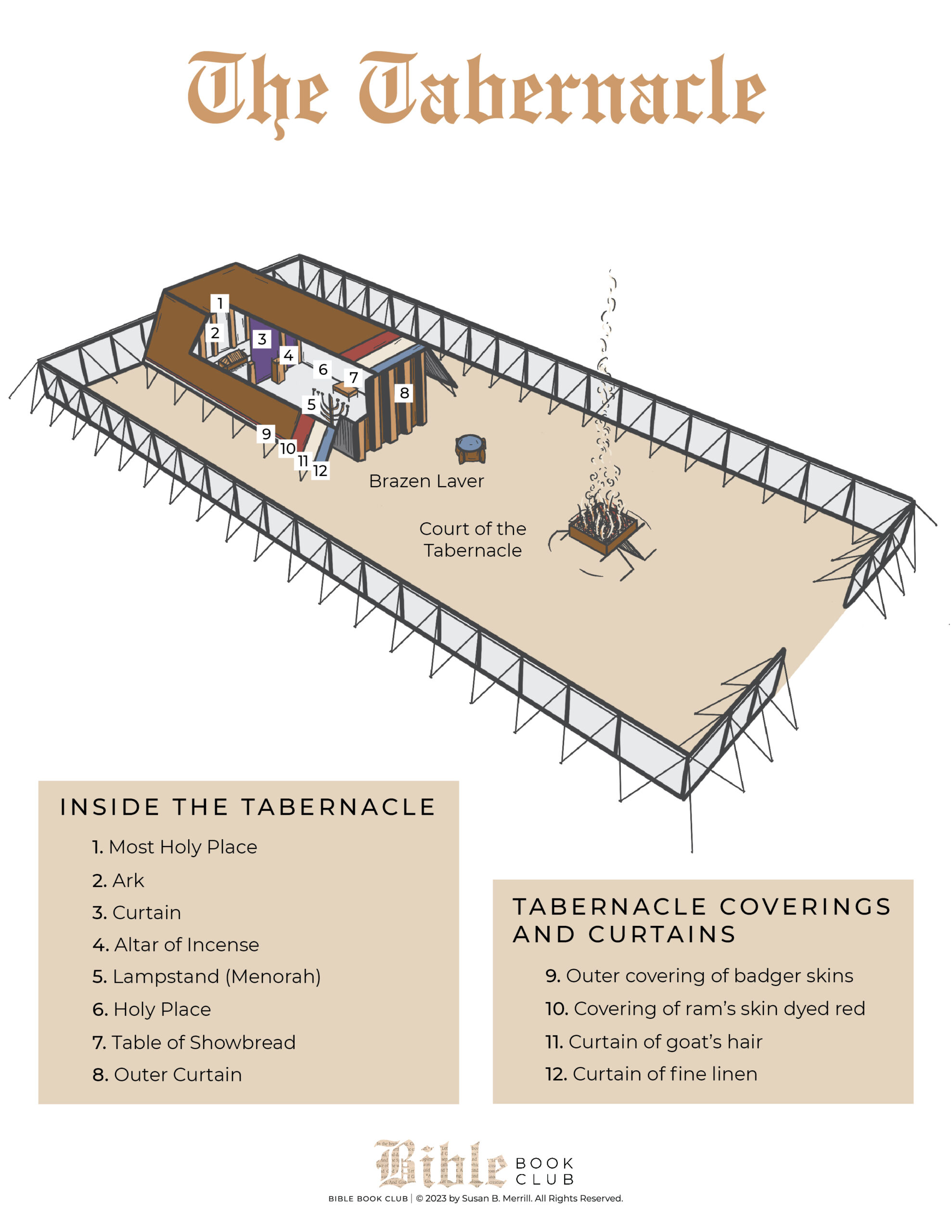
The Temple will also give Israel a national identity. The Canaanites, Egyptians, and other foreigners all have temples for their gods, but the Ark has been housed in a tent called the Tabernacle since the time they left Egypt. In 2 Samuel 6:17, David pitched a tent for the Ark, but it needs a permanent home. It needs a Temple.
Solomon Negotiates with Hiram, the King of Tyre, in 1 Kings 5
In 1 Kings 5:1-12, Hiram, king of Tyre, sends an envoy to Solomon. He was allies with David, and now he’s obviously hoping to be allies with David’s son Solomon. This is a providential, divine opportunity for Solomon. Israel does not have the resources or expertise to build the Temple Solomon has in mind but Tyre does, and they’ve provided building materials to David in the past.
In 2 Samuel 5:11 Solomon immediately begins negotiations for similar assistance by reminding Hiram of God’s instructions to David that Solomon should build the Temple. Hiram is pleased with Solomon’s request and even praises God. Their collaboration is simple. Solomon will provide Hiram with a lifetime supply of wheat and olive oil in exchange for Tyre’s lumber and skilled labor.
Solomon’s Massive Building Crew
The next task on Solomon’s list is to organize the construction team for building in 1 Kings 5:13-18. Adoniram will be the man in charge of 30,000 men enlisted from all Israel. Ten thousand rotated in each month while the other 20,000 spent two months at home.
It sounds like a simple enough job share plan if they have planes and cars. But the commute every three months must be killer for some of them, not to mention housing and feeding 10,000 migrant workers every month.
On top of the Israelite labor, there are 70,000 carriers who transport the stone, 80,000 stone cutters, and 3,300 foreman to keep all those men organized. There are also craftsmen who do the more elaborate work on the timber and stone. In total, over 187,000 men will work on the project.
Sometimes the undaunted determination to get things done is even more powerful than wisdom, and Solomon is on a mission. He is going to get it done. He will build God a home for His presence to dwell among them.
Reflection Point
What’s your mission? What skill has God given you to accomplish His mission? Is it genius, determination, courage, vision, influence, or something else? Are you getting your mission done?
Where was Solomon’s Temple built in 1 Kings 6?
From 2 Samuel 23-24, we know the Temple was built on Mount Moriah on the threshing floor David purchased. In 1 Kings 6:1, the word Ziv means flowers, so the building of the Temple began somewhere between April and May in the month of flowers, which is the second month of the year.
The author is making a point by mentioning it has been 480 years since God brought Israel out of Egypt. Israel was in Egypt for 430 years before they were given their freedom in Exodus 12:40-41. Now, after 480 years of wandering and war, Israel is given rest. The author sees the beginning of the Temple construction as the beginning of the promised era of rest in 2 Samuel 7 when God created the Davidic Covenant.
This is another sign. Another promise fulfilled. Israel is on the right path in God’s redemption plan.
How big was Solomon’s Temple?
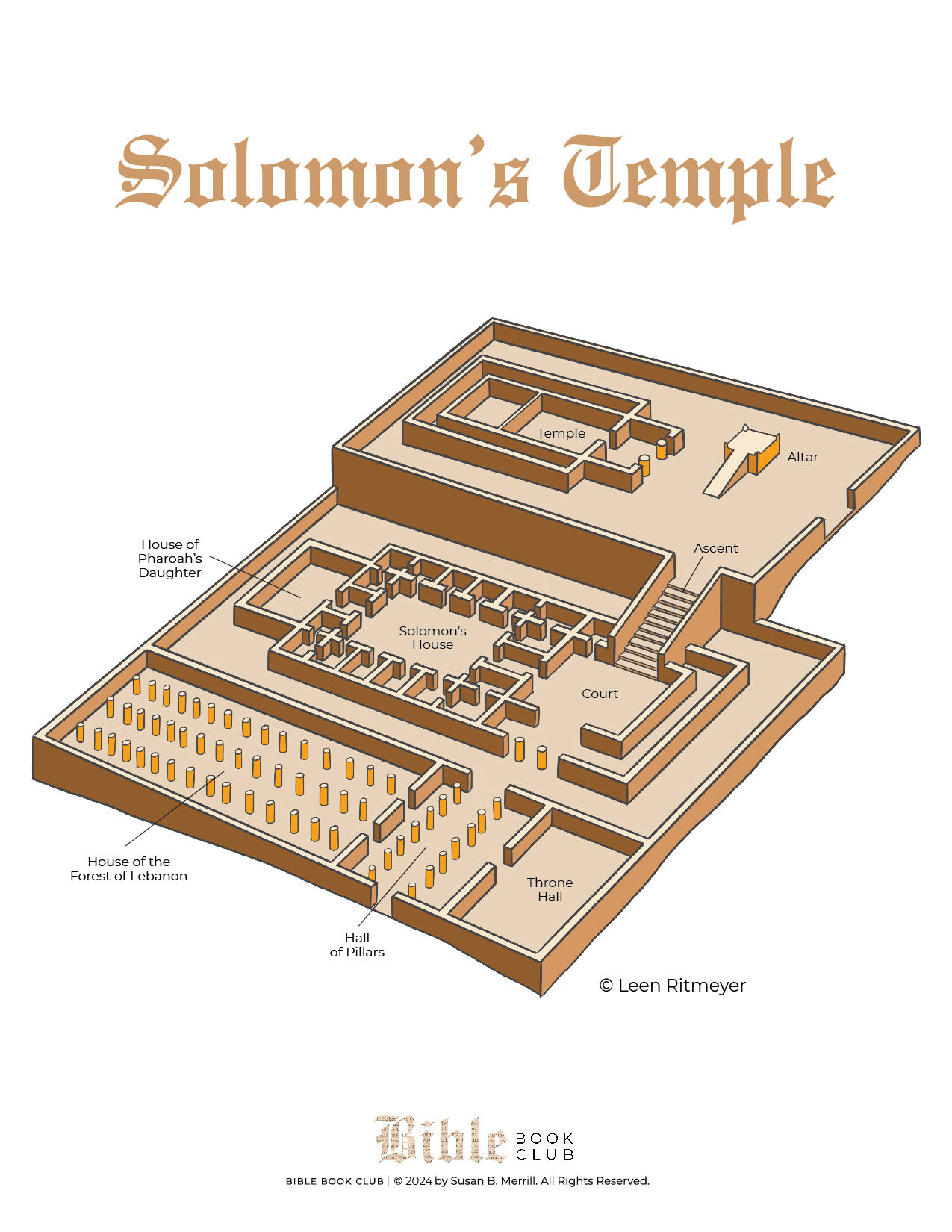
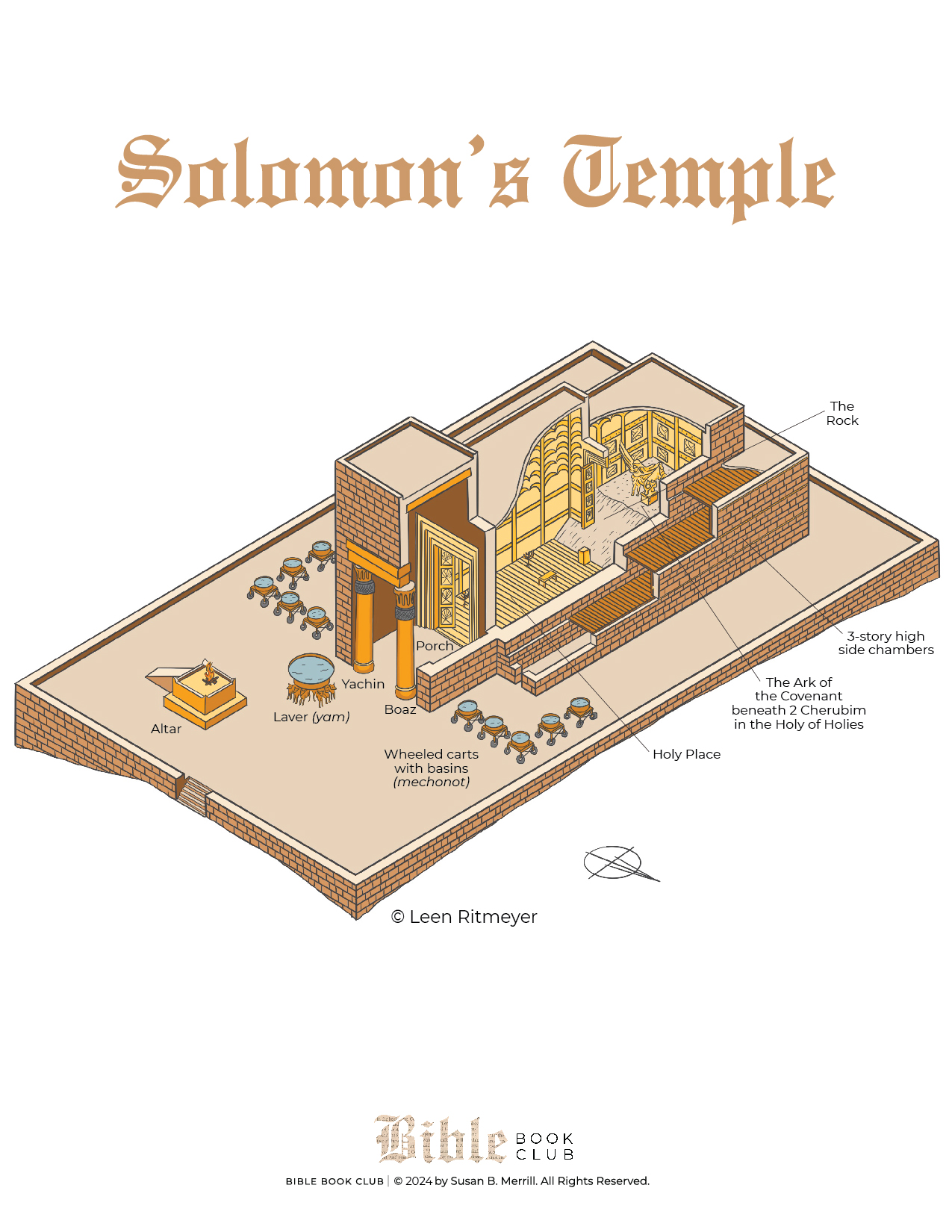
In 1 Kings 6:2-10, the author describes the exterior, interior, entrances, and courtyard. The exterior measured approximately 90 feet long x 30 feet wide x 45 feet high. The Temple size was double the size of the Tabernacle. The front porch added another ten cubits. Three stories of side rooms were built around the three other walls of the exterior.
The Temple was a small building compared to others Solomon built. However, it was a part of a much larger royal compound and the adjacent Palace. For a great visual of of the layout, check out our show notes on Solomon’s Temple.
Hearts Matter More Than Houses
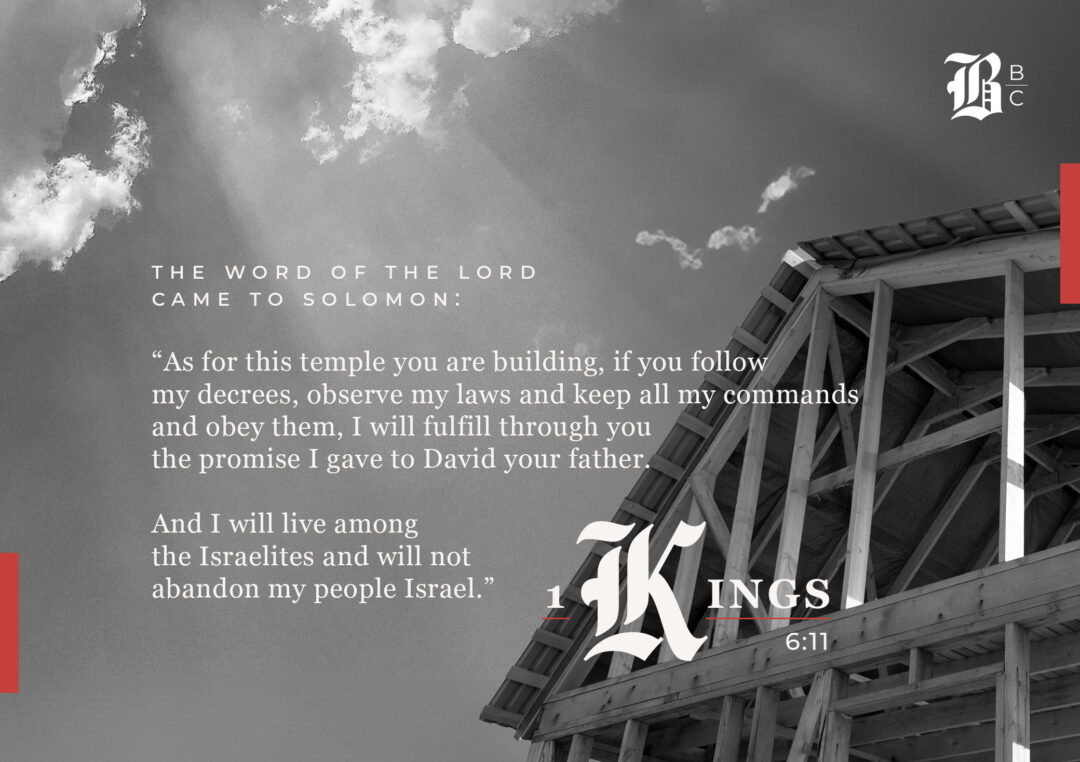
Right after Solomon completes the exterior and before he begins the interior, God gives Solomon a very important spiritual reminder in 1 Kings 6:11-13. The Lord reiterates His promise to David and encourages Solomon to remember the house he’s building is a place for the Lord to dwell among His people. But the people must keep His laws as outlined in the Mosaic Covenant. If they do, He will keep His covenant to David as outlined in the Davidic Covenant.
In other words, as beautiful as this Temple will be, a relationship with God is not about a house. It cannot hold Him captive in a relationship with Israel. They must have a heart for the Lord, or this house for the Lord will fall.
What did Solomon’s Temple look like?
The interior of Solomon’s Temple includes a long, narrow main hall or Holy Place. There is an inner sanctuary at the end of the main hall for the Ark called the Most Holy Place or Holy of Holies. The entrance to the sanctuary is through the front porch, and the entrance to the side rooms and stairs are on the south side of the Temple.
In 1 Kings 6:14-18, Solomon panels the Temple walls with carved cedar. The cedar tree is ideal because of its fragrance and size, reaching up to 100 feet tall. The kings of Egypt, Phoenicia, Assyria, Babylon, and Persia also used cedar trees to build temples and palaces.
The inner sanctuary, or the Most Holy Place, in 1 Kings 6:19-28 is the resting place of the Ark of the Covenant. It is the perfect golden cube, 20 cubit square with the walls, floor, and ceiling all overlaid with gold. A Biblical cubit is about 1.5 feet, but in other ancient cultures it was longer.
In our drawing of the Temple (scroll past the Temple courtyard to see the Temple itself), you can see the Most Holy Place takes up about 30 feet, which is the entire last third of the Temple. The first two thirds, or 60 feet, are the main hall called the Holy Place. This room is also possibly overlaid with gold because in verse 22 it seems to be included with the Most Holy Place. That’s a lot of gold!
The two cherubim inside the Most Holy Place are 15 feet high with wings that touch in the middle and expand the width of the room. That means each cherubim is also 15 feet wide. These cherubim most likely stand right behind or over the Ark with their wings touching above it.
A Temple Dressed in Eden’s Beauty
In 1 Kings 6:29-36, the walls and doors of the Temple are elaborately carved with cherubim, palm trees, and flowers representing the Garden of Eden and, of course, there is more gold. The author wants us to understand that everything was covered with gold, even the floor.
The doors to the Temple and the Most Holy Place are similarly carved and covered in hammered gold. The inner court, also called the court of the priests, was a walled space around the outside of the Temple.
A Barrier Meant to Be Broken
The gold chains that extend across the inner sanctuary most likely refer to the veil that separated the Ark from the view of all but the high priest. The veil is either in front of the door or behind it. That way, if the door is opened, no one can see the Ark because the veil will be in the way.
In 2 Corinthians 1:13-18, Paul speaks about the veil. His words explain the believer’s access to God’s glory. Jesus died for our sin and the veil in the Temple was ripped in two. Our sins have been atoned for and now we have access to God through Jesus Christ.
What the Altar of Incense Represents
The gold altar is the altar of incense, and it is placed near the entrance to the Most Holy Place in the main hall as was the altar of incense in the Tabernacle described in Exodus 30. It is significant that there was an altar of incense in the Tabernacle and now Solomon places an altar of incense in the Temple. In Revelation 8:1-5, the Apostle John has a vision of an altar of incense also in Heaven.
Bible Bender
Understanding Revelation is such a Bible Bender. The Pulpit Commentary has a very clear explanation of what John saw in his vision in Revelation:
“This is the golden altar of incense which stood before the veil in Exodus 30:1-8 and in 1 Kings 6, but which now stands before the throne of God, the veil having disappeared. The order of events followed resembles the ceremony of Jewish worship. In the temple, the priest took burning coals from off the bronze altar in the courtyard, and proceeded to the altar of incense, on which to burn incense (Leviticus 16:12-13).
The prayers are to be incensed, so as to render them pure and acceptable to God upon the golden altar.
There appears to be a kind of progression in the insight that the seer affords us of the heavenly worship. In Revelation 4:1 a door is opened, and St. John sees into heaven; he is, as it were, outside the sanctuary. In this place he is permitted to advance in his vision within the sanctuary, and to observe the golden altar.”
The gold altar of incense starts in the Tabernacle, progresses to the Temple, and ends before the Throne of God in Heaven.
- The Tabernacle was the first dwelling place of the presence of God on Earth.
- The Temple was the second dwelling place of the presence of God on Earth.
- Heaven is the last dwelling place of man in the presence of God.
The progression of the altar of incense from Exodus to 1 Kings to Revelation is a small example of how God has led us through His plan of redemption to our final resting place in heaven. His goal since the beginning has been for us to dwell in relationship with Him for eternity.
How many years did Solomon take to build the Temple?
Solomon completed the Temple in the eighth month, the month of Bul, which means rain. The Temple took seven and a half years to complete, and at last God has a place to dwell among His people. But will God come? And if He does, will He stay? We’re about to find out in our upcoming chapters of 1 Kings.
🎧 Ready to dive deeper? Listen to this episodes of the Bible Book Club Podcast here.
Next Episode:
Show Notes:
Jerusalem in the Time of David and Solomon
Map of Mount Moriah and the temple
Video tour of the Temple Mount and the dome of the Rock exterior on Mount Moriah
Video of the inside of the Dome of the Rock
Picture of the Rock inside the dome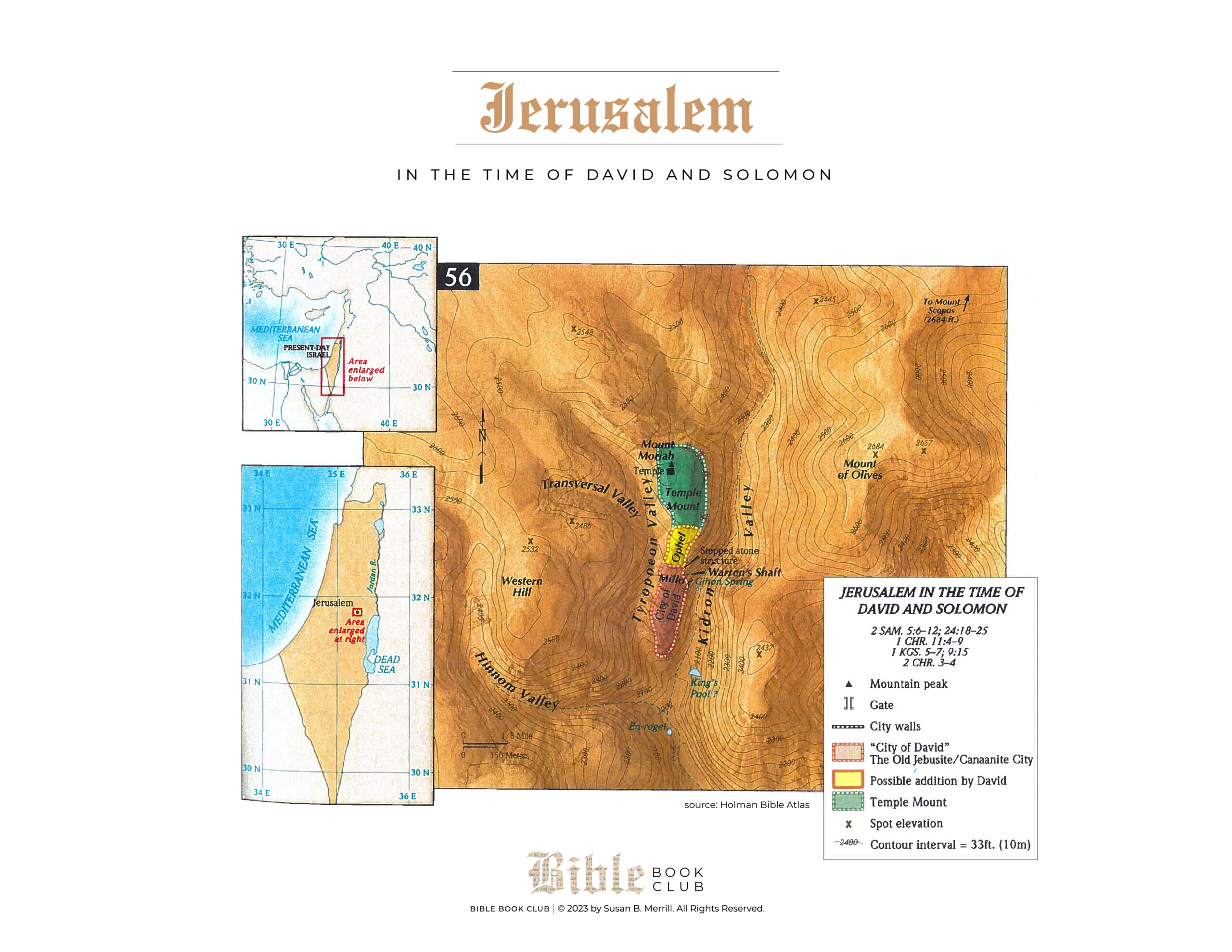
The Temple
Other Podcast Episodes Mentioned:
