Subscribe to BBC on Apple, Spotify , or Amazon.
Levi’s Redemption Story – 1 Chronicles 6
Finally, in 1 Chronicles 6, the author gets to focus on his favorite tribe–the Levites. Many believe he loves this tribe so much because it’s his own tribe. This only strengthens the belief the Chronicler is in fact the priest Ezra, because priests can only come from the tribe of Levi.
The Chronicler seems to love a good redemption story. After all, the sole reason he wrote Chronicles is to encourage the Israelites to embrace their own story of redemption by loving and serving God.
And the tribe of Levi is an awesome redemption story. Way back in Genesis 34 Levi and Simeon were cursed by their father Jacob for the vengeful way they killed the men of Schechem. The curse said God would divide and scatter their tribes in Israel.
That curse became a blessing in Exodus 32:29 when the Levites stood with Moses against idolatry during the golden calf incident. At that point, Moses declared them “set apart to the Lord.” With this, the Levites were elevated to sacred service throughout the Promised Land–caretakers of the Temple and priests for the people.
Levi’s Place in the Story
The Chronicler symbolically places the tribe of Levi in the middle of the genealogy in Chronicles. There could be a few possible reasons for this.
Perhaps it’s because the tribe plays a central role in helping Israel find favor with God. After all, the people must worship, learn about, and obey God, and the tribe of Levi leads that effort.
Or maybe it’s because they are the only tribe with ties to every tribe. They were scattered as the curse dictated–assigned to every region–and became a blessing to the people.
Another possible reason is a subliminal reference to the pattern Moses used to arrange the tribes as they traveled through the wilderness.
- In camp, the Levites were stationed directly around the Tabernacle, forming a protective barrier between it and the rest of the tribes. Each Levite clan (the Gershonites, Kohathites, and Merarites) was assigned specific duties related to the Tabernacle.
- While marching, the Levites carried the Tabernacle and its furnishings, traveling in the middle of the procession. The Kohathites, in particular, carried the most sacred items such as the Ark.
When the Israelites were exiled to Babylon, it brought an end to the monarchy. Without a king, the Chronicler knew it would fall to the tribe of Levi to lead the people in the restoration of Israel. This is why he wrote the book of Chronicles!
The Spiritual Legacy of Levi
Levi’s three sons Gershon, Kohath, and Merari formed the three clans of the Levitical Corps that served the Temple and community. As the Chronicler lays out the genealogy of the Levite tribe, he begins with the line of Kohath in 1 Chronicles 6:1-3.
This is the line that led to Aaron, the first high priest. It’s packed with big names like Moses, Aaron, Miriam, Eleazar, Phinehas, Samuel, and more. It was a Godly tribe.
The returning exiles who were Levites hearing this genealogy must have been encouraged and proud. This tribe was loaded with leaders who had done so much for Israel. Maybe even more than Judah.
Sacred Duty and Spiritual Drama
In Numbers 28, Aaron became the first high priest. The author quickly covers all 21 generations of high priests in 1 Chronicles 6:3-15.
He only calls out two of them. Johanan–the first priest to preside over the Temple Solomon built. And Jozadak–the son of the last priest who presided over the Temple when Nebuchadnezzar destroyed it.
The Chronicler doesn’t mention the priests who were epic failures including Nadab and Abihu who were Aaron’s own sons. In Leviticus 10, they were drinking and messed up their priestly duties.
Similarly, Eli’s sons Phinehas and Hophni had a fatal fail in priestly duties in 1 Samuel. All four of these priests died in the line of duty–but not for honorable reasons.
Many of the other priestly names might look familiar. Phinehas is Aaron’s grandson. He was a good guy and a killer priest, literally wielding a sword for the Lord in Numbers, Season 4, Episode 13.
Zadok was the priest who stayed loyal to David during Absalom’s rebellion and anointed Solomon in 2 Samuel 15, Season 10, Episode 10. Hilkiah was the priest under Josiah who found the Book of the Law and read it to Josiah, which created a covenant revival in 2 Kings 22, Season 12, Episode 13.
Set Apart for Service
Every priest was a Levite, but not every Levite was a priest. Some had other jobs—important ones. Working for the Lord was a high calling that demanded discipline, focus, and a willingness to take on risk every single day.
It wasn’t easy work, but it was sacred. Moses laid out the plan for this work in Numbers 3, assigning each clan their specific duties.
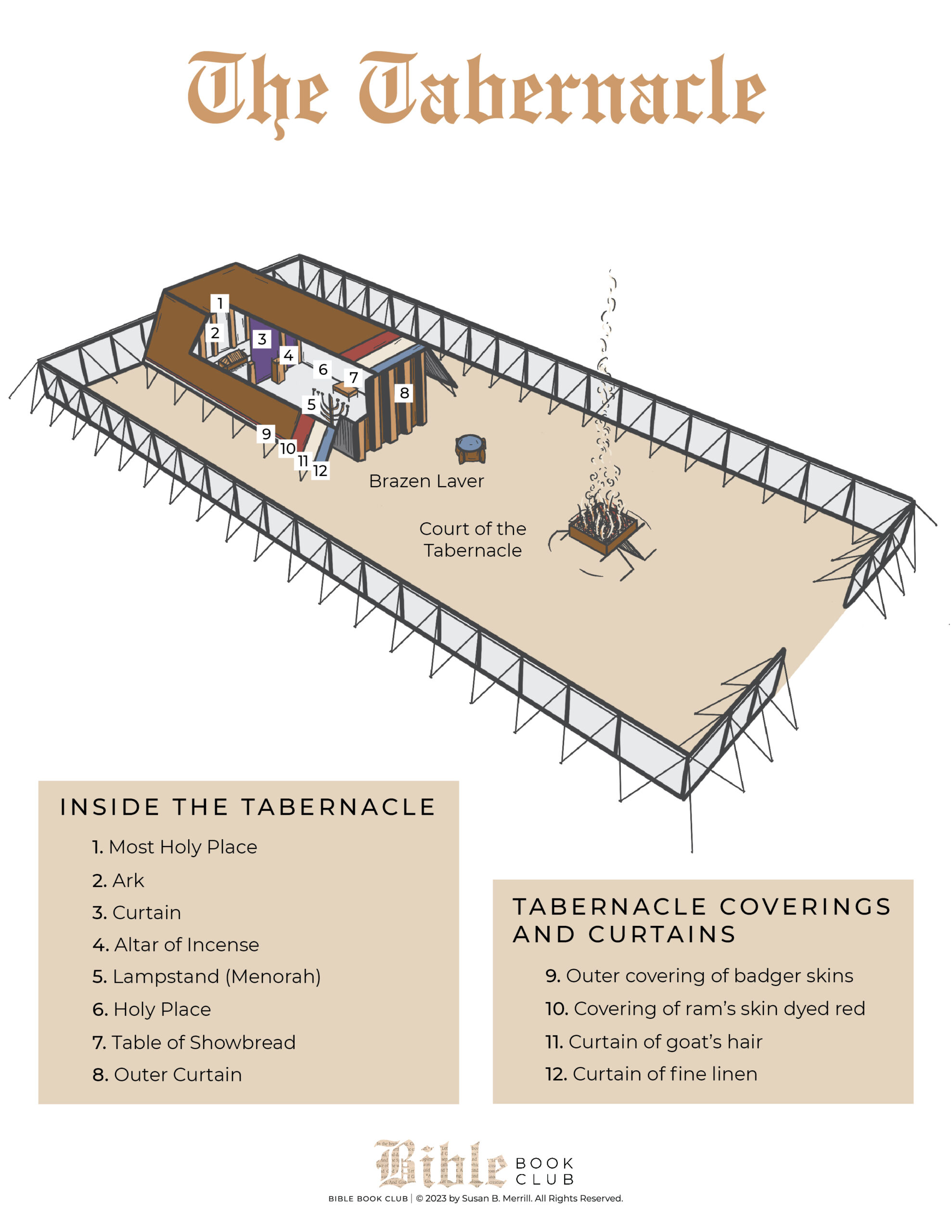
In 1 Chronicles 6:16-21, we start with the Gershonites whom Moses assigned to care for the outer courtyard of the Tabernacle in Numbers 3:21-26. This job included the tent coverings, curtains, ropes, and everything related to their use. For a visual of how this all came together, check out this diagram.
Kohath’s Dangerous Duty
Next up is the clan of Kohath. In 1 Chronicles 6:22-28, these are the Kohath members who are not in the priesthood. Priests also come from the line of Levi’s son Kohath, but they are a special subset of this clan from the line of Aaron.
The Kohathite clan had the most responsibility of the three clans. They report directly to the High Priest and, in Numbers 3:27-32, Moses assigns them the inner sanctuary where it could be deadly to work.
Remember in 2 Samuel 6 when the Ark was in transport and the oxen stumbled? A man named Uzzah reached out to steady the Ark and died for touching it.
Holy, Hard Work
The last clan of the three is the Merarites. In Numbers 3:33-37, Moses made them responsible for setting up and taking down the giant fence around the Tabernacle. Not to mention also carrying it all over the wilderness and Canaan.
This must have been a heavy task! The curtain fence enclosed a space of 11,250 square feet. It was 150 x 75 feet and the curtain was seven feet tall.
Imagine the Merarites doing this all in sandals, no gloves, megaphone, or PA system to blast communication. No trucks. Just men, carts, and donkeys. It sounds grueling. However, there were a lot of them, and they were extremely organized.
A God of Order
Organization is noteworthy. God’s a big fan of it. He ordered the world in Genesis 1.
He ordered the lives of the Israelites…
- Into tribes, clans, and families.
- With Laws. (Bible Book Club Season 3 of Leviticus)
- In Worship. (Bible Book Club Season 2 of Exodus and Season 3 of Leviticus)
- And Leadership. (Judges Season 7, 1 Samuel Season 9, 2 Samuel Season 10, 1 Kings Season 11, and 2 Kings Season 12)
God loves order and Paul confirms its importance for us in 1 Corinthians 14:33 and 14:40.
While there is much we can’t control in life, there are things we can do to be more organized. Perhaps we can challenge ourselves to create more space for unforeseen time drains and downtime. Or maybe for resting our tired brains and bodies so we can create solutions for order.
It’s not easy to be organized and maintain an orderly existence in our lives–whether at home or work–but with order comes peace.
From Tent Duty to Temple Praise
God said David couldn’t build the Temple–that would be Solomon’s job. But David was a man with a constant need for action. So he did everything he could to set Solomon up for success when it was his time to build the Temple.
One of these things was a shift of responsibilities from the Tabernacle to the Temple. Moving the tent, setting up the courtyards, building the fence, etc. was done. It was time for the Levites to have new jobs.
Music was at the top of David’s mind because it was his gift, which is orderly of God. David had a heart for the Lord, so it makes sense he wrote music that would share his heart with others. David is the author of 73 of the 150 Psalms.
Solomon’s gift was wisdom, so it makes sense he wrote most of the wisdom literature–specifically Proverbs, Ecclesiastes, and Song of Songs–to teach the people.
The Levite’s New Job Descriptions
In David’s plan, all three clans have a voice in the Temple music. In 1 Chronicles 6:31-38, within the Temple musician’s genealogy, the Chronicler gives a nod to Samuel.
Samuel was faithful, but his sons Joel and Abijah were tragically unfaithful in 1 Samuel 8. They accepted bribes which perverted justice and led to the Israelites desire for a king, which led to Saul.
Now, the Israelites have come full circle and do not have a king.
Heman, Samuel’s grandson, is first in command of the Temple Musicians. In 1 Chronicles 6:39-43, we learn Asaph is his right hand man. Asaph’s name will pop up quite a bit because he wrote Psalm 50 and 73-83.
We learn Ethan was the musical leader of the Merarites in 1 Chronicles 6:44-47. He wrote Psalm 89.
In 1 Chronicles 6:48, David assigned other duties in the Temple to any Levite who was not a musician or a priest. These tasks would have included things like:
- Overseeing the courtyard and storage rooms.
- Filling the bronze basin with water estimated at 10,000 to 18,000 gallons.
- Getting wood for all those altar sacrifices.
The responsibilities of the Aaronite High Priests did not change much from the Tabernacle to the Temple in 1 Chronicles 6:49-53. Their highest responsibility was still to atone for the sins of the people.
Forty-Eight Cities, One Mission: Serve Every Tribe
The Levites didn’t inherit specific territory like the other tribes, so they were given 48 cities and the surrounding pasturelands spread across the land. This allowed the Levites to serve as spiritual leaders and teachers to all the tribes.
In 1 Chronicles 6:54-63, the Chronicler lays out how these cities were distributed. Six of them were designated as cities of refuge where the people who accidentally killed someone could go for protection until their case was judged. The Kohathites received 23 towns, Gershonites got 13, and the Merarites were given 12 cities.
According to 1 Chronicles 6:64-70, the land given to the Kohathites was located amongst the tribes of Judah, Simeon, Benjamin, Ephraim and the half tribe of Manasseh located on the west side of the Jordan in Canaan.
In 1 Chronicles 6:71-76, the Gershonites receive land located amongst the half tribe of Manasseh on the wrong side of the Jordan, Issachar, Asher, and Naphtali. The Merarites get land amongst the tribes of Zebulun, Reuben, and Gad in 1 Chronicles 6:77-81.
A Tribe Lost and (Briefly) Found
One tribe is missing–the tribe of Dan. We covered the cause of Dan’s demise in Judges Season 7, Episode 11.
This tribe had declined to nothing during the Chronicler’s time, which must have been sad. However, it resurfaces and gets a mention in Ezekiel 48, but then it’s excluded again in Revelation 7.
In John’s vision of the number who were sealed, there is a list of 12 tribes. But Levi’s tribe is included, making the list an even 12 and Dan is omitted.
Revelation: Where All the Threads Tie Together
When we get to the Book of Revelation, you will experience an explosion of Bible connections and revel in the depth of understanding you have because of the history you have learned throughout the Old Testament.
It’s all connected! Tribal symbolism, Davidic lineage, Temple imagery, plague parallels, prophetic fulfillment, divine kingship, and a new Jerusalem. The discussion in Revelation will be so rich because of what we are learning right now!
🎧 Ready to dive deeper? Click here to listen to the Bible Book Club Podcast now!
Themes of this podcast:
God can redeem our darkest moments. The Levites’ story encourages us that no matter our past mistakes, God can transform our lives into something meaningful when we choose to serve Him. He can use our greatest weaknesses as vessels for His purpose.
Divine Order Brings Peace. God’s intentional structuring of worship, leadership, and tribal responsibilities shows us that creating order in our own lives opens space for peace and clarity. When we embrace God’s organizational principles, we can experience the same peace that comes from knowing our specific purpose and operating within His divine design.
Follow your calling wherever it leads. The Levites were God’s embedded spiritual leaders–scattered across Israel in 48 cities, including cities of refuge–guiding every tribe. Their mission-centered calling shows that influence isn’t about borders. It’s about presence, purpose, and serving wherever God places you.
Show Notes: