
Subscribe to BBC on Apple, Spotify , or Amazon
Hezekiah’s Trust in God Changes History in 2 Kings 18-19
It’s not every day a good king comes along to restore our hope, but King Hezekiah makes it happen in 2 Kings 18-19. The Prophet Isaiah adds confidence and conviction in this inspirational story about the power of unwavering trust, prayer, and divine intervention.
King Hezekiah: The King Who Finally Got It Right: 2 Kings 18
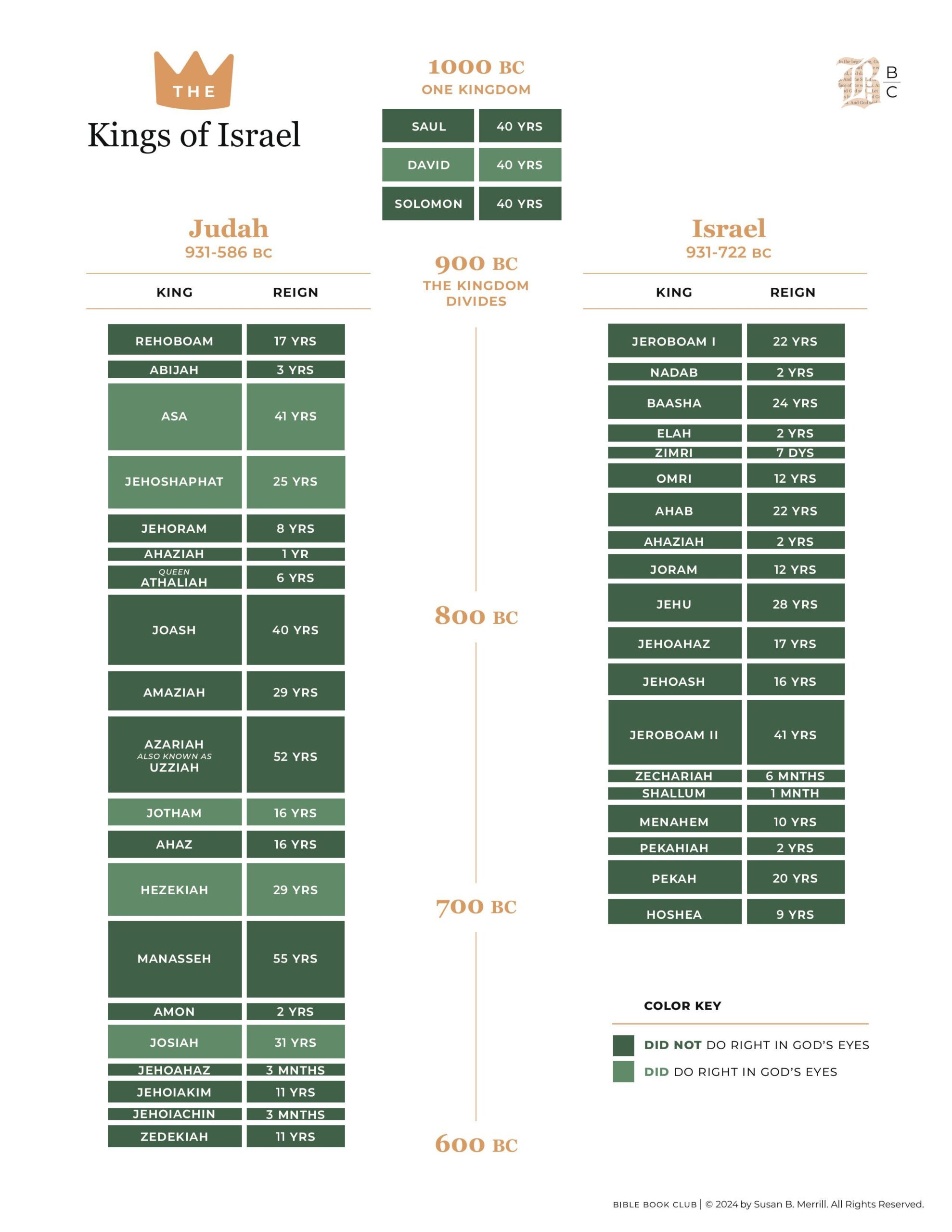
King Hezekiah comes to us from an unlikely source. He’s the son of evil King Ahaz, the worst king Judah had ever seen. King Hezekiah finally, finally does what all the kings before him failed to do. He removes the high places, smashes the sacred stones, and cuts down the Asherah poles. It’s more than enough to get him on the list as one of the good Kings of Israel.
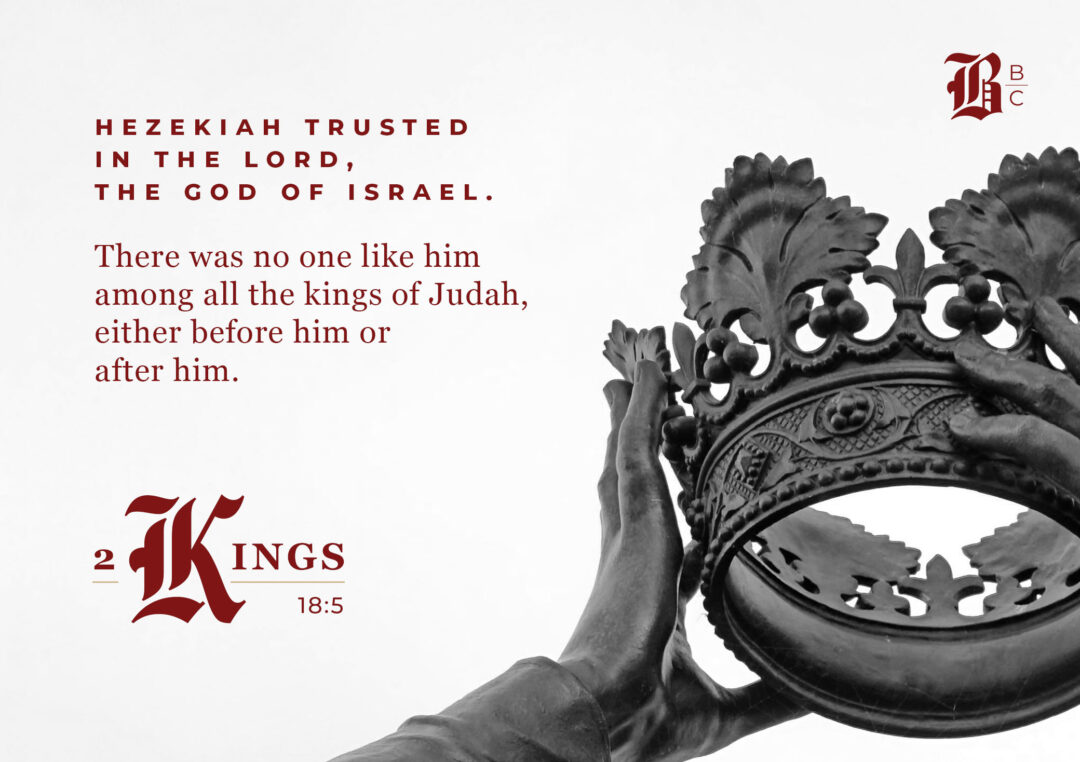
Not only was he good, he was one of the best. “There was no one like him among all the kings of Judah, either before him or after him.” (2 Kings 18:5) But let’s take it even further. King Hezekiah is considered to be among the top three kings of the entire Old Testament, the other two being King David and King Solomon.
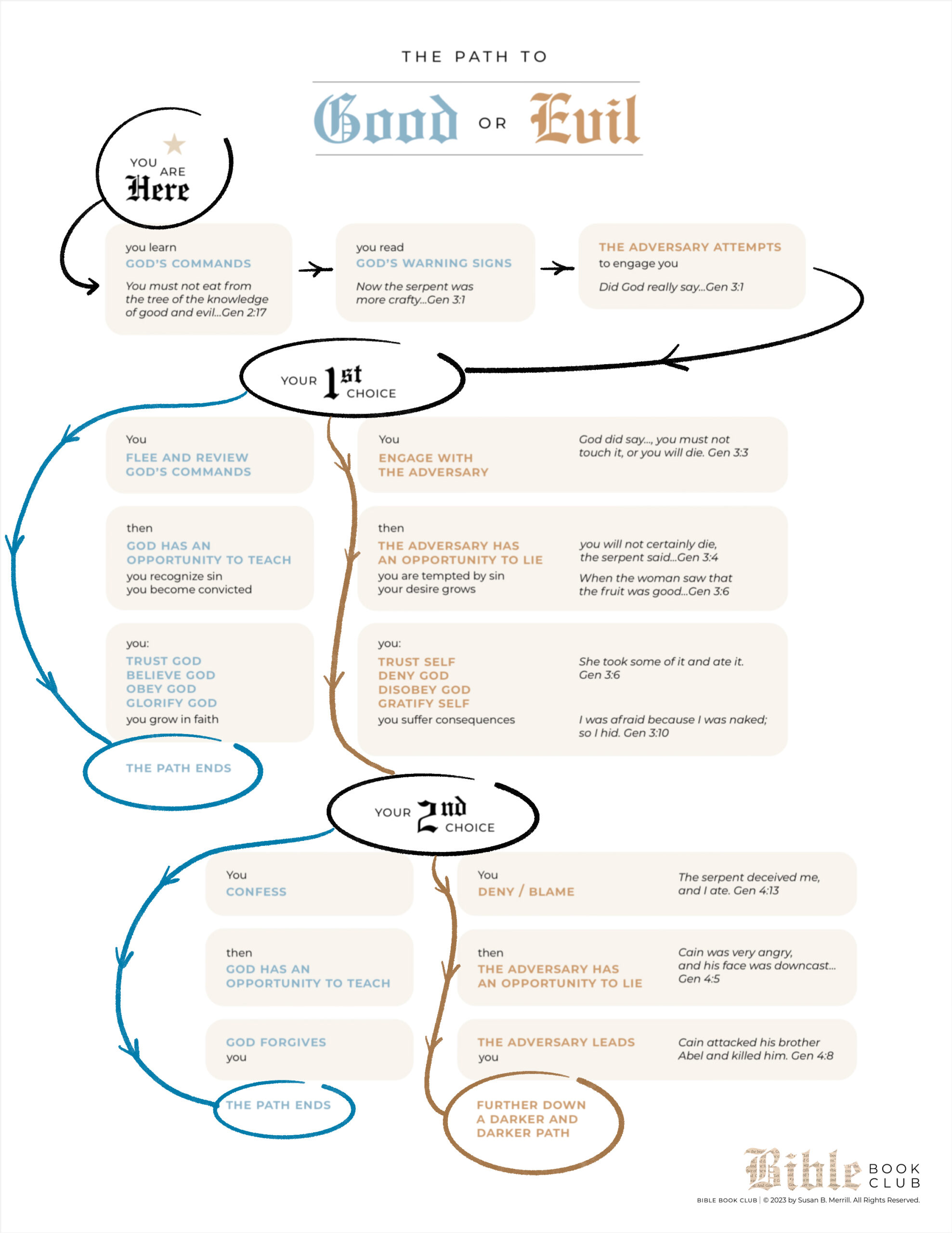
All of King Hezekiah’s goodness and success are attributed to his trust and reliance on God and thus his ability to do what was right in the eyes of the Lord. So many kings before and after him failed to do this because they chose what was right in their own eyes instead of what was right in God’s eyes.
Like King David, King Hezekiah locked his eyes on God and didn’t flinch, checking in with God often and staying close to God’s will. His reward, like David’s, was to receive tremendous support from God. In fact, he and King David are the only two kings the Bible says had the Lord “with them.”
We will hear more about King Hezekiah’s success in 2 Chronicles, season 14 of the Bible Book Club Podcast.
Israel Falls, and Judah Holds Its Breath
While King Hezekiah does amazing things in Judah, the Northern Kingdom of Israel begins its descent into ruin. King Hezekiah is just 29-years-old in his fourth year as king when Assyria attacks Israel. It takes Assyria three years to fully overpower Israel and deport all the tribes.
Seeing the ten tribes of Israel destroyed must have cast an alarming shadow over Judah. Yes, Israel and Judah were enemies at some points in their history, but they were still brothers–part of the same 12 tribes of Israel. What a “then there were two” eye-opener of what would happen if Judah chose the same path as their brothers to the north.
The Northern Kingdom of Israel broke the covenant one too many times, and God gave Israel what they chose, removing them from His presence. As Judah watched God’s protection fade away from Israel and the nation shatter into pieces, they had to wonder if they’d turned the corner enough or if they also were too far gone.
With the Assyrian army looming so close, it seems like they would find out soon enough. But the answer didn’t come for another ten years.
King Hezekiah’s Costly Moment of Panic
In the 14th year of King Hezekiah’s reign, the King of Assyria gets hungry for more of the Promised Land. He moves south, capturing all the fortified cities of Judah, about 46 walled cities. Judah has all but fallen.
King Hezekiah is a great king, but he’s not perfect. Like David (and us) he makes mistakes, and when the king of Assyria marches on Judah, Hezekiah makes a big one. Instead of turning to the Lord, he panics and offers to pay off the King of Assyria, even stripping the temple to do so.
Sound familiar? This is the sixth time the temple has been stripped.
- 1 Kings 14 by the King of Egypt
- 1 Kings 15 by King Asa to bribe the king of Aram
- 2 Kings 12 by King Joash to pay off the king of Aram
- 2 Kings 14 by Jehoash, King of Israel
- 2 Kings 16 by King Ahaz as a gift to the King of Assyria
The temple will be stripped two more times before we make it to the end of 2 Kings, both by King Nebuchadnezzar of Babylon who will ultimately destroy the temple. Solomon built this temple. It’s where the cloud of God’s presence appeared. It must have been so devastating for God to watch such a sacred place be repeatedly plundered by foreigners and misused by the kings.
Stripping the temple was a bad move for King Hezekiah, but repentance can do wonders for our relationship with the Lord. Like King David, Hezekiah will recover.
However, his costly mistake only stalls Assyria. It’s not long before they want more and set their eyes on the city of Jerusalem.
A Battle of Words: Can Fear Make Judah Surrender?
To save time and resources, the King of Assyria sends his supreme commander to manipulate King Hezekiah into surrendering the city of Jerusalem without a fight. The commander is clearly an expert at psychological warfare and uses scare tactics by marching his whole army right up to Jerusalem.
This master of manipulation tailors his message to the crowd, speaking in the people’s native tongue so no one misses his carefully crafted arguments for surrender. Seven times within just five verses he weaves in the Hebrew root word for “trust” or “depend” to reinforce his claim Judah’s army is too weak to defeat Assyria and Egypt is an unreliable ally.
Then the commander makes his first fatal mistake. He claims the people can’t depend on God because King Hezekiah took down all their high places and limited their access to God. Assyria is a land of many gods, and he is applying Assyrian theology and logic to Judah.
However, the high places were actually breaking the covenant with God. Removing them pleased God and enhanced Judah’s relationship with Him. Now, the only place the people can worship is in the temple…in Jerusalem.
A few people spread throughout Judah might miss the convenience of a local place to worship at the high places (even if it wasn’t true worship). But the people the commander is speaking to are in Jerusalem, and they are staunch temple-only supporters.
Unaware of his error, the commander presses on, mocking Judah because, even if he gave them 2,000 horses for battle, they wouldn’t have enough men to ride them. Emboldened, he blasphemes, telling the people they also can’t rely on God because the Lord Himself told the commander to march against Jerusalem.
Twisting the Truth: Assyria’s Deception Meets Judah’s Unshakeable Faith
The commander keeps going, relentless in his efforts to trick the people into trusting Assyria as their savior. It gets so bad that King Hezekiah’s men beg him to switch to Aramaic so the people can’t understand what he’s saying. This only lights a fire under the commander. He doubles down, urging the people not to listen to King Hezekiah when he tells them to trust their God.
Then he manipulates the Biblical promises of the Promised Land, trying to convince the people their only hope at a good life is to surrender to Assyria. He says, “Then each of you will eat fruit from your own vine and fig tree and drink water from your own cistern.” (2 Kings 18:31)
This echoes 1 Kings 4:25: “During Solomon’s lifetime Judah and Israel, from Dan to Beersheba, lived in safety, everyone under their own vine and under their own fig tree.”
Next he challenges the people to choose life, echoing Deuteronomy 30:19 when Moses said, “This day I call the heavens and the earth as witnesses against you that I have set before you life and death, blessings and curses. Now choose life, so that you and your children may live.” The commander twists this message, insinuating choosing Assyria is their only way to choose life.
Thankfully, the people of Judah are not deceived and remain silent as King Hezekiah commanded them to do. This time, King Hezekiah stays strong too. He turns to the Lord and sends his officials to the Prophet Isaiah.
2 Kings 19 – The Prophet Isaiah Speaks with Authority: Fear Not, God is in Control
The Prophet Isaiah is not concerned with the threats of Assyria. In fact, he’s almost condescending, calling the Assyrian messengers blasphemous underlings. He assures King Hezekiah’s people they are safe. God will distract the king of Assyria, and he’ll leave Judah alone.
Isaiah’s bold fearlessness stems from a deep reverence for God’s authority combined with a strong spiritual connection to God. This gives him clarity and many visions and revelations from God. He is the Apostle Paul of the Old Testament. In fact, Paul quotes the Prophet Isaiah more than any other prophet. They were two of a kind.
As Isaiah predicted, the field commander gets a message from the king of Assyria and withdraws from tormenting Jerusalem to go help his king battle somewhere else…for a little while. But then the king of Assyria gets a message the king of Cush is coming for him.
Worried he won’t have time to battle the king of Cush and overtake Jerusalem, the king of Assyria once again sends a message to King Hezekiah. The basic gist is that none of the gods of the other nations have been able to save those nations from the Assyrians, and Judah’s God won’t be able to save them either.
It’s sound logic, except for one thing, and this is the second fatal mistake the Assyrians make. They don’t realize the other nations’ gods are fake and the God of Judah is real.
Hezekiah’s Bold Prayer: A Turning Point in Judah’s History
We haven’t seen a king turn to God in prayer since the days of King Solomon when he prayed for wisdom in 1 Kings 6. But our friend King Hezekiah prays! And you know it’s an important moment when the Bible mentions it twice. Hezekiah’s prayer is in both 2 Kings 19 and Isaiah 37.
Bookmark Moment
Put a bookmark on this passage, because King Hezekiah’s prayer is a template for how we can pray.
First, he takes his problem to the Lord. He literally takes the threatening letter from the Assyrians and lays it before the Lord. This follows King David’s advice in Psalm 55: “Cast your cares on the Lord and he will sustain you; he will never let the righteous be shaken.”
Next, he praises God, which is simply saying, “God you are [blank].” For example, “God you are the God of Israel. God you are over all the kingdoms of the earth. God you are the maker of heaven and earth.” This praise built King Hezekiah’s faith just like it will build our own. His people are being threatened and he is praising God who has control over all kingdoms, even Assyria.
Then he asks God to hear him. Pointing out Assyria has made the gods of other nations look weak by defeating them, he asks God to deliver Jerusalem from Assyria “so that all the kingdoms of the earth may know that you alone, Lord, are God.” King Hezekiah wants the world to know his God is the only God. His end game is glorifying God. This should be our chief end goal too.
In Philippians 4:6-7 Paul invites us to pray like this as well. “Do not be anxious about anything, but in every situation, by prayer and petition, with thanksgiving, present your requests to God. And the peace of God, which transcends all understanding, will guard your hearts and your minds in Christ Jesus.”
Paul and King Hezekiah are solid examples to follow. When we tie our problems to God’s glory, the outcome will be a testimony that draws us and others to the Light.
In our next podcast episode, we’ll find out God’s answer to King Hezekiah’s prayer.
🎧 Ready to dive deeper? Click here to listen to the Bible Book Club Podcast now!
Show Notes:
Kings of Israel
The Path to Good or Evil
- Scene 1: Hezekiah Is Crowned King of Judah (2 Kings 18:1-8)
- Scene 2: Three Assyrian Threats (2 Kings 18:9-12)
- Scene 3: Assyria Attacks Judah (2 Kings 18:13-16)
- Scene 4: Assyria Threatens Jerusalem (2 Kings 18:17-37)
- Scene 5: Hezekiah Seeks Wisdom from God’s Prophet Isaiah (2 Kings 19:1-13)
- Scene 6: Hezekiah Prays (2 Kings 19:14-19) (Psalm 55:22) (Philippians 4:6)
Themes of this podcast episode: Our focus rests on Judah as the nation turns to God, restoring our hope just as the Northern Kingdom of Israel loses it all in 2 Kings 18 and 2 Kings 19.
- Israel’s Fall Serves as a Warning. As Judah watches their brothers to the north fall, they get a sobering reminder what happens when a nation turns away from God for too long. They’re left to reflect on their own spiritual state and consider the consequences of disobedience.
- Trusting in God Overcomes Fear and Worldly Power. King Hezekiah’s initial panic led to a costly mistake, but when he ultimately trusted God, he saw deliverance. His story reminds us that worldly power, intimidation, and fear should never dictate our choices—our faith must be firmly rooted in God, who alone has control over all things.
- Prayer is the Key to Breakthrough. King Hezekiah’s bold, humble, and God-glorifying prayer at the end of 2 Kings 19 is a turning point for Judah. His example shows us that bringing our concerns to God, praising His power, and aligning our desires with His glory is a great way to pray.
