
Embark on a journey in 1 Kings 15 through the tumultuous reigns of Judah and Israel’s kings, as we explore their profound impacts on history and faith.
Rehoboam and Abijah’s Reigns: Rehoboam’s reign was marked by idol worship and divine displeasure, setting the stage for Judah’s struggles. His successor, Abijah, followed similar paths of sin, yet God preserved the Davidic line, showing His faithfulness.
The Rise of Asa: Asa, a righteous king, brought reform to Judah by eradicating idol worship and restoring faithfulness to God. His strategic alliance with Ben-Hadad of Aram helped secure Judah’s borders against Baasha of Israel, ensuring peace and prosperity.
Kingdoms in Turmoil: Israel faced instability with rapid successions of kings, including Nadab, Baasha, Elah, and the short-lived Zimri, each doing evil in the Lord’s eyes. These turbulent times noted in 1 Kings 15 paved the way for the rise of Omri and the imminent arrival of the prophet Elijah.
Subscribe to BBC on Apple, Spotify , or Amazon
1 Kings 15: Lessons from the Reigns of Rehoboam and Asa
Rehoboam’s Reign: A Period of Spiritual Decline
The reign of Rehoboam, Solomon’s son and successor, marked a significant downturn in Judah’s spiritual integrity. Becoming king at the age of forty-one, Rehoboam’s tenure was characterized by a departure from the religious devotion that had defined his grandfather David’s rule. Unlike David, who was known for his steadfast adherence to God’s commands, Rehoboam allowed Judah to indulge in practices that were detestable in the eyes of the Lord. His reign saw the rise of idol worship, with high places, sacred stones, and Asherah poles becoming common across the land. These acts were not just mere deviations; they were direct affronts to the religious principles and practices that had been established in Israel.
Rehoboam’s acceptance of these pagan practices unleashed a spiritual decay that mirrored the sins of surrounding nations. The people of Judah engaged in the same detestable acts that had led to the downfall of nations that previously occupied the land. This decline in spiritual discipline stirred God’s jealousy and anger, setting the stage for divine warnings and eventual consequences. Rehoboam’s reign serves as a solemn reminder of the impact that leadership can have on a nation’s spiritual health and its adherence to divine commandments.
Asa’s Reformation and Spiritual Renewal
In stark contrast to his predecessor, Asa’s reign was marked by a fervent return to spiritual rejuvenation. Ascending to the throne, Asa inherited a kingdom in need of reform and seized the opportunity to cleanse Judah of its idolatrous practices. His commitment to the Lord was reminiscent of David, as he took decisive actions to expel male shrine prostitutes and destroy idols. Asa’s reforms went as far as deposing his grandmother, Maakah, from her position as queen mother due to her involvement in idol worship.
Asa’s leadership set a new spiritual course for Judah, bringing about a period of renewed faithfulness to God. Unlike his father Rehoboam, Asa’s heart was fully devoted to the Lord throughout his reign, which lasted an impressive forty-one years. His dedication not only restored Judah’s spiritual compass but also strengthened its political and social fabric.
Legacy and Lessons from Two Contrasting Kings
The contrasting reigns of Rehoboam and Asa offer profound lessons on leadership and its impact on a nation’s spiritual and political landscape. Rehoboam’s disregard for spiritual discipline led to a period of decline and external threats, while Asa’s reforms and devotion to God ushered in renewal and stability. These narratives underscore the importance of aligning leadership with divine principles to ensure both spiritual and national prosperity.
For modern leaders and individuals alike, the stories of these two kings serve as a reminder of the enduring impact of choices and values. Rehoboam and Asa’s reigns illustrate the potential for transformation and growth when leaders prioritize spiritual integrity and the well-being of their people. The legacy of their leadership continues to echo through time, offering insights into the timeless principles that govern the prosperity and harmony of communities and nations.
Verses Mentioned:
Show Notes Mentioned:
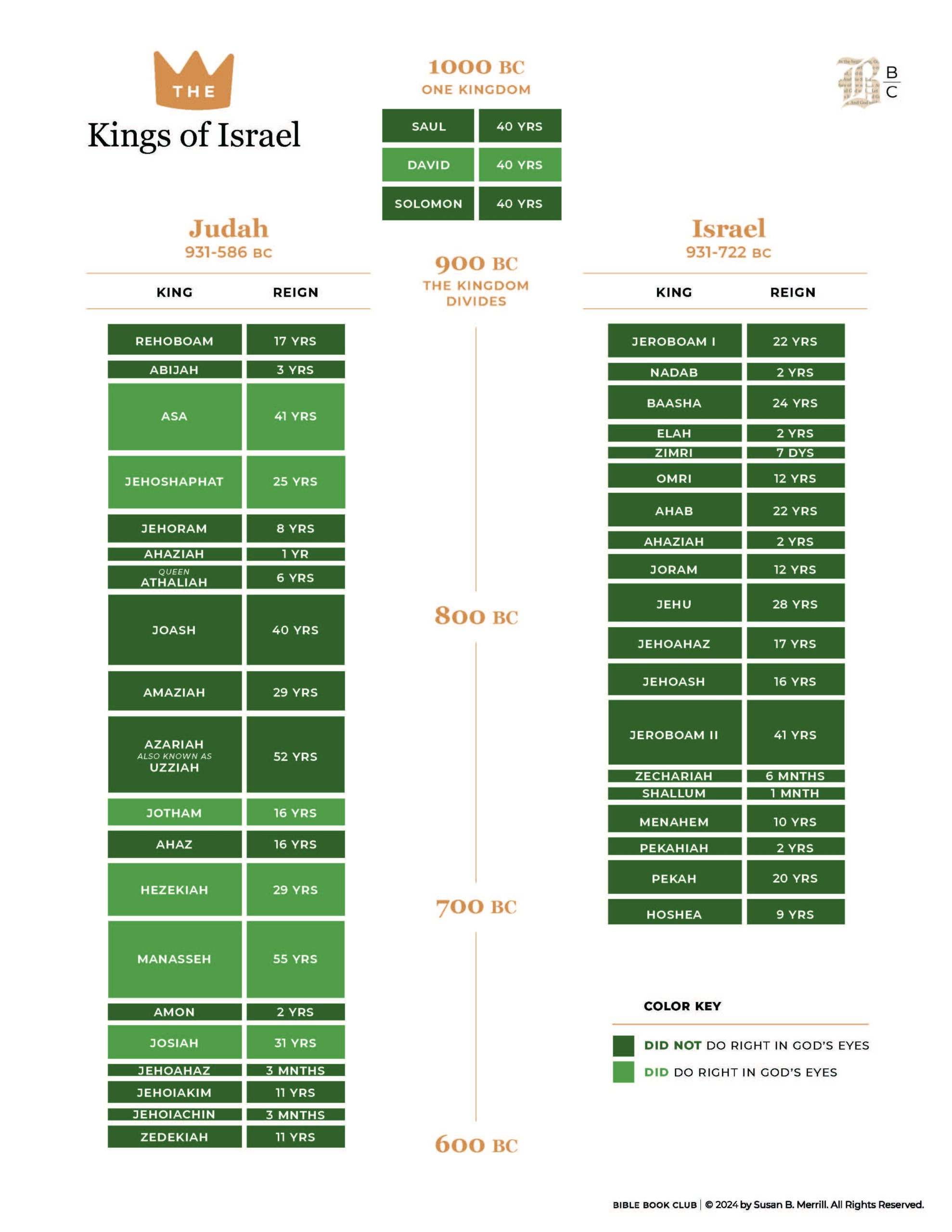
Kings of Israel
The author of this article is Hayley Mowatt, producer of Bible Book Club podcast.
