Subscribe to BBC on Apple, Spotify , or Amazon
What is the Feast of Tabernacles?
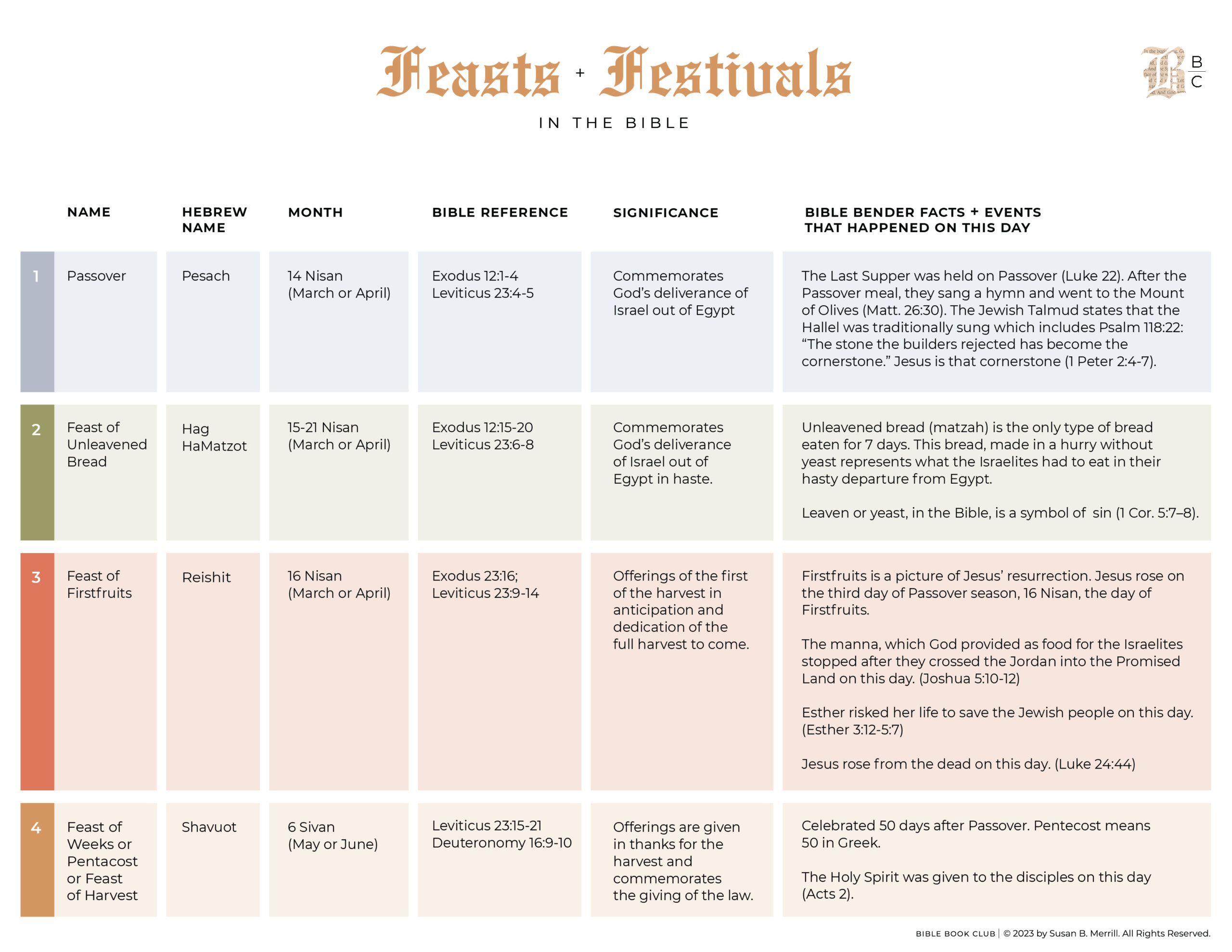
The Feast of Tabernacles, or Feast of Booths, commemorates Israel’s 40 years in the wilderness. In 1 Kings 8, Solomon dedicates the Temple during this festival when families gather and set up temporary shelters, or booths, for a week to remember how the Israelites lived for 40 years. See more about all nine Feasts and Festivals here.
Solomon Dedicates the Temple in 1 Kings 8
Solomon dedicates the Temple in the seventh month, which is 11 months after the Temple completion. The name of this month is Ethanim, later called Tishri. So it correlates with our September/October timeframe.
It makes sense that Solomon would choose to wait until the Feast of Tabernacles to dedicate the Temple. After all, the Temple is a visible sign that Israel has found rest and permanence in the Promised Land. Plus, all the people are already gathered in Jerusalem to celebrate the feast.
In 1 Kings 8:1-2, the Israelites are gathered at Solomon’s Temple dedication with trepidation and solemnity. One question is on all their minds. We have built it. Will He come?
Where was the Ark of the Covenant placed?
The first thing King Solomon does is install the Ark of the Covenant in the Temple, reminiscent of when David moved the Ark from Obed-Edom’s house to Jerusalem. Remember those 15-foot cherubim whose outer wings touch the walls and inner wings meet in the middle of the Most Holy Place? The priests place the Ark of the Covenant right under the middle of those wings. The poles are longer than the veil and stick out somehow. No one is quite sure how.
Contents of the Ark of the Covenant
The contents of the Ark of the Covenant in verses 3-9 includes the stone tablets but no mention of Aaron’s staff and the pot of manna that are usually mentioned with the Ark. In addition to the Ark, Solomon also moves all the other items from the Tabernacle in Gibeon to the Temple in Jerusalem.
A Physical Sign of God’s Presence Descends
In 1 Kings 8:10-13, when the Ark is in and the priests are out, the Cloud of God fills the Temple. This Cloud is the glory of the Lord and embodies His presence, power, and protection. It’s a physical sign of God’s presence and a visible representation of His glory.
At the same time, the Cloud of God also covers His glory. It reveals and conceals, because no one in this world can look upon the full glory of God. His glory is a mystery. An unimaginable greatness that our finite minds cannot grasp and our imperfect eyes cannot look upon.
Pillar of Cloud
In our journey through the Old Testament, we have often read about the Cloud of God. The first mention was in Exodus 13:21-22 when the Pillar of Cloud guided the Israelites through the wilderness. In Exodus 40, we read about the daily relationship between the Pillar of Cloud and the Israelites. This Cloud guided the Israelites through the wilderness for 40 years after they left Egypt. It’s another one of the physical signs of God’s presence.
Cloud of Protection
The Cloud is strange to us. We know from Exodus that the Lord is in the Cloud. It appears that the angel of God works with the Lord and the Cloud. In Exodus 14, the Israelites witnessed the Cloud of God’s power and protection when it stood between them and the Pharaoh’s army. The separation stopped the Egyptians from attacking. It also blocked the Israelites’ view of the Egyptians so they could focus on God.
The Cloud provided light to one camp and darkness to the other. This darkness should have been a sign to the Egyptians, because they experienced darkness just days earlier. That darkness was followed by the death of their firstborn.
The Cloud with two sides paints another cool picture of the divine nature of God that appears frequently in both the Old and New Testaments. Darkness represents judgement and light represents salvation.
Cloud of God’s Presence
At the Temple’s dedication, the return of the Cloud of God must have been a deeply moving experience for Solomon and all of Israel. God was pleased and chose to dwell among them. The Temple is as close as they can get to heaven on earth. God’s presence, power, and protection mean peace in Israel.
Solomon’s Temple Dedication Prayer
In 1 Kings 8:14-21, Solomon states what God has done for the nation. God kept His promise to David so Solomon could build the Temple on the ground his father purchased. This is an essential spiritual accomplishment. From this time forward, the Temple is visible proof of the establishment of the promised kingdom in the Promised Land for God’s chosen people.
The Altar that Solomon stands in front of in verse 22 is most likely the bronze altar in the outer courtyard where the people can gather. Only priests are allowed in the Temple. Solomon’s next prayer praises God for His covenant love. When God keeps His covenant love like this, it is an act of hesed.
What does hesed mean?
Hesed is an act of kindness performed for the benefit of a person in real and desperate need within the context of a deep and enduring commitment between the two people. In 1 Kings 8:23-24, God is in the greater position to meet needs, and He offers His covenant love, loyalty, and kindness to the Israelites.
Solomon praises God for His mercy in choosing to do this for Israel. Then in verses 25-26 he asks God to keep another promise…His promise to David that there will always be a descendant of David’s on the throne.
You Can’t Limit God
In 1 Kings 8:27, Solomon’s prayer acknowledges God cannot be contained or limited to this Temple or this earth. The Apostle Luke affirms this in Acts 7:44-50. Luke speaks of the Tabernacle and the Temple but declares that the Lord does not live in houses made by humans. Heaven is the Lord’s throne and earth is His footstool.
King Solomon’s Seven Special Requests in 1 Kings 8
In verses 28-30, King Solomon asks God five times to hear the prayers of Israel. Then in verses 31-53 he lists seven scenarios in which Israel may need God to hear their prayers and forgive them. When…
- A person wrongs a neighbor.
- Israel suffers defeat by an enemy because they have turned away from God.
- Israel experiences a drought because they have turned away from God.
- Israel experiences any disaster because they have turned away from God.
- A foreigner believes in God and prays.
- They need victory in war.
- People are taken captive because of their sin against God.
Solomon wraps up this section of his prayer by once more begging God to hear them whenever they cry out to Him. Solomon is not blind to their history of sin and rebellion, and his prayers for the people are wise. His focus is on forgiveness, because he knows that’s the key to their relationship with God.
Relationship with God Is the Goal
The purpose of the covenant, the Temple, and the nation is for Israel to be the Lord’s people and live in a relationship with God. Not a perfect relationship like in the Garden of Eden, but an imperfect covenantal relationship until the New Covenant comes.
This new covenant is the one we benefit from when, as Revelation 3 puts it, the perfect King who is holy and true and holds the key of David opens what no one can shut and shuts what no one can open. The Key of David is held by Jesus Christ. Only He has the key to an eternal relationship with God.
King Solomon’s Blessing and Exhortation in 1 Kings 8
In verses 54-61 King Solomon blesses the people and closes his prayer with praise to God for fulfilling His promises. He asks God to be with them always and turn their hearts always to Him so they will obey Him and keep His laws. Solomon also prays all the words he spoke will be ever before the Lord so God will uphold their cause and all the people of the earth will know the Lord is the one true God of heaven and earth.
From Solomon’s Temple to God’s Eternal Plan
This day, this celebration, and this Temple are a big deal, and Solomon is deeply moved. The Temple was a long-awaited desire of David’s heart and a dream of Israel’s. It represents permanence, standing, and a future. It is costly and beautiful. So much more beautiful than the Tabernacle.
The Israelites could not begin to fathom that this beautiful new Temple was nothing compared to what is to come. In fact, no one had any idea until the apostle John was alone and in exile on the island of Patmos and had a vision more beautiful than the Tabernacle and Temple put together.
John wrote about what he saw in Revelation 21:1-4 and 22-27. His vision merged the man-made Tabernacle and Temple with the Garden of Eden into something more glorious. A new heaven and a new earth. A place where there is no Temple because God dwells among His people.
God’s plan began in the Garden of Eden with two trees. The Tree of Life and the Tree of the Knowledge of Good and Evil. In Revelation 22:1-5, the trees in John’s vision are for healing the nations. There will no longer be a curse and, most importantly, there will be no separation from God. The Tree of the Knowledge of Good and Evil will be gone.
The Tabernacle and the Temple are temporary, physical signs of God’s presence. His plan was always for something permanent. Something eternal and beautiful beyond all we can imagine. God’s plan will end in a city where we will be with Him and eat for eternity from the Tree of Life.
Show Notes Mentioned:
Feasts an Festivals in the Bible