
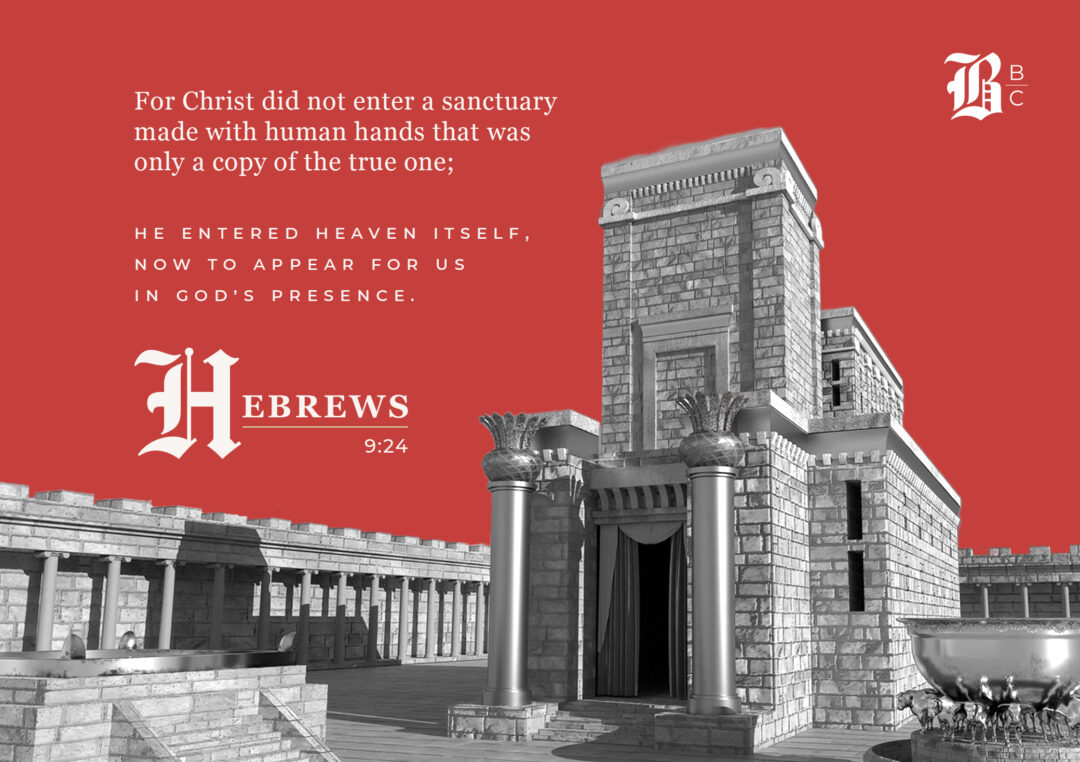
How long did it take Solomon to build the Temple?
The Temple took 7.5 years to build compared to Solomon’s Palace which took 13 years. This makes sense, considering the Palace is much larger than the Temple. And Solomon’s Palace is so much more than just a beautiful home. It’s a compound of buildings that serve as both a residence for the king and government administration.
What did Solomon’s Palace look like?
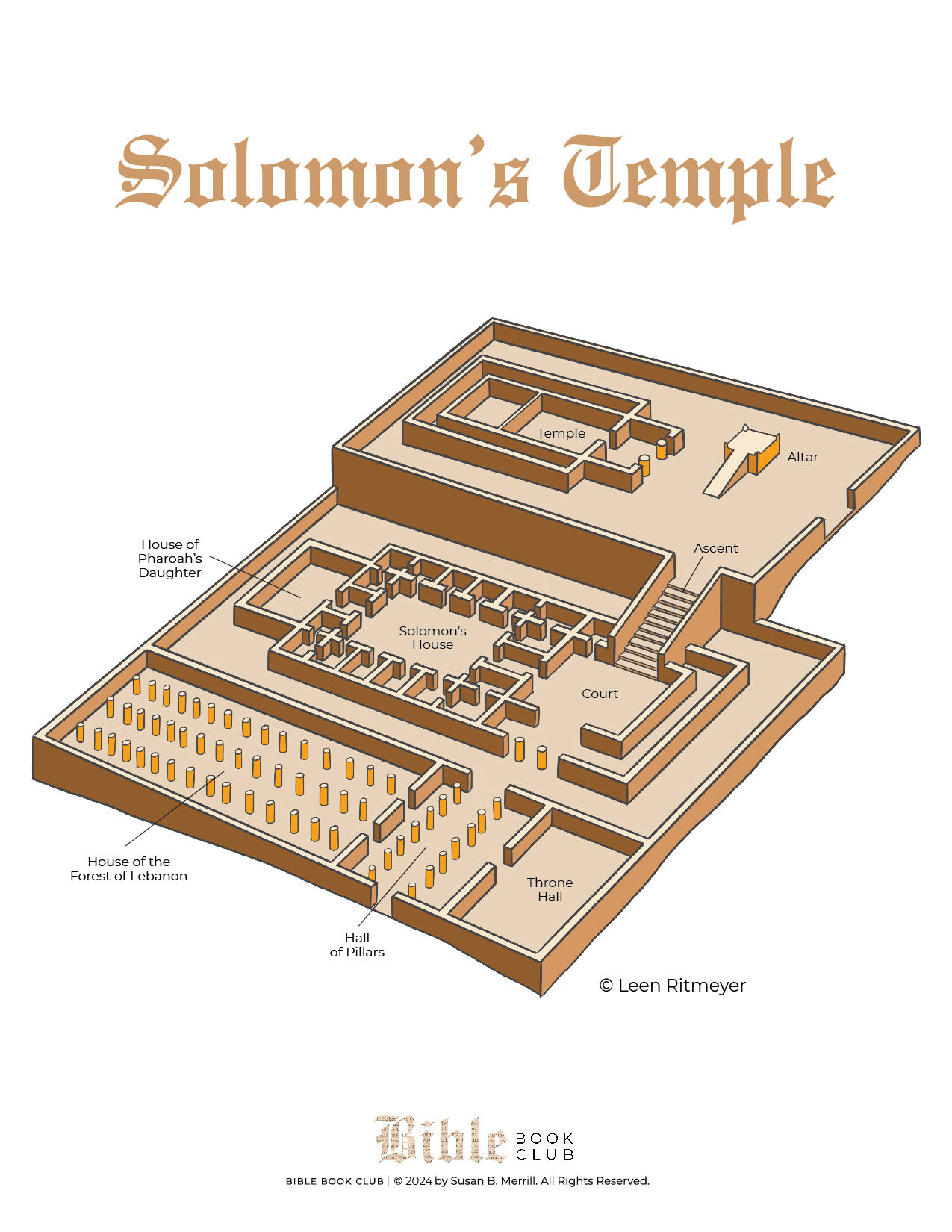
Unfortunately, today there is nothing left of Solomon’s Palace, but the descriptions in 1 Kings 7:1-12 give us an idea what it may have looked like. See our show notes for a great visual of how Solomon’s Palace is laid out.
Palace of the Forest of Lebanon
In 1 Kings 7, the first building the author describes is the Great Assembly Hall or Palace of the Forest of Lebanon. It measures about 146 feet long and 73 feet wide. The roof is supported by 45 pillars giving it the appearance of an indoor forest. Hence its name, the Palace of the Forest of Lebanon.
Hall of Pillars and Hall of Justice
The Hall of Pillars is next. It most likely is not a separate building but a room or colonnade that serves as an entrance to the Great Assembly Hall. It’s as long as the Great Assembly Hall is wide and is probably similar to the foyer of a large ballroom today. The Throne Hall, or Hall of Justice, is the third room. It’s where Solomon sits when in court as a judge.
Solomon’s Palace
Solomon’s Palace is where he and his servants live. It’s a separate building in another courtyard set back from the administrative buildings. Pharaoh’s daughter has her own palace too, which is probably adjacent to Solomon’s Palace.
Set in Stone
The author of 1 Kings 7 gives the stone in Solomon’s Palace a lot of attention and for good reason. Stone was not only used in the foundation but also in the framework. Each stone was hewn to measure at the quarry and then transported. Imagine the careful planning, measuring, transporting, and building it would have taken to move that much stone
Just the sight of these huge stones rolling down the streets of Israel would have created a stir. Each stone in the foundation was 11 to 15 feet. The size of a bedroom! And there were so many of them.
What is the difference between the Tabernacle and the Temple?
The difference between the Tabernacle Moses built and Solomon’s Temple is the size, materials, and quantity. Solomon kept the scale the same but everything in the Temple is bigger and more expensive. That’s why the author of 1 Kings 7 is so enamored with the details. The building of the Temple was a long-awaited dream come true.
Every other surrounding nation had glorious buildings and tribute temples to their gods, but Israel didn’t. Yet they loved their God and knew Him to be the One True God. They wanted the world to know him too.
The Temple and Solomon’s Palace are a sign to the world representing credibility, stability, and most of all the presences of God among them. The author of 1 Kings 7 is extremely proud of every quarried stone and every golden candlestick that goes into Israel’s precious Temple.
Tabernacle vs Temple Furnishings
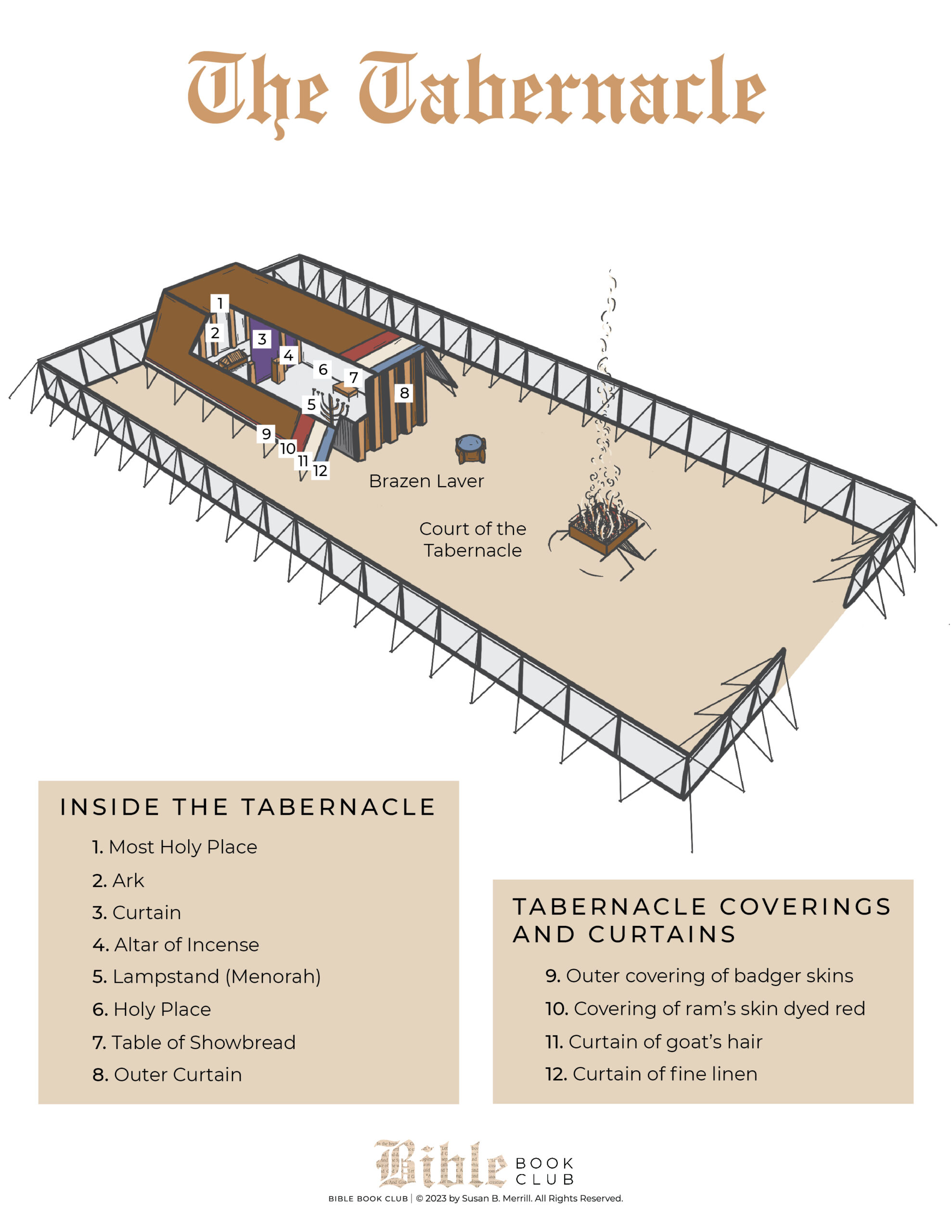
Just like Moses furnished the Tabernacle, Solomon furnishes the Temple. Both the Tabernacle and Temple contained:
- The Altar of Burnt Offering.
- Altar of Incense.
- Laver or Basin for washing.
- Table of Showbread.
- Menorah.
- Bronze artifacts in the Courtyard.
- Gold artifacts in the Temple.
- Decor with a Garden of Eden motif of flowers, fruit, and trees.
Temple Artifacts and God’s Perfect Craftsman in 1 Kings 7
During the time of the book of Judges, the tribe of Asher failed to drive out the inhabitants of the cities on the Phoenician coast. The tribe of Naphtali lived right next door to the tribe of Asher, and the result was intermarriage with the Phoenicians for both tribes.
Huram, the gifted bronze craftsman in 1 Kings 7:13-14, has a Phoenician father and an Israelite mother from the tribe of Naphtali. God gave him incredible talent for such a time as this, and he crafts all the artifacts used by the priests in Solomon’s Temple.
Boaz and Jachin Pillars
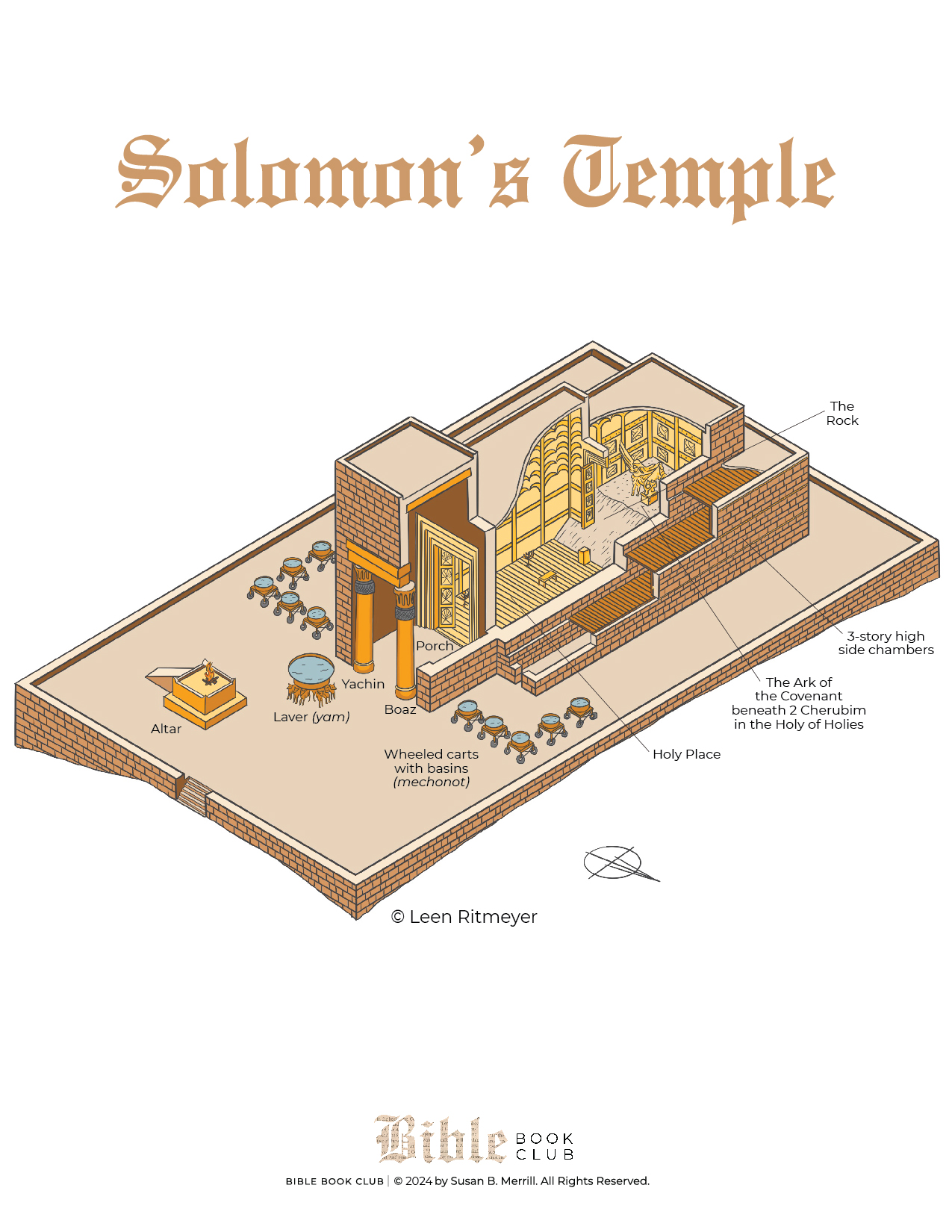
In 1 Kings 7:15-22, Huram creates the Boaz and Jachin Pillars. These pillars are huge. Each is about 6 feet wide and has a capital on top that makes the entire pillar 34 feet tall. The capitals are in the shape of lilies decorated with tightly woven chainwork in a net pattern and lots of pomegranates.
The Boaz and Jachin pillar names have meaning. Jakin means “he will establish.” Boaz means “in Him is strength.” When combined, they send a message or prayer that God will establish His people, the line of David, and that the Lord is their King, the strength of the nation.
Bronze Sea
In 1 Kings 7:23-26, Huram builds the Bronze Sea, an enormous, elevated water basin 15 feet in diameter and 7.5 feet high. It is supported by 12 bronze bulls, three on each side, and holds 11,000 to 17,000 gallons of water.
The Bronze Sea is much larger than its Tabernacle counterpart described in Exodus 30:17-21 and is considered a great feat of ancient metalwork because of its size. The water is used for the many priests to wash or purify before entering the Temple for the large number of daily ritual tasks.
There is much speculation about how they filled the basin. Based on Joshua 9:27, some believe the Gibeonites originally supplied the water. Commentators think later a conduit connected the basin to Solomon’s Pools or to one of the reservoirs that have been discovered underneath all the stone.
Smaller Basins
In 1 Kings 7:27-40, Huram builds 10 smaller basins on carts to assist in ritual cleansing. These are unique to the Temple. The Tabernacle did not have such heavy equipment, because the Israelites were a mobile community when the Tabernacle was in use.
Each of these 10 basins is six feet wide and holds about 220 gallons of water. The stands, or carts, that hold the water basins are elaborately decorated and have wheels, although they wouldn’t have been easy to move. Five of the basins and carts are placed on the south side and five on the north.
The Altar of Burnt Offering
The inventory of bronze artifacts for the courtyard of the Temple in 1 Kings 7:40-47 is missing one thing. The Altar of Burnt Offering. It is, however, included in 2 Chronicles 4:1, so we know they didn’t forget to make it.
The Altar was about 35 feet by 35 feet and placed 17 feet high on a platform with steps up to it. The Tabernacle version of the Altar of Burnt Offering in Exodus 27 was one fifth the size, about seven feet six inches square by four feet six inches high.
But the purpose of the altar was the same. It was used for burnt offerings to atone for sins. If you were with us for Season 3 of the Bible Book Club Podcast when we studied Leviticus, you might recall there was a lot of daily animal sacrifice on that Altar. Based on the way Solomon enlarges the water basins and the Altar of Burnt Offering, it appears he is planning to expand the kingdom.
Altar of Incense
Only gold is used in the Temple, just as only bronze is used in the courtyard. Gold was more precious and therefore set the Temple apart as more sacred. In 1 Kings 7:48, the author does not give us any details about size. However, we know from Exodus 30 that the gold altar was the Altar of Incense. It was smaller and more beautiful than the Altar of Burt Offering in the courtyard.
The Altar of Incense was in the Holy Place or main room of the Temple, in front of the curtain that leads to the Most Holy Place. Its purpose is to burn incense, which symbolizes the prayers of God’s people.
Bread of the Presence
The author also does not give any detail about the gold table on which was placed the Bread of the Presence. He probably assumes we are good Hebrews and have read Exodus and Leviticus.
The table will be put in the Holy Place as will the lampstand and incense altar. The table is for the purpose of holding the Bread of the Presence. There are 12 loaves of bread replaced every Sabbath representing the 12 tribes who are under the constant provision and care of God.
Temple Lampstands and the Ark of the Covenant
Like the basin, the lampstands in 1 Kings 7:49-51 get a large upgrade in the Temple. The Tabernacle had just one lampstand, but the Temple gets 10. This makes sense considering the Temple is so much larger. The purpose of the lampstand is to light the main area or Holy Place. The lampstands look like candelabras, but candles are not in use at that time. Instead, the Israelites use oil with a wick.
Every aspect of the Temple is carefully and elaborately created. The only furnishing Solomon doesn’t have to make is the original piece of furniture created under Moses’ instructions over 400 years earlier…the Ark of the Covenant.
God’s Dwelling Place
It’s easy to get lost in the elaborate details of the Temple and lose sight of what the building means to the lives of the Israelites, the entire Bible, and our redemption through Christ. The Temple is sacred because it is God’s dwelling place. It’s also a visible reminder to the Israelites that the world is a sacred space that belongs to God.
Garden of Eden
The purpose of the Temple actually started in Genesis with the Garden of Eden. This was God’s first dwelling place on Earth. He created the world and then He created the Garden of Eden within that creation so He would have a place to be with Adam and Eve.
The fellowship God had with Adam and Eve in the Garden of Eden was perfect and pure. There was no sin, no separation, no book of laws, decrees, and commands. There was just one rule. Don’t eat from the Tree of the Knowledge of Good and Evil.
Mount Sinai
Mount Sinai was God’s second dwelling place. He met Moses on the mountain many times and had fellowship with him and the 70 in covenant celebration. But the Israelites had to leave Mount Sinai for the Promised Land, and the mountain could not go with them.
Tabernacle
So in Exodus 25:8-9 God gave Moses details and instructions on how to build God’s third dwelling place, the Tabernacle. It was mobile and the design pointed back to the Garden of Eden, God’s perfect dwelling place that the Israelites longed to return to.
Solomon’s Temple
Solomon’s Temple is God’s fourth dwelling place. The Israelites are no longer wanderers. They have conquered the Promised Land. God promised when they entered this period of rest Solomon could build a permanent Temple. Now it’s time for them to make the move, Tabernacle to Temple. Like the Tabernacle, the design of the Temple points back to the Garden of Eden.
Three Levels of Increasing Holiness
All four of these dwelling places had a three-part division that increased in holiness. In the beginning, there was Eden, the Garden within Eden, and the Tree of Life within the Garden.
At Mount Sinai, the people were at the base, Moses’ companions like Joshua kept watch on the second level, and only Moses could go to the top level.
In the Tabernacle and Solomon’s Temple, there’s a courtyard where the priests sacrifice for the people, a Holy Place where only certain priests can go, and the Most Holy Place where only the High Priest is allowed.
All of this separation from God was caused by the fall. Sin is impure and can only be atoned for by sacrifice. And only when sin has been atoned for can we commune with God. In the Old Testament, this was a burdensome ritual that took place over and over in Solomon’s Temple.
From Tabernacle to Temple, the Missing Piece Is Christ
From Tabernacle to Temple, creating an elaborate plan for God’s dwelling place will always fail. The forgiveness of sin is very complicated and the Israelites can’t keep all the laws. But their failure is part of the plan and has a purpose. It points them to the need for the One. The Savior, Jesus Christ. That’s why, way back in the beginning, in Genesis 3, God promised the One.
In Hebrews 9:1-28, the Apostle Paul connected all the dots for us like an attorney solving a mystery. He built the case for what Moses and the Israelites couldn’t have even imagined. The missing piece was Christ.
Moses may have had the plan for the Tabernacle, and Solmon had the plan for the Temple. But Paul understood the plan in its entirety from beginning to end, including the missing piece. That one High Priest who put an end to the separation of the veil and the sacrificing of animals for the atonement of sin.
Now there is no more need for a tent, Ark, animal sacrifice, or blood because Jesus, the missing piece to God’s plan, has taken the High Priest’s place. As 1 Corinthians 3:16 says, now the physical Temple is…you!
Where is the Temple of God?
God’s sacred space is no longer restricted to the Most Holy Place in a tent or a building. It lives in the heart and soul of every believer. You are a mobile Tabernacle. A living Temple.
🎧 Ready to dive deeper? Listen to this episodes of the Bible Book Club Podcast here.
Next Episode:
Show Notes:
Video tour of the Temple Mount and the dome of the Rock exterior on Mount Moriah
Video of the inside of the Dome of the Rock
Picture of the Rock inside the dome
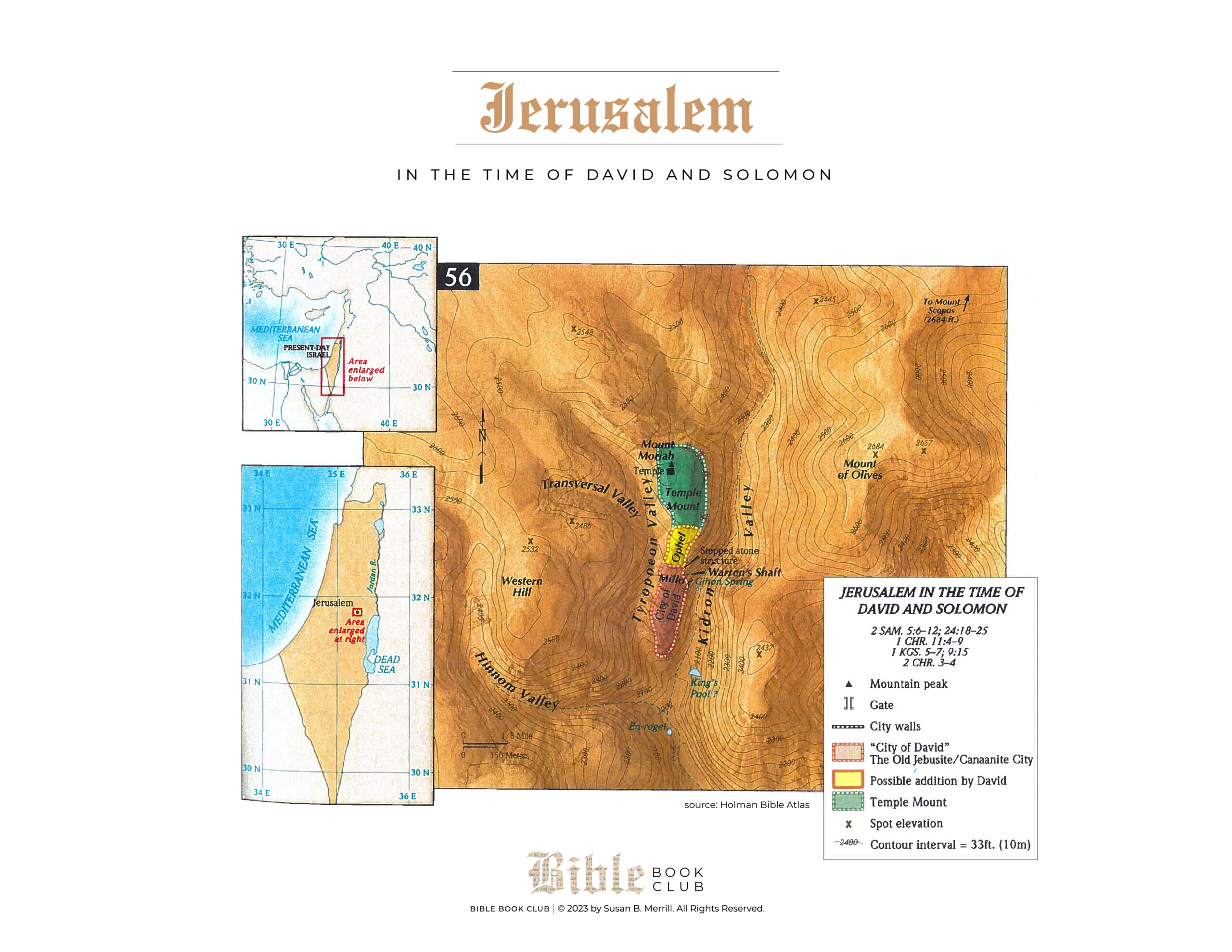
Jerusalem in the Time of David and Solomon
1 Kings 7 Podcast Summary
In 1 Kings 5–6, Solomon began his building plan for the temple. He contracted with Hiram king of Tyre for all the building supplies. Then he organized over 187,000 laborers. In the 480th year, after the Israelite’s release from Egypt, they began building. It took 7 and ½ years to complete. The temple was twice the size of the Tabernacle, 30 feet wide and 90 feet long. But the scale was the same. The Holy Place was twice the size of the Most Holy Place with the interior covered in gold. Now that the temple is up, in 1 Kings 7 Solomon moves on to furnishing it…
Just like Moses furnished the Tabernacle. As you see in 1 Kings 7, both the Tabernacle and the Temple contained the Altar of Burnt Offering and Altar of Incense. Both have a laver or basin for washing, Table of Showbread and Menorah. And both had bronze artifacts in the courtyard and gold artifacts in the temple. And both were decorated with a Garden of Eden motif of flowers, fruit and trees. The difference between the Tabernacle and the Temple was the size, materials, and quantity.
Solomon kept the scale the same but everything in the temple was bigger and more expensive. And that is why the author of 1 Kings is so enamored of the details.
The building of the temple was a long-awaited dream come true.
The temple and the palace were a sign to the world. Every other surrounding nation had glorious buildings and tribute temples to their gods. Never Israel.
Yet they loved their God and knew him to be the one true God, they wanted the world to know him. The temple represented credibility, stability, and, most of all, the presence of God among them. And the author of 1 Kings is prodigiously proud of every quarried stone and every golden candlestick that went into Israel’s precious Temple.
Other Podcast Episodes Mentioned:
